Complete index · 96
- Sun Wukong
- Hongjun Daozu
- Yuanshi Tianzun
- Tongtian Jiaozhu
- Taiqing Laozi
- Nüwa
- Dijun
- Donghuang Taiyi
- Zhunti Daoren
- Jieyin Daoren
- Houtu
- Pangu
- Luohou
- Kunpeng
- Minghe Laozu
- Zhenyuanzi
- Hongyun Laozu
- Fuxi
- Randeng Daoren
- Hou Yi
- Chang’e
- Dijiang
- Zhujiuyin
- Jumang
- Zhurong
- Gonggong
- Rushou
- Xuanming
- Qiangliang
- Xizi
- Tianwu
- Shebishi
- Guangchengzi
- Chijingzi
- Taiyi Zhenren
- Yuding Zhenren
- Huanglong Zhenren
- Wenshu Guangfa Tianzun
- Puxian Zhenren
- Cihang Daoren
- Juliusun
- Daoxing Tianzun
- Qingxu Daode Zhenjun
- Lingbao Dafashi
- Xuandu Dafashi
- Nanji Xianweng
- Yunzhongzi
- Yang Jian
- Nezha
- Duobao Daoren
- Jinling Shengmu
- Wudang Shengmu
- Guiling Shengmu
- Zhao Gongming
- Yunxiao
- Qiongxiao
- Bixiao
- Jiang Ziya
- Shen Gongbao
- Wen Zhong
- Di Xin
- Su Daji
- Ji Chang
- Ji Fa
- Huang Feihu
- Lei Zhenzi
- Kong Xuan
- Luya Daoren
- Tu Xingsun
- Deng Chanyu
- Jinzha
- Muzha
- Huang Tianhua
- Rulai
- Puti Zushi
- Guanyin
- Niu Mowang
- Zhu Bajie
- Sha Seng
- Four Heavenly Kings
- Li Jing
- Tang Sanzang
- Jade Emperor
- Queen Mother of the West
- Taibai Jinxing
- Bailongma
- Ao Guang
- Princess Iron Fan
- Red Boy
- Six-Eared Macaque
- Golden Horn and Silver Horn
- Yellow Brow
- Golden-Winged Great Peng
- Maitreya
- White Bone Demon
- Yellow Wind Demon
- TierDa Luo Golden Immortal, roughlySect / factionMount Huaguo / Buddhist attainmentSun WukongGreat Sage Equal to Heaven · Victorious Fighting Buddha
- TierHeaven’s-Way tier / Merged with the DaoSect / factionXuanmenHongjun DaozuAncestor of the Mystic Gate · merged himself into Heaven’s Way
- TierSaintSect / factionChanjiaoYuanshi TianzunSecond of the Three Pure Ones · head of the Chan Sect
- TierSaintSect / factionJiejiaoTongtian JiaozhuThird of the Three Pure Ones · head of the Jie Sect
- TierSaintSect / factionRenjiaoTaiqing LaoziFirst of the Three Pure Ones · head of the Human Sect
- TierSaintSect / factionWahuang Palace / close to the Yao clanNüwaMaker of humankind · mistress of Wahuang Palace
- TierQuasi-SaintSect / factionYao Heavenly CourtDijunHeavenly emperor of the Yao clan
- TierQuasi-Saint peakSect / factionYao Heavenly CourtDonghuang TaiyiWar god of the Yao clan
- TierSaintSect / factionWestern SectZhunti DaorenOne of the two saints of the West
- TierSaintSect / factionWestern SectJieyin DaorenOne of the two saints of the West
- TierSaint-level / Earthly Saint / Hunyuan Da LuoSect / factionWu clan → the underworldHoutuShe who became the six paths of rebirth
- TierGreat-Dao tier / Beyond Heaven’s WaySect / factionNonePanguHe who split heaven from earth
- TierQuasi-Saint peak / Hunyuan Da Luo / Saint-levelSect / factionModaoLuohouAncestor of the demonic path
- TierQuasi-SaintSect / factionNorthern sea / Yao Heavenly CourtKunpengLord of the northern sea · Yao preceptor
- TierQuasi-Saint peakSect / factionSea of blood / Asura SectMinghe LaozuLord of the sea of blood
- TierQuasi-SaintSect / factionIndependent / the earthbound immortal lineageZhenyuanziAncestor of the earthbound immortals
- TierDa Luo peak / Quasi-SaintSect / factionIndependentHongyun LaozuAt the centre of the quarrel over sainthood
- TierQuasi-SaintSect / factionYao clan / humankindFuxiBrother of Nüwa · Heavenly Sovereign of humankind
- TierQuasi-Saint / Da LuoSect / factionChanjiao, later the WestRandeng DaorenDeputy head of the Chan Sect
- TierDa Luo Golden Immortal, roughly / Great WitchSect / factionHuman hero / Great Witch of the Wu clanHou YiThe archer who shot down the suns
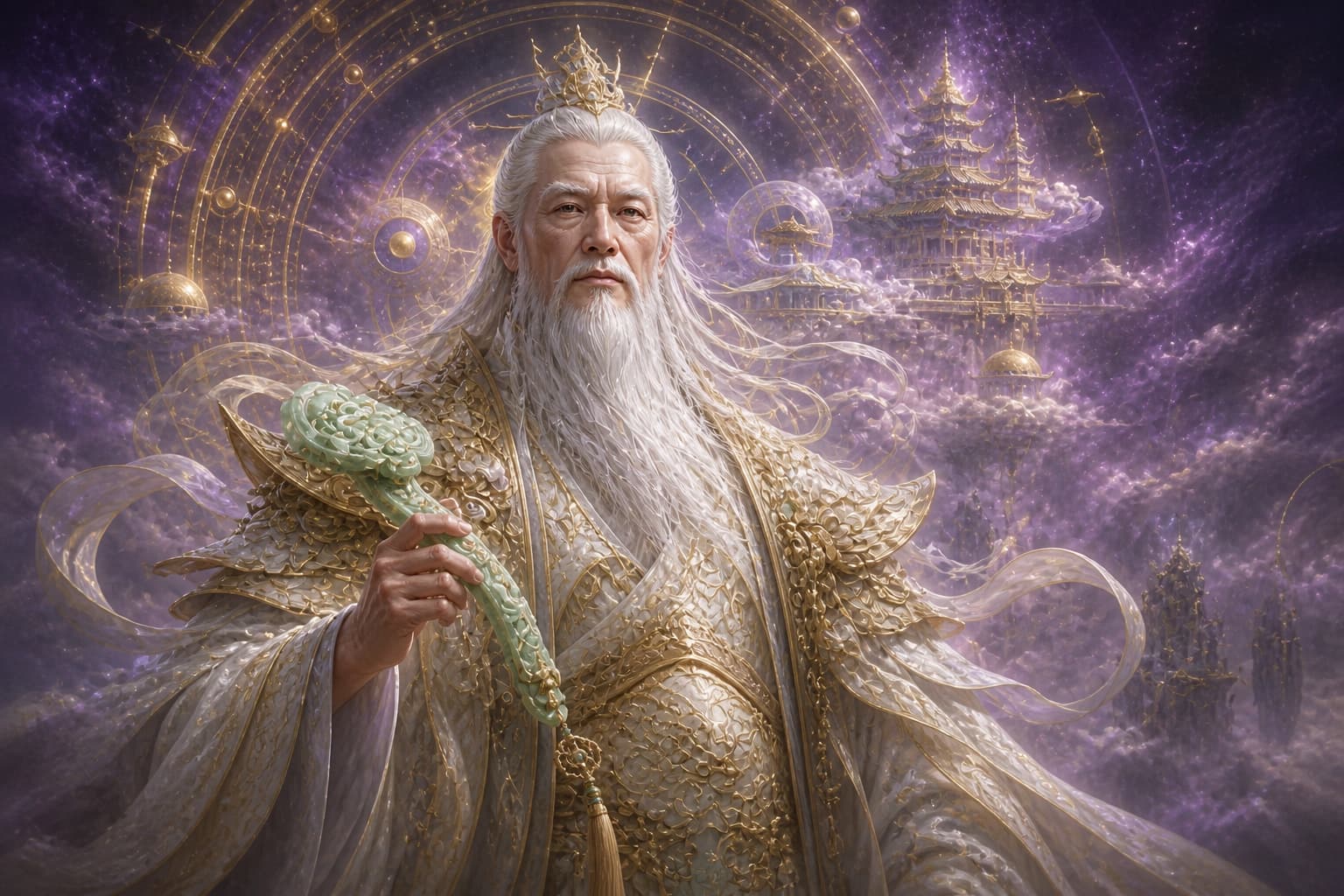
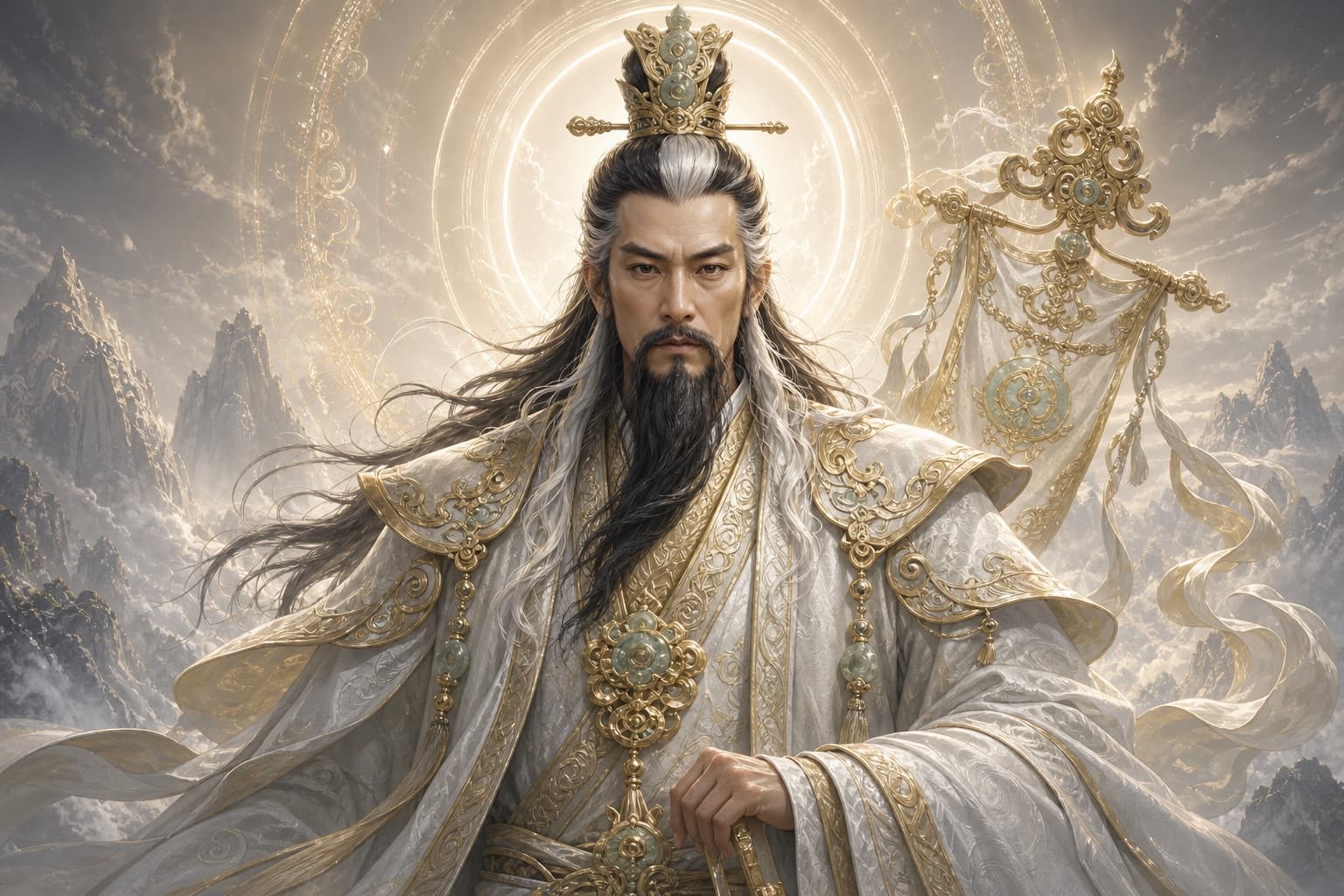
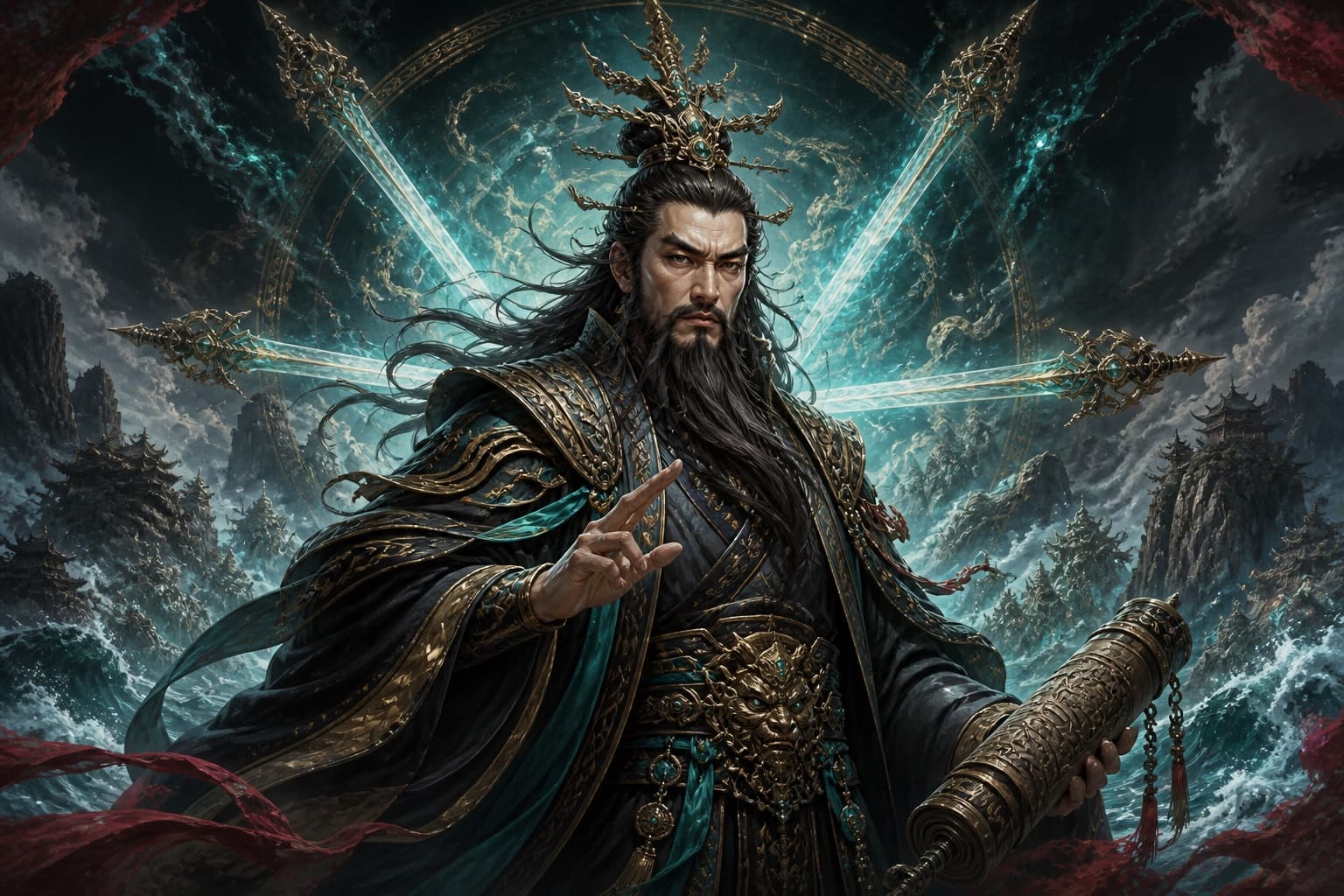
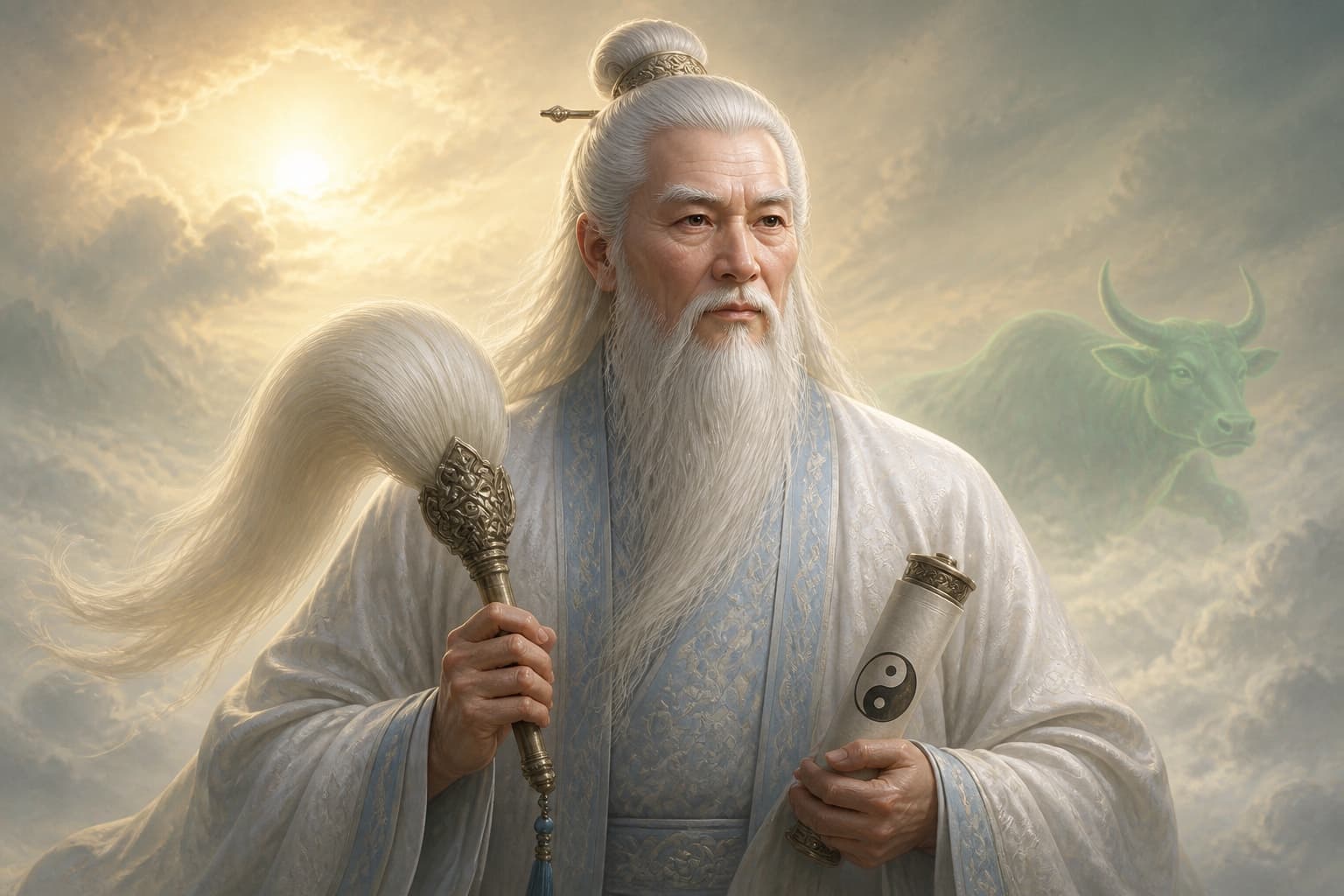
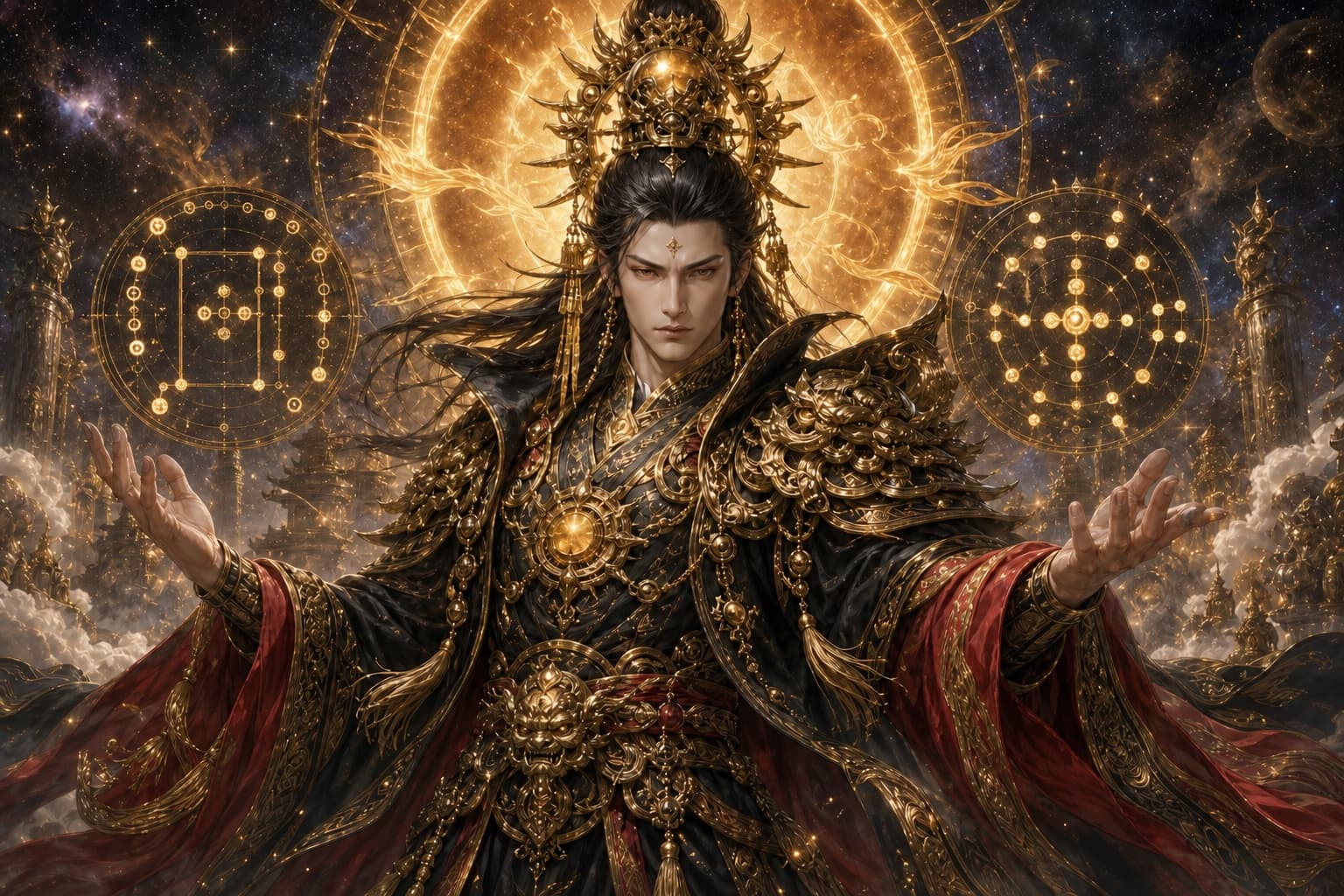
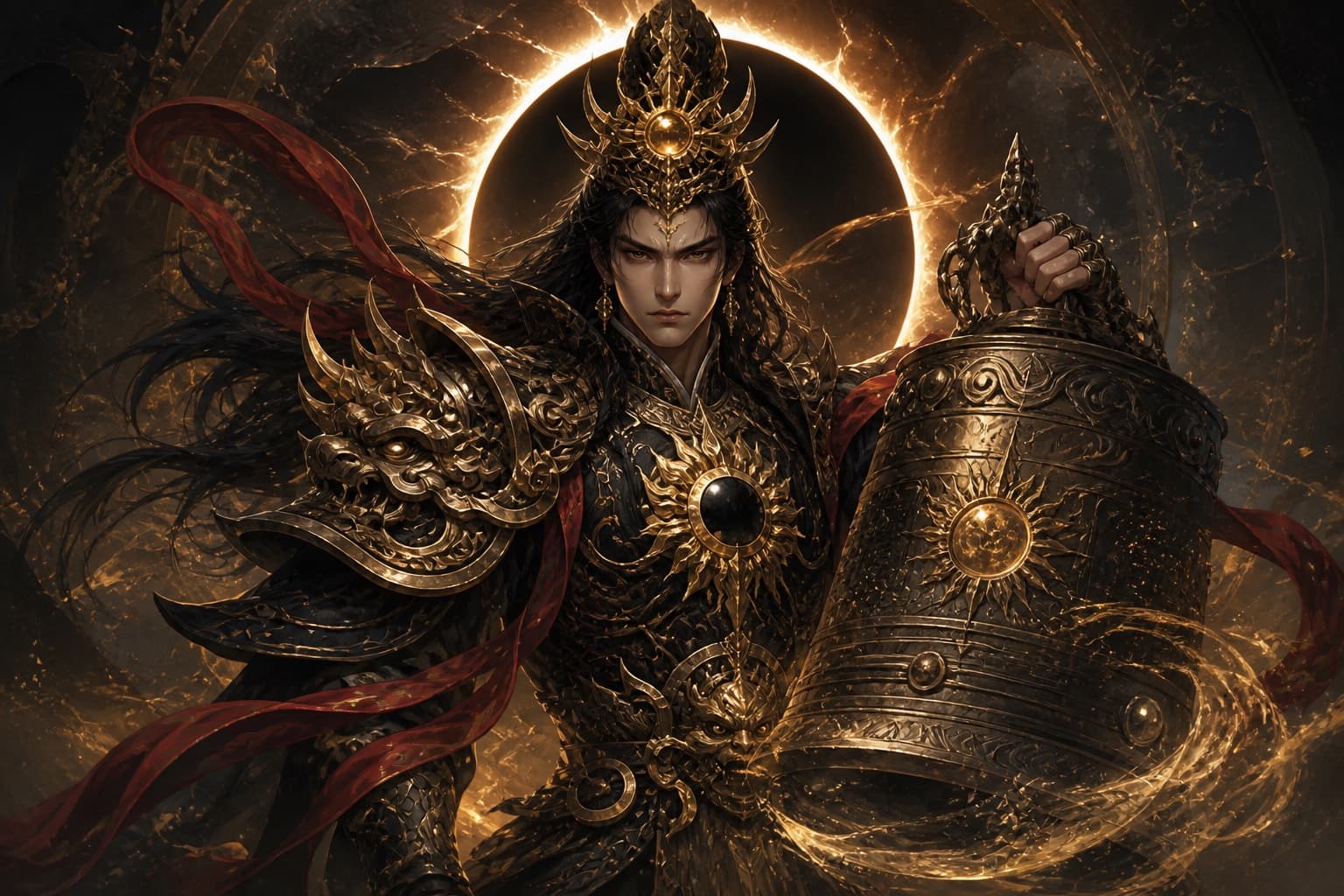
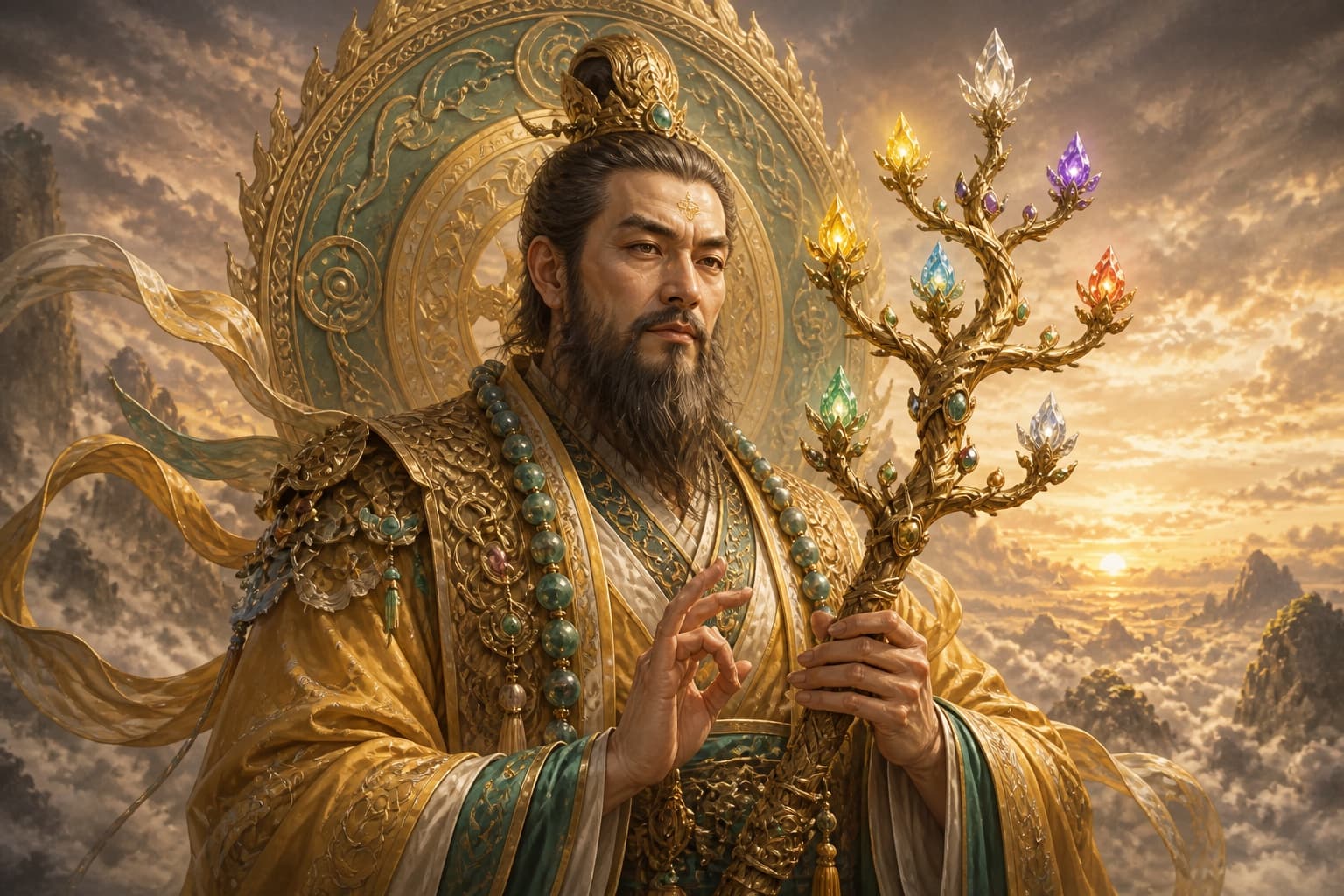
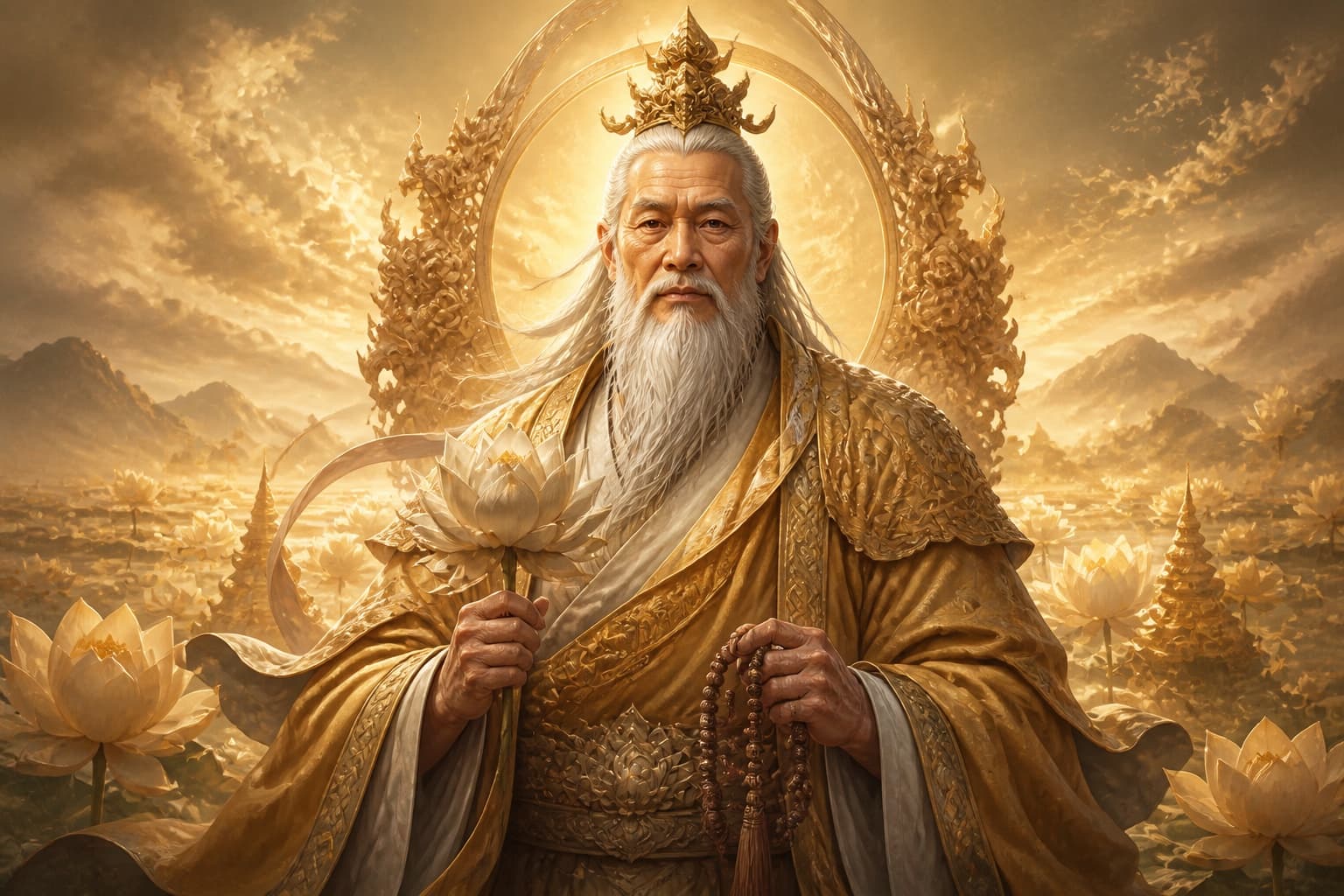
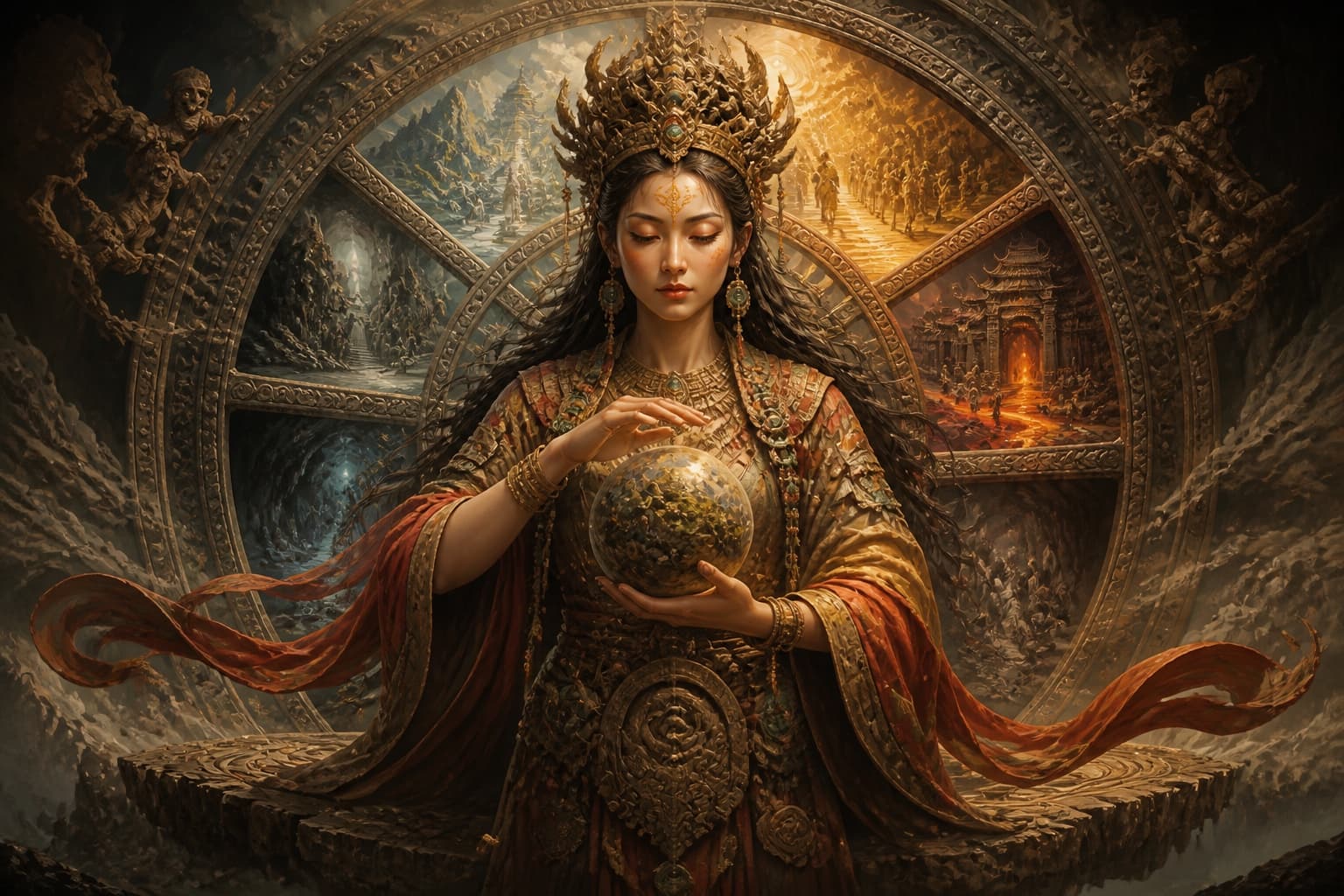
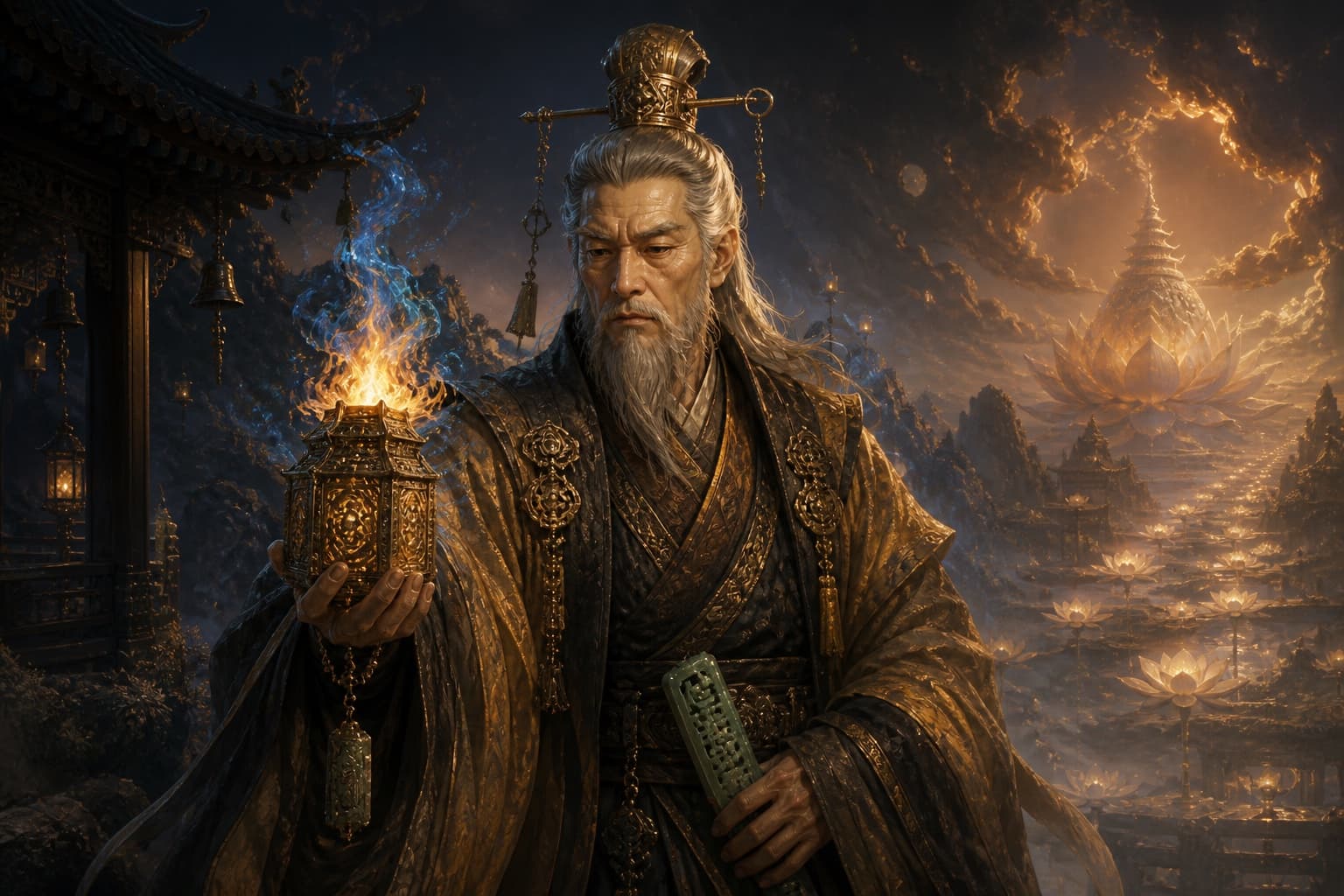
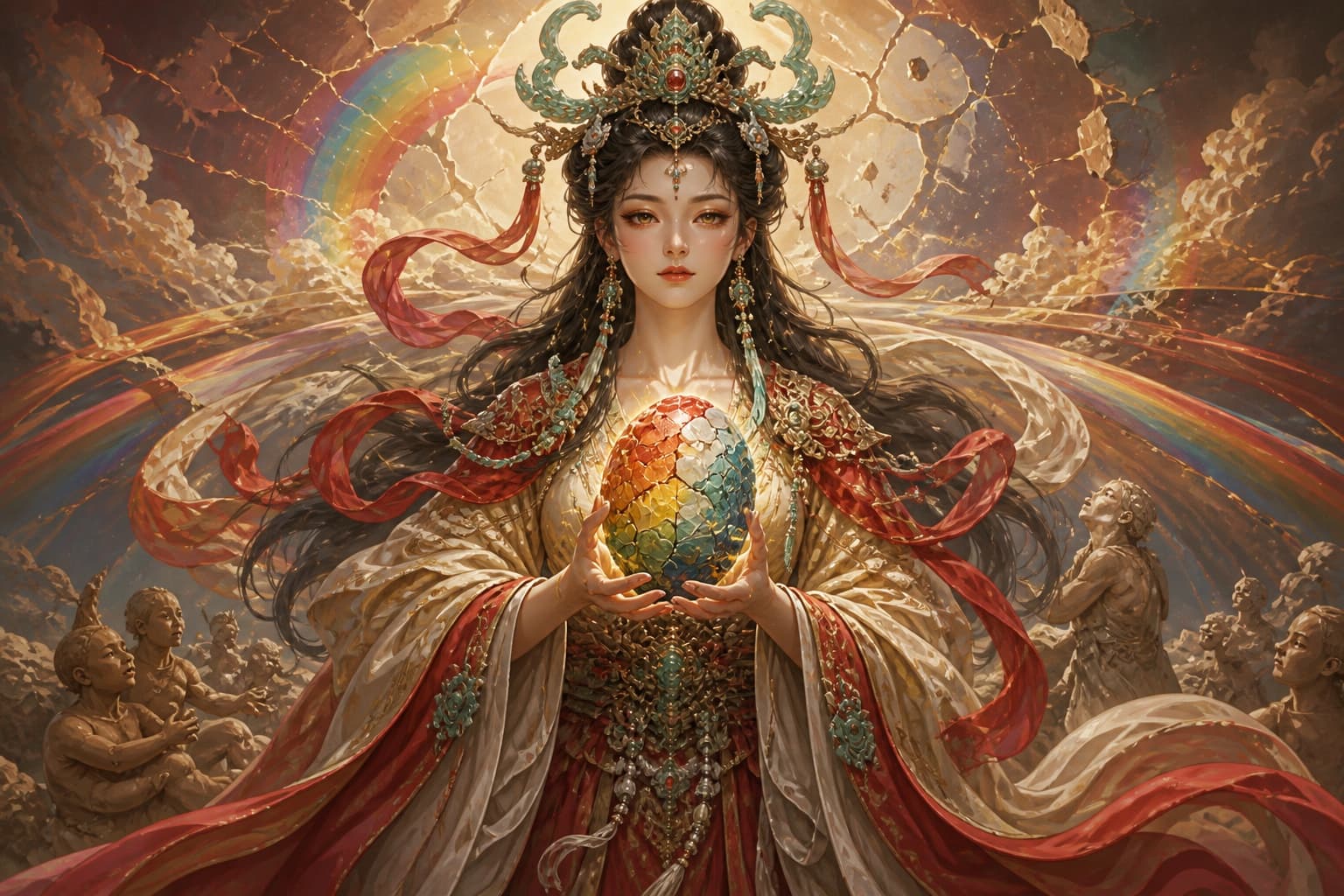
Nüwa
The story
Nüwa, human-headed and serpent-bodied, lived in the world of Honghuang. Walking one day by a river she saw how lonely her reflection was in the water, took yellow earth and water, and shaped clay figures after her own likeness. They came alive the moment they touched the ground and crowded round her, laughing and talking.
Delighted, she came to the water day after day to shape more; but her hands grew tired and the work went slowly, so she dipped a length of vine into the mud and flicked it in every direction. Wherever the drops fell they too became people, and humankind spread little by little across the world.
With people made, Nüwa established the rites of marriage between man and woman, so that humankind could go on multiplying without having to be shaped by her hands.
Humankind gathered and lived across the world, day and night. Later Gonggong, the water god, and Zhurong, the fire god, went to war; the mountains shook, the four poles broke and the nine regions split, and flood and fire came together upon the settlements of men.
When the vault of heaven cracked, rain poured down day and night, great fires burned on and would not go out, and beasts came running out of the hills. Passing through the ruined country and seeing the roads cut and the people driven from their homes, Nüwa set about finding what she needed to mend the sky.
She went through every river, mountain and marsh gathering stones of five colours — blue, red, yellow, white and black — then built up a furnace and put the stones into it to melt. As the molten stone came, water was still falling through the rent above.
Gonggong and Zhurong had fought, and Gonggong, defeated, had struck Mount Buzhou with his head in his rage. The mountain fell and the earth sank; a great tear opened in the vault of heaven and floodwater poured through it, and many of humankind were drowned.
Seeing this, Nüwa gathered five-coloured stones from the great rivers, refined them in the furnace day and night, and when the five-coloured molten stone was ready she closed the rent in the sky with her own hands.
The sky mended, she cut the four feet from a giant sea-turtle and set them up at the four quarters of the earth to hold the sky. From then on the four poles held and did not fall again.
After the mending, Nüwa lived in her own temple and received the offerings of the human world; through the ages many kings sent envoys to sacrifice there and pray for kind weather.
In the last years of Shang, King Zhou came with his officers to burn incense at Nüwa’s temple. Seeing how beautiful the image in the hall was, he was seized by a moment of disrespect, called for brush and ink, and wrote an insulting poem on the wall while his officers tried in vain to stop him.
Nüwa returned on her cloud and saw the poem on the wall, the ink still fresh and the incense in the hall already cold. She held her anger down, kept the matter in mind and did nothing yet.
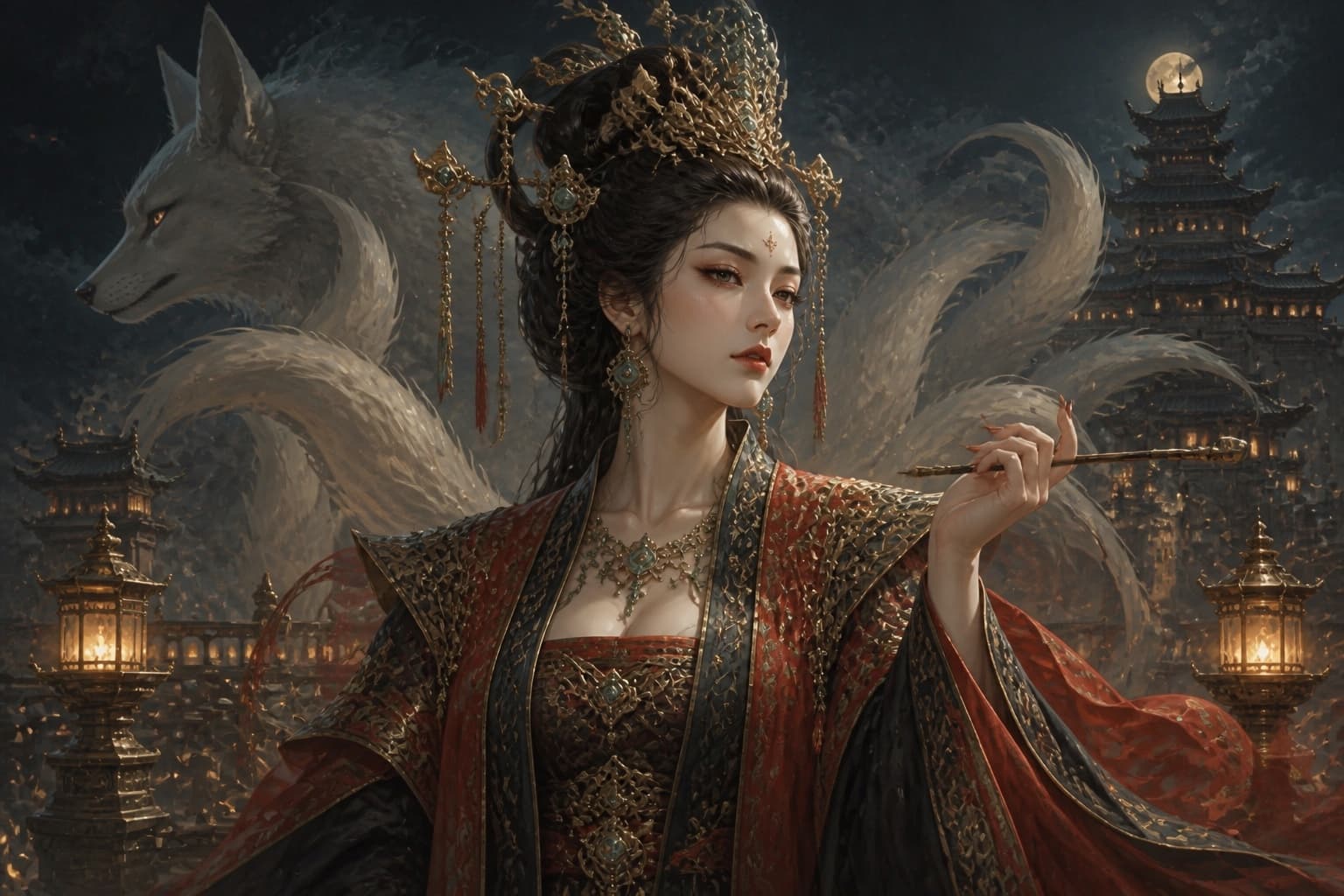
Nüwa called out the Demon-Summoning Banner. As its shadow unfurled it drew in three creatures that had cultivated for long ages in the tomb of Xuanyuan: a thousand-year fox spirit, a jade pipa spirit and a nine-headed pheasant spirit.
She told the three that the king had lost his virtue first and had insulted her image with his poem, and ordered them into Chaoge to lead him astray and break the fortune of Shang — warning them not to harm the innocent.
The three took the charge and went. The fox spirit possessed Su Daji, newly chosen for the palace, and stayed at the king’s side deep in the inner court for years; the other two hid themselves and waited their moment.
When the mandate of Shang was spent and the Zhou army entered Chaoge, the three were discovered and fled the palace in disorder, only to have their road cut by Jiang Ziya’s officers.
Nüwa had long known that the three had broken her ban and killed the innocent as they pleased, and she stopped them with the demon-binding cord. By the time Yang Jian and the others came up, the three were bound and could not slip away.
Yang Jian took them back to the Zhou camp, and Jiang Ziya dealt with them under military law. Nüwa took back her cord, returned to her temple, and took no further part in the war at Chaoge.
This sequence is the usual arrangement of later Honghuang novels, not a single record found in the ancient texts.
Other Honghuang novels write Nüwa as head of a Yao teaching, or write only of her dealings with Fuxi, Dijun and the other figures of the Yao clan.
Relationship map
Relationship story
Select a label on one of the lines to read when the two met, what happened next, and how it ended.
Selecting a portrait still opens that entry directly.