Complete index · 96
- Sun Wukong
- Hongjun Daozu
- Yuanshi Tianzun
- Tongtian Jiaozhu
- Taiqing Laozi
- Nüwa
- Dijun
- Donghuang Taiyi
- Zhunti Daoren
- Jieyin Daoren
- Houtu
- Pangu
- Luohou
- Kunpeng
- Minghe Laozu
- Zhenyuanzi
- Hongyun Laozu
- Fuxi
- Randeng Daoren
- Hou Yi
- Chang’e
- Dijiang
- Zhujiuyin
- Jumang
- Zhurong
- Gonggong
- Rushou
- Xuanming
- Qiangliang
- Xizi
- Tianwu
- Shebishi
- Guangchengzi
- Chijingzi
- Taiyi Zhenren
- Yuding Zhenren
- Huanglong Zhenren
- Wenshu Guangfa Tianzun
- Puxian Zhenren
- Cihang Daoren
- Juliusun
- Daoxing Tianzun
- Qingxu Daode Zhenjun
- Lingbao Dafashi
- Xuandu Dafashi
- Nanji Xianweng
- Yunzhongzi
- Yang Jian
- Nezha
- Duobao Daoren
- Jinling Shengmu
- Wudang Shengmu
- Guiling Shengmu
- Zhao Gongming
- Yunxiao
- Qiongxiao
- Bixiao
- Jiang Ziya
- Shen Gongbao
- Wen Zhong
- Di Xin
- Su Daji
- Ji Chang
- Ji Fa
- Huang Feihu
- Lei Zhenzi
- Kong Xuan
- Luya Daoren
- Tu Xingsun
- Deng Chanyu
- Jinzha
- Muzha
- Huang Tianhua
- Rulai
- Puti Zushi
- Guanyin
- Niu Mowang
- Zhu Bajie
- Sha Seng
- Four Heavenly Kings
- Li Jing
- Tang Sanzang
- Jade Emperor
- Queen Mother of the West
- Taibai Jinxing
- Bailongma
- Ao Guang
- Princess Iron Fan
- Red Boy
- Six-Eared Macaque
- Golden Horn and Silver Horn
- Yellow Brow
- Golden-Winged Great Peng
- Maitreya
- White Bone Demon
- Yellow Wind Demon
- TierDa Luo Golden Immortal, roughlySect / factionMount Huaguo / Buddhist attainmentSun WukongGreat Sage Equal to Heaven · Victorious Fighting Buddha
- TierHeaven’s-Way tier / Merged with the DaoSect / factionXuanmenHongjun DaozuAncestor of the Mystic Gate · merged himself into Heaven’s Way
- TierSaintSect / factionChanjiaoYuanshi TianzunSecond of the Three Pure Ones · head of the Chan Sect
- TierSaintSect / factionJiejiaoTongtian JiaozhuThird of the Three Pure Ones · head of the Jie Sect
- TierSaintSect / factionRenjiaoTaiqing LaoziFirst of the Three Pure Ones · head of the Human Sect
- TierSaintSect / factionWahuang Palace / close to the Yao clanNüwaMaker of humankind · mistress of Wahuang Palace
- TierQuasi-SaintSect / factionYao Heavenly CourtDijunHeavenly emperor of the Yao clan
- TierQuasi-Saint peakSect / factionYao Heavenly CourtDonghuang TaiyiWar god of the Yao clan
- TierSaintSect / factionWestern SectZhunti DaorenOne of the two saints of the West
- TierSaintSect / factionWestern SectJieyin DaorenOne of the two saints of the West
- TierSaint-level / Earthly Saint / Hunyuan Da LuoSect / factionWu clan → the underworldHoutuShe who became the six paths of rebirth
- TierGreat-Dao tier / Beyond Heaven’s WaySect / factionNonePanguHe who split heaven from earth
- TierQuasi-Saint peak / Hunyuan Da Luo / Saint-levelSect / factionModaoLuohouAncestor of the demonic path
- TierQuasi-SaintSect / factionNorthern sea / Yao Heavenly CourtKunpengLord of the northern sea · Yao preceptor
- TierQuasi-Saint peakSect / factionSea of blood / Asura SectMinghe LaozuLord of the sea of blood
- TierQuasi-SaintSect / factionIndependent / the earthbound immortal lineageZhenyuanziAncestor of the earthbound immortals
- TierDa Luo peak / Quasi-SaintSect / factionIndependentHongyun LaozuAt the centre of the quarrel over sainthood
- TierQuasi-SaintSect / factionYao clan / humankindFuxiBrother of Nüwa · Heavenly Sovereign of humankind
- TierQuasi-Saint / Da LuoSect / factionChanjiao, later the WestRandeng DaorenDeputy head of the Chan Sect
- TierDa Luo Golden Immortal, roughly / Great WitchSect / factionHuman hero / Great Witch of the Wu clanHou YiThe archer who shot down the suns
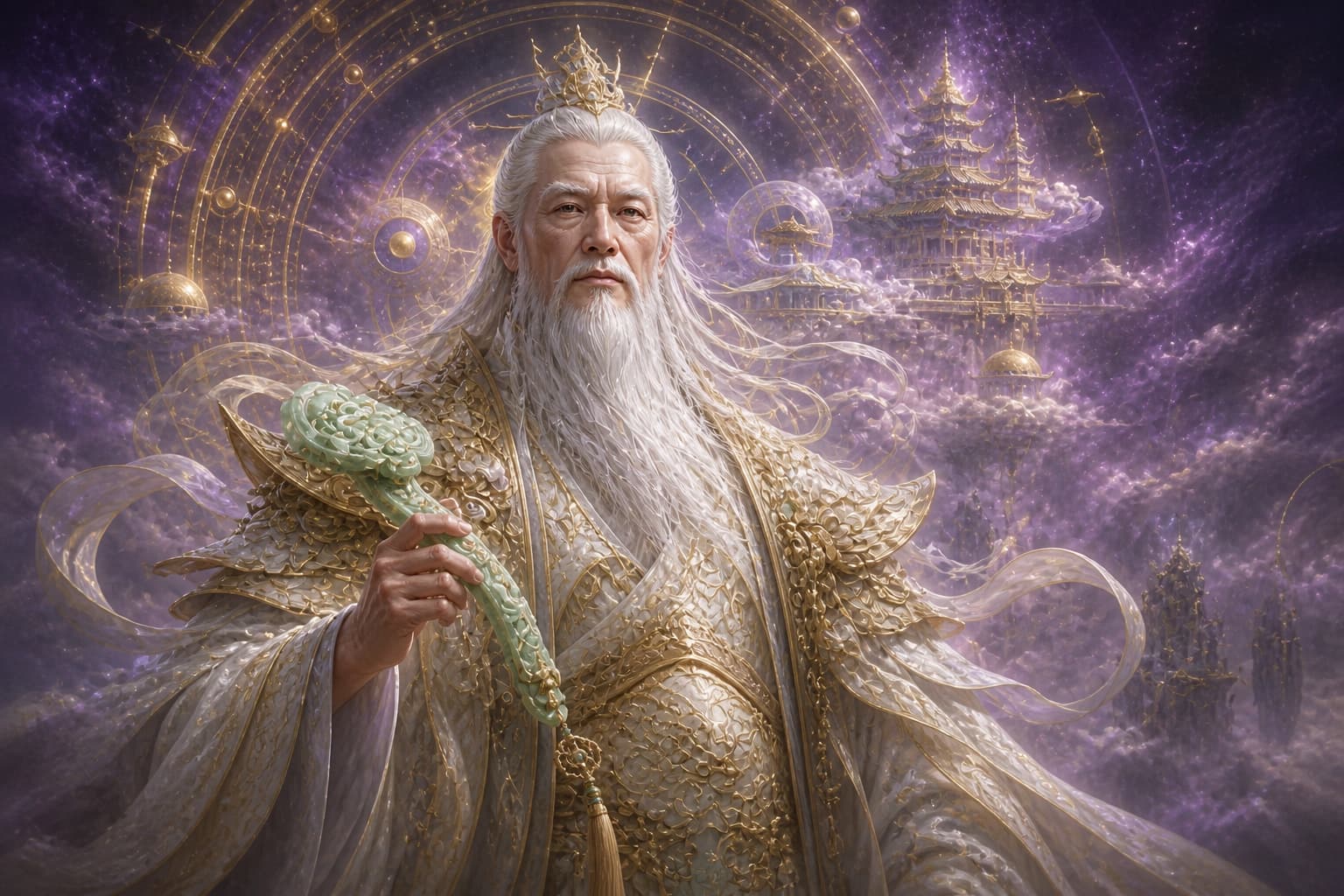
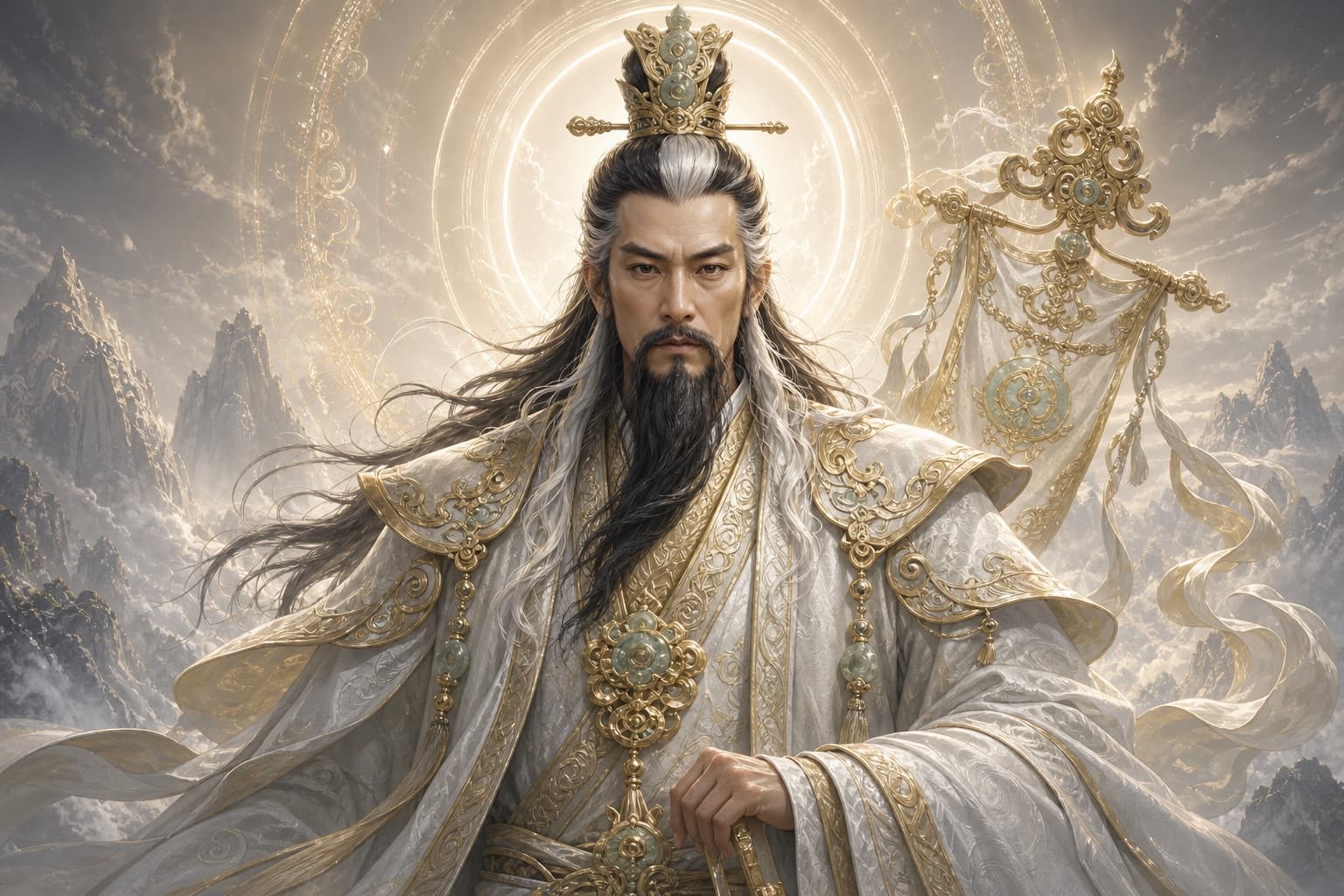
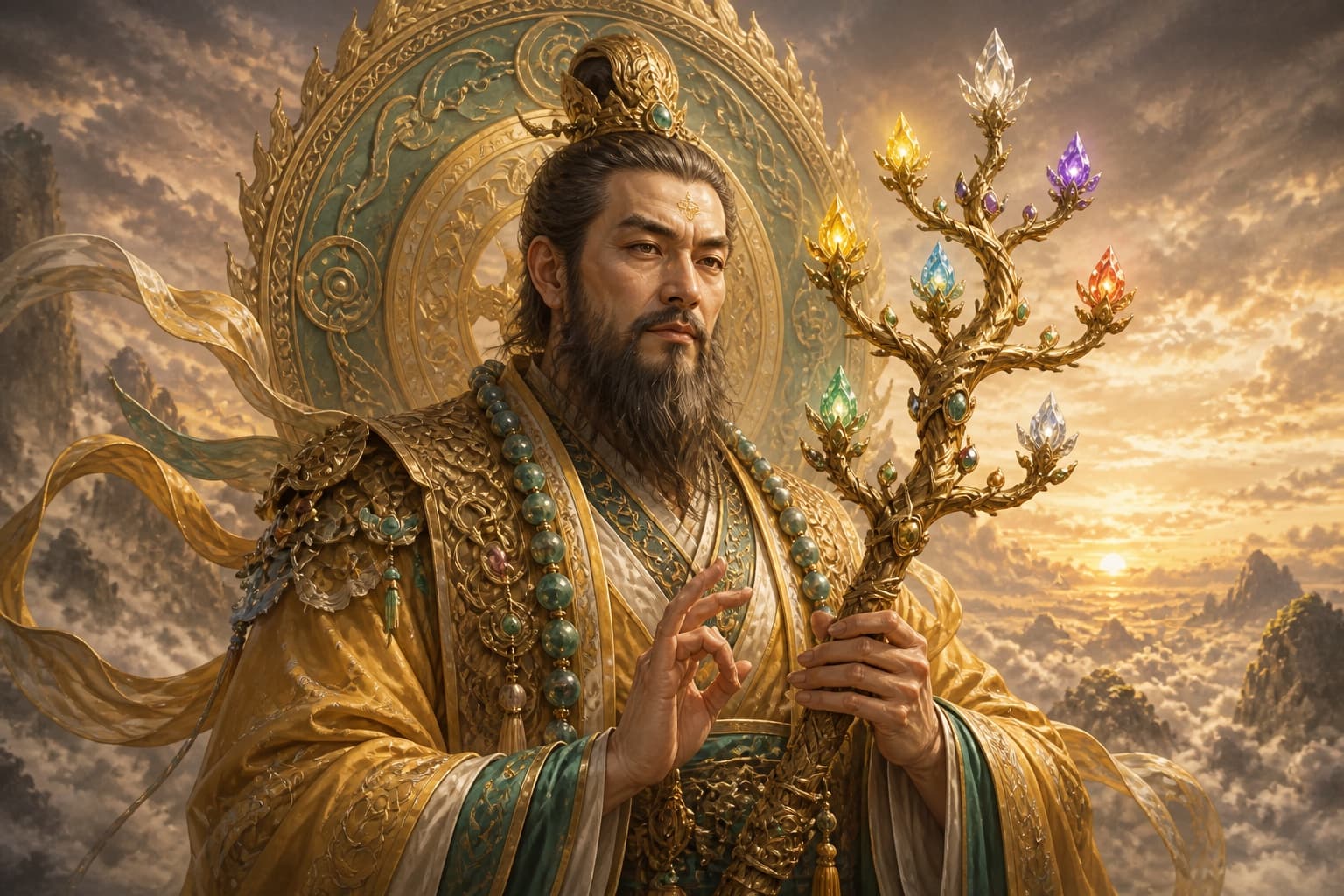
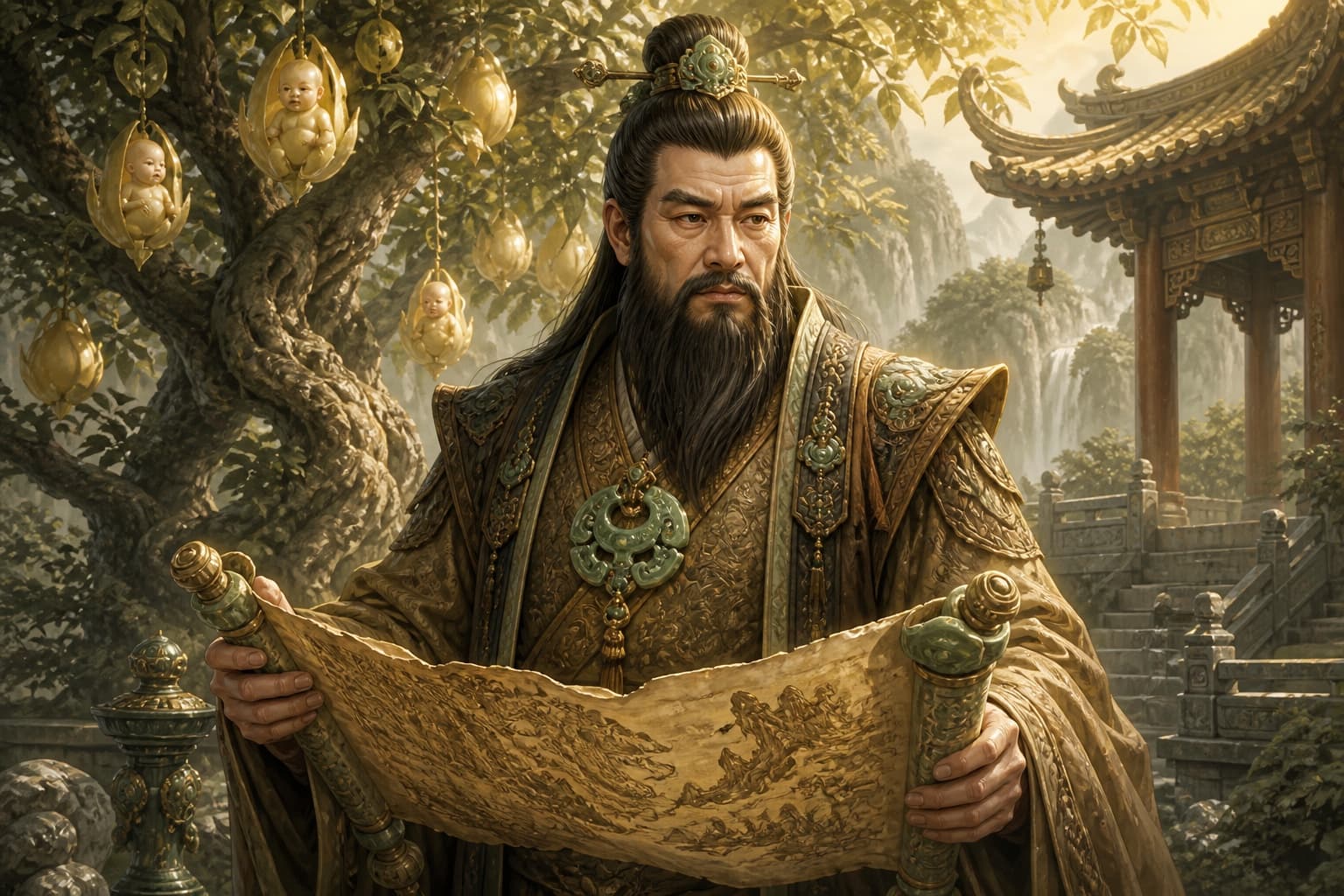
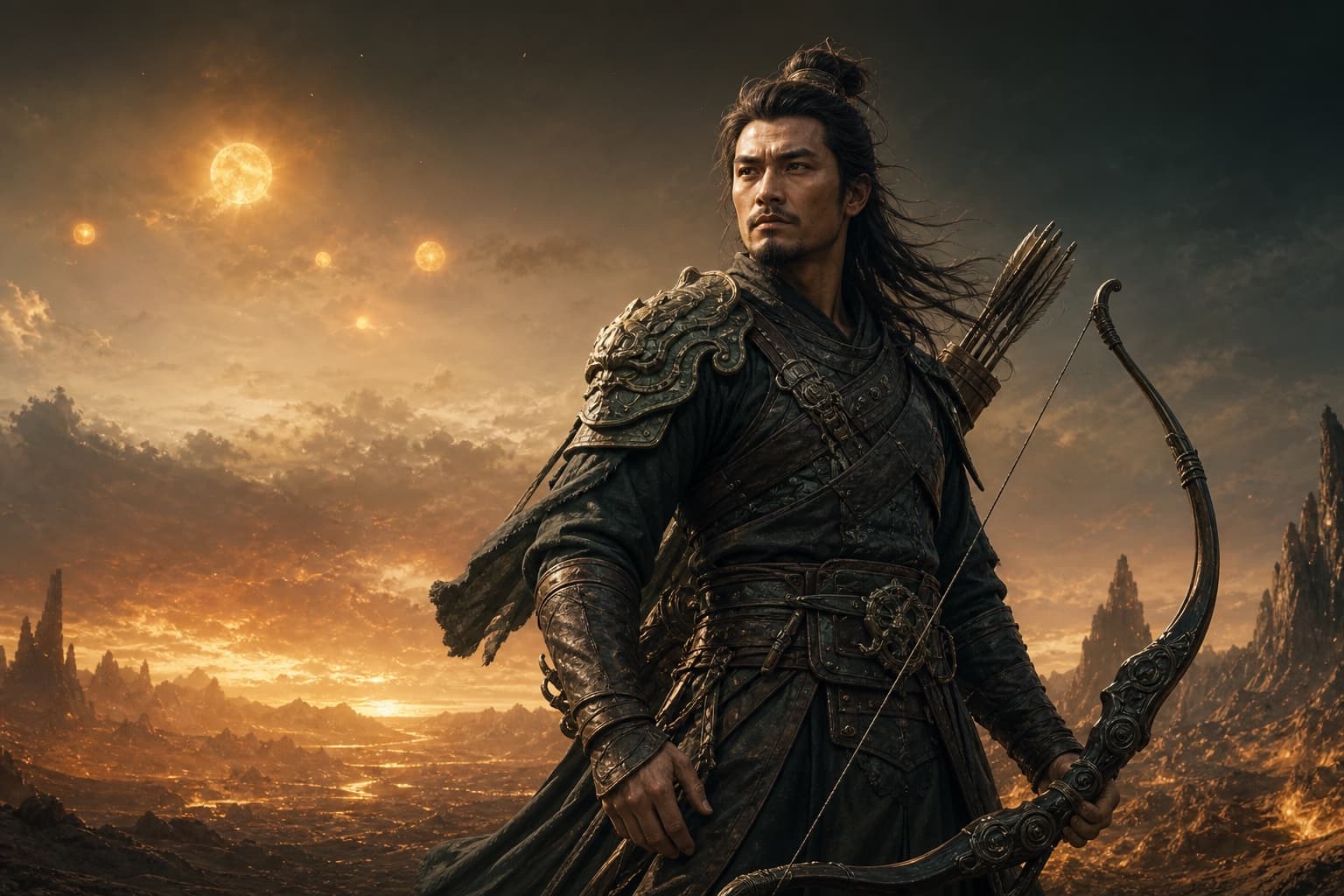
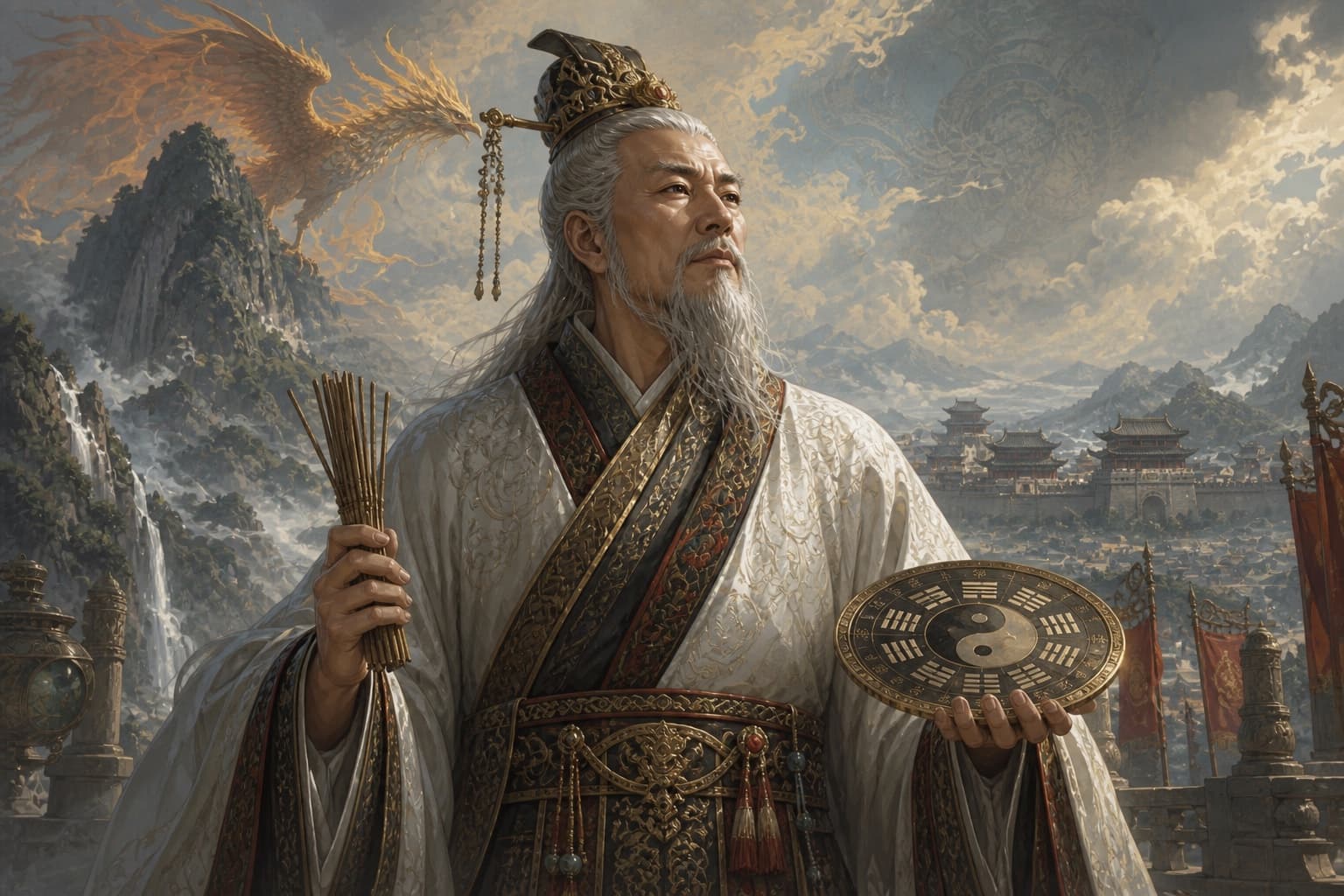
Ji Chang
The story
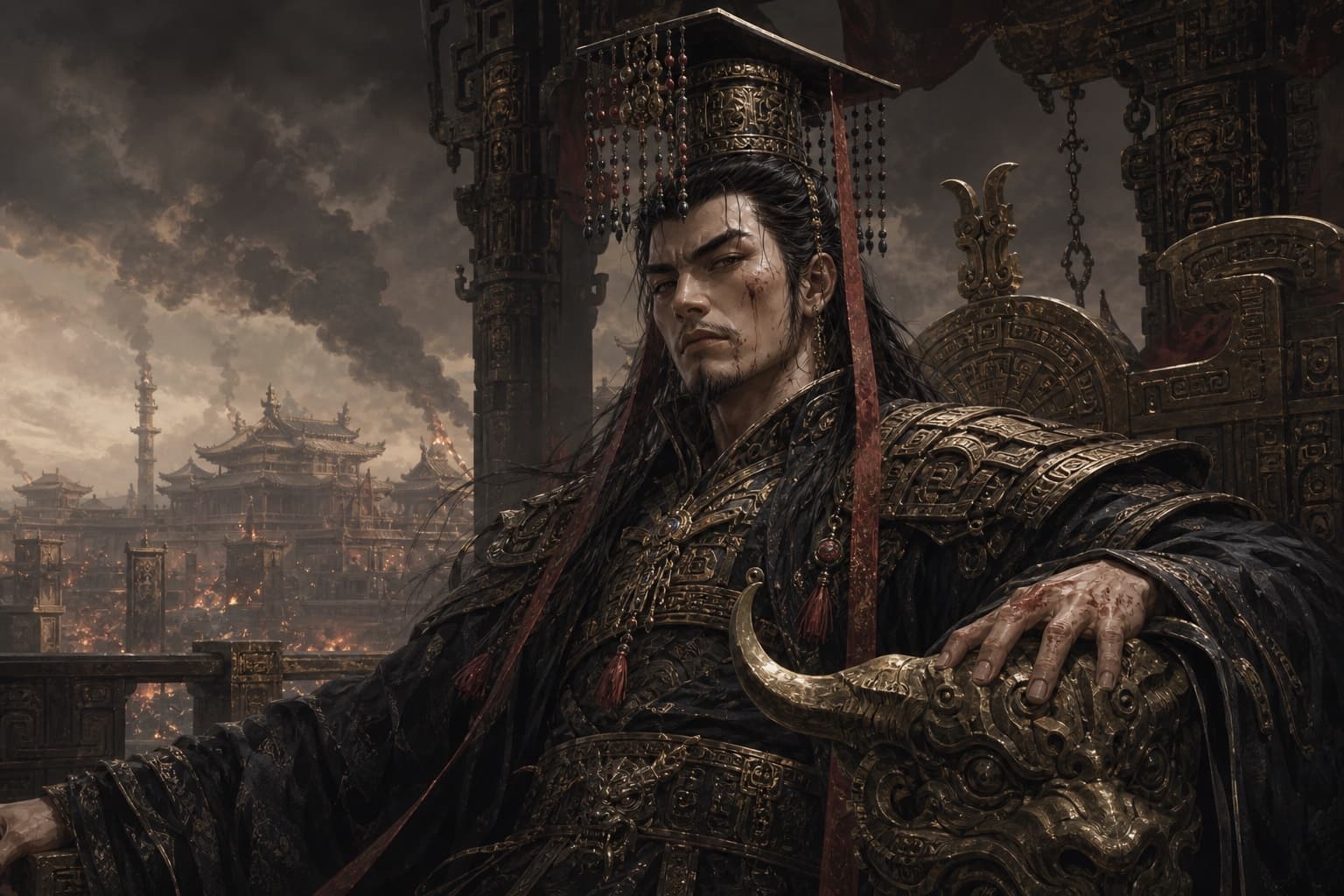
Ji Chang was Earl of the West and lived in the city of Western Qi. His fields were orderly and his markets well kept, and people from every quarter wished to attach themselves to him. Shang counted him one of its four great lords, and he had to attend at Chaoge at the turn of the year.
One New Year Ji Chang went to Chaoge with Jiang Huanchu, Marquis of the East, and E Chongyu, Marquis of the South. Both were condemned and killed outside the Meridian Gate in turn; Ji Chang, working out the trigrams at the guest lodging, sighed when the hexagram was formed, and dared not speak of good or ill fortune, but noted it privately.
Fei Zhong and You Hun noticed the change in his face and slandered him to the king, saying that Ji Chang could see the future and might have designs; Chong Houhu, Marquis of the North, added that his reputation for benevolence was a plan to win the hearts of the western lands. The king therefore confined Ji Chang at Youli, and he stayed there seven years.
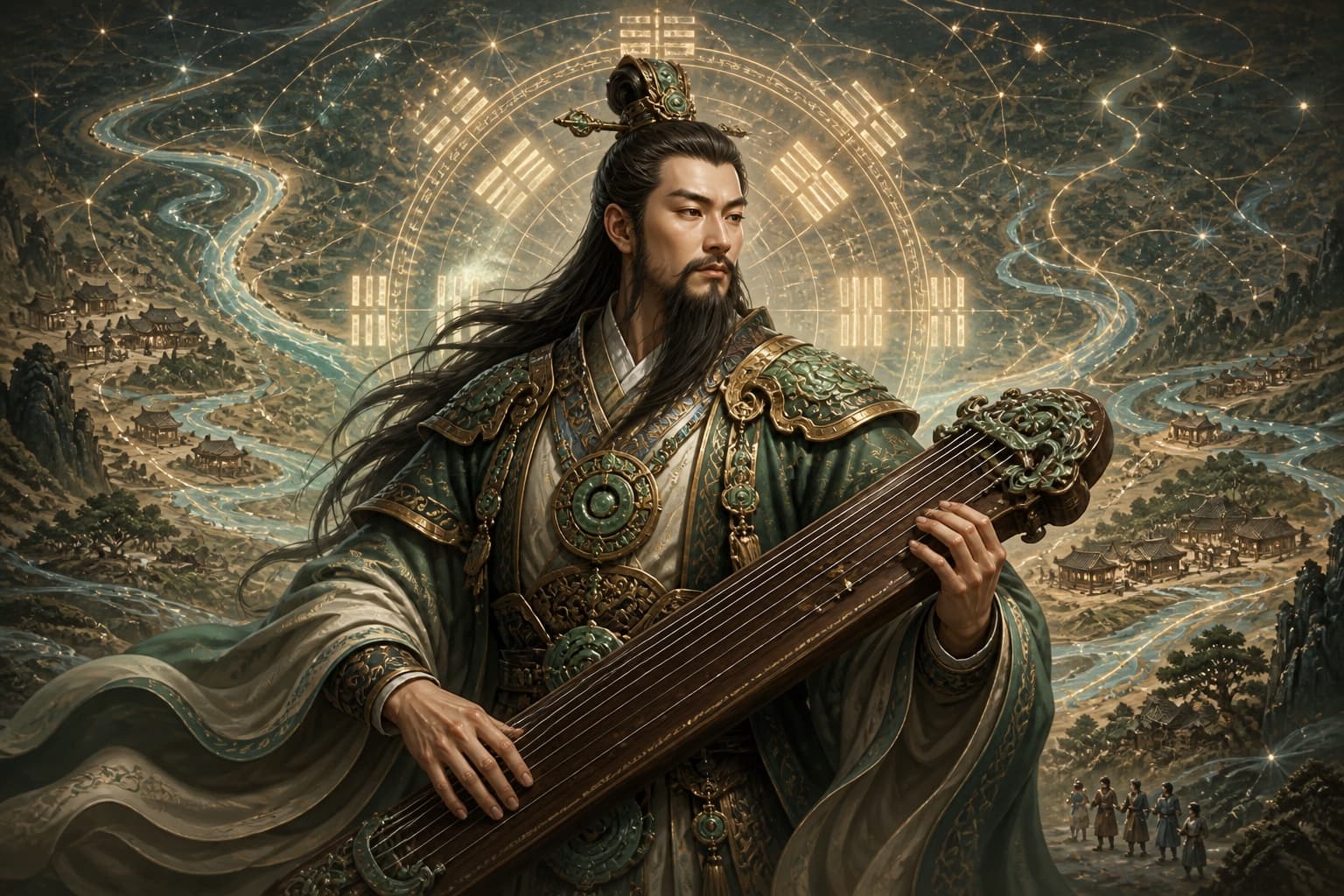
The sky over Youli hung low all day, and Ji Chang lived in a narrow room with nothing on the table but yarrow stalks and bamboo slips. Out of that captivity he worked the primordial eight trigrams into sixty-four hexagrams, adding a text to each line, to pass the time.
His eldest son Bo Yikao, hearing of his father’s confinement, took tribute and carriages to Chaoge to redeem him, offering horses and rarities. Daji, taken with his bearing, made an advance which he refused, and the king had him put to death; his body was made into a broth by the cooks and sent to Ji Chang in his cell at Youli. Ji Chang knew perfectly well what was in the bowl and ate it all as ordered; afterwards his stomach turned and what he brought up fell to the ground as three white hares that ran away.
When the grandees of Western Qi heard of it, San Yisheng and the others searched the west for rarities, obtained beautiful women, a white-faced ape, a seven-fragrance carriage and a wine-sobering stone, and sent them by night to Chaoge, handing them to Fei Zhong and You Hun, who presented them to the king. Pleased with the treasures, the king issued a pardon, allowed Ji Chang to return to his state, and granted him bow, arrows, axe and battleaxe with the right to campaign at his own discretion.
On his earlier journey to Chaoge, Ji Chang’s carriage had passed through the country of Mount Yan when a thunderstorm broke and lightning split the clouds; there he had found an abandoned child and taken him as an adopted son — the future Lei Zhenzi. Lodging at a post station on the road, he had also dreamed of a winged bear entering his tent, and he remembered the omen without telling anyone.
As the carriage neared Western Qi, Ji Chang went hunting by the River Wei and saw an old man holding a rod, its hook baited with nothing and hanging three feet above the water, sitting there all day.
Ji Chang made Jiang Shang chancellor of the right, called him Shangfu, and put the whole civil and military business of Western Qi into his hands. Jiang Shang set the administration in order, encouraged farming and sericulture, and built the Numinous Terrace to watch the heavens; the treasuries of Western Qi filled and able men came from every quarter. Hong Yao, San Yisheng, Tai Dian and Nangong Kuo attached themselves in turn and helped govern, standing with Jiang Shang as the supports of Western Qi.
The rulers of Yu and Rui, quarrelling over a boundary and unable to settle it, came to ask Ji Chang to judge between them, having heard that Western Qi was famous for yielding. Coming into Western Qi they saw ploughmen give way over the ridges between fields and travellers give way on the road, and were so ashamed that they turned back without seeing him, ended their quarrel and left the disputed ground fallow.
Ji Chang also had Jiang Shang lead troops against the Quanrong, Mixu and other unsteady peoples of the west. Chong Houhu had long been at odds with him and slandered him repeatedly, and Ji Chang raised an army against him, took his city and put him to death, after which most of the lords of the west attached themselves to Zhou.
In his last years, feeling his strength failing, Ji Chang called Jiang Shang and his heir Ji Fa to his bedside, entrusted them with the unfinished campaign against King Zhou and with the whole business of the state, told them to keep at the work, and then died.
Ji Fa succeeded him, honoured his father as King Wen and buried him with the proper rites. The people and soldiers of Western Qi, Jiang Shang and the ministers all kept to Ji Chang’s arrangements, drilling and arming, laying the ground for the alliance and the campaign against King Zhou to come.
Relationship map
Relationship story
Select a label on one of the lines to read when the two met, what happened next, and how it ended.
Selecting a portrait still opens that entry directly.