Complete index · 96
- Sun Wukong
- Hongjun Daozu
- Yuanshi Tianzun
- Tongtian Jiaozhu
- Taiqing Laozi
- Nüwa
- Dijun
- Donghuang Taiyi
- Zhunti Daoren
- Jieyin Daoren
- Houtu
- Pangu
- Luohou
- Kunpeng
- Minghe Laozu
- Zhenyuanzi
- Hongyun Laozu
- Fuxi
- Randeng Daoren
- Hou Yi
- Chang’e
- Dijiang
- Zhujiuyin
- Jumang
- Zhurong
- Gonggong
- Rushou
- Xuanming
- Qiangliang
- Xizi
- Tianwu
- Shebishi
- Guangchengzi
- Chijingzi
- Taiyi Zhenren
- Yuding Zhenren
- Huanglong Zhenren
- Wenshu Guangfa Tianzun
- Puxian Zhenren
- Cihang Daoren
- Juliusun
- Daoxing Tianzun
- Qingxu Daode Zhenjun
- Lingbao Dafashi
- Xuandu Dafashi
- Nanji Xianweng
- Yunzhongzi
- Yang Jian
- Nezha
- Duobao Daoren
- Jinling Shengmu
- Wudang Shengmu
- Guiling Shengmu
- Zhao Gongming
- Yunxiao
- Qiongxiao
- Bixiao
- Jiang Ziya
- Shen Gongbao
- Wen Zhong
- Di Xin
- Su Daji
- Ji Chang
- Ji Fa
- Huang Feihu
- Lei Zhenzi
- Kong Xuan
- Luya Daoren
- Tu Xingsun
- Deng Chanyu
- Jinzha
- Muzha
- Huang Tianhua
- Rulai
- Puti Zushi
- Guanyin
- Niu Mowang
- Zhu Bajie
- Sha Seng
- Four Heavenly Kings
- Li Jing
- Tang Sanzang
- Jade Emperor
- Queen Mother of the West
- Taibai Jinxing
- Bailongma
- Ao Guang
- Princess Iron Fan
- Red Boy
- Six-Eared Macaque
- Golden Horn and Silver Horn
- Yellow Brow
- Golden-Winged Great Peng
- Maitreya
- White Bone Demon
- Yellow Wind Demon
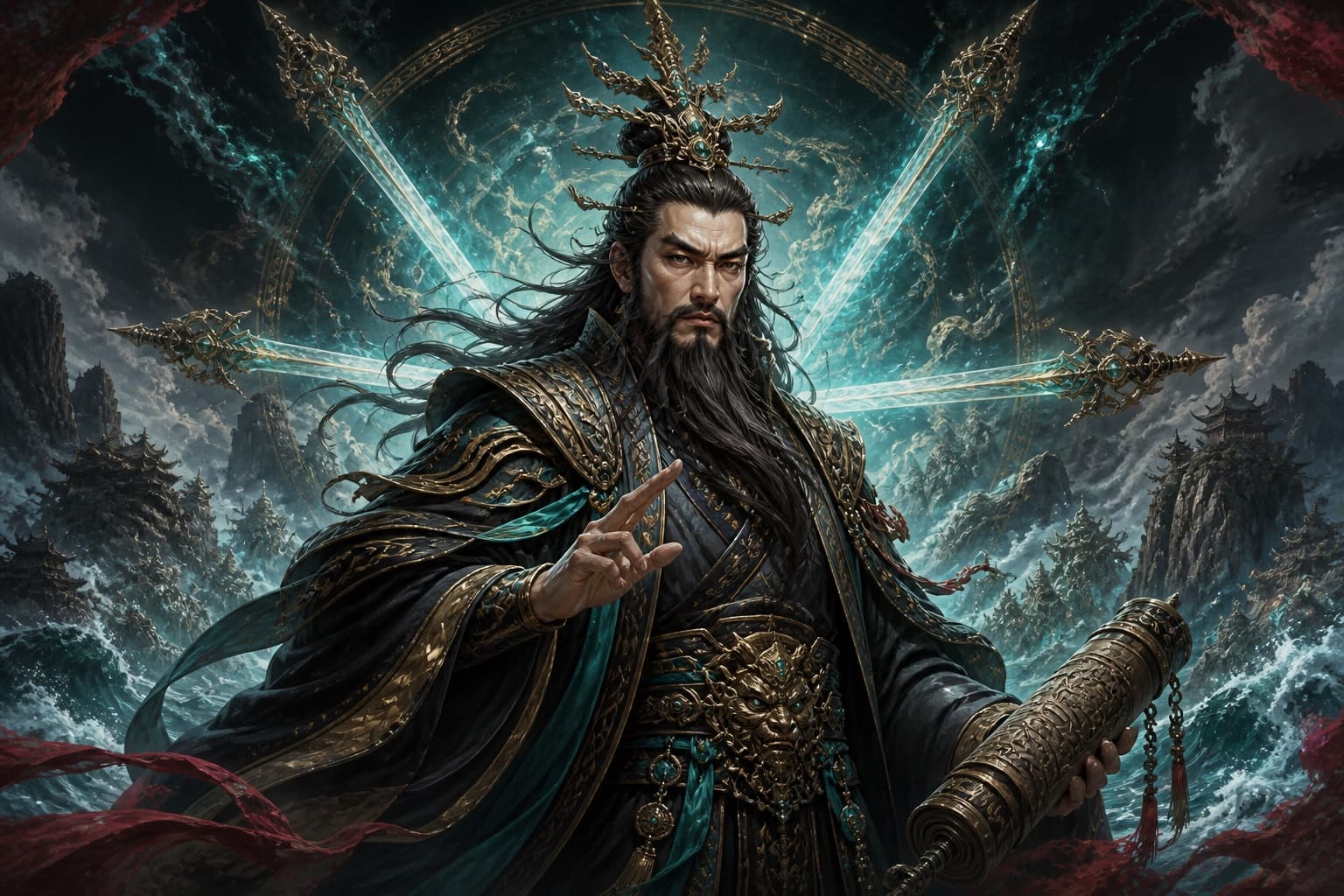
- TierDa Luo Golden Immortal, roughlySect / factionMount Huaguo / Buddhist attainmentSun WukongGreat Sage Equal to Heaven · Victorious Fighting Buddha
- TierHeaven’s-Way tier / Merged with the DaoSect / factionXuanmenHongjun DaozuAncestor of the Mystic Gate · merged himself into Heaven’s Way
- TierSaintSect / factionChanjiaoYuanshi TianzunSecond of the Three Pure Ones · head of the Chan Sect
- TierSaintSect / factionJiejiaoTongtian JiaozhuThird of the Three Pure Ones · head of the Jie Sect
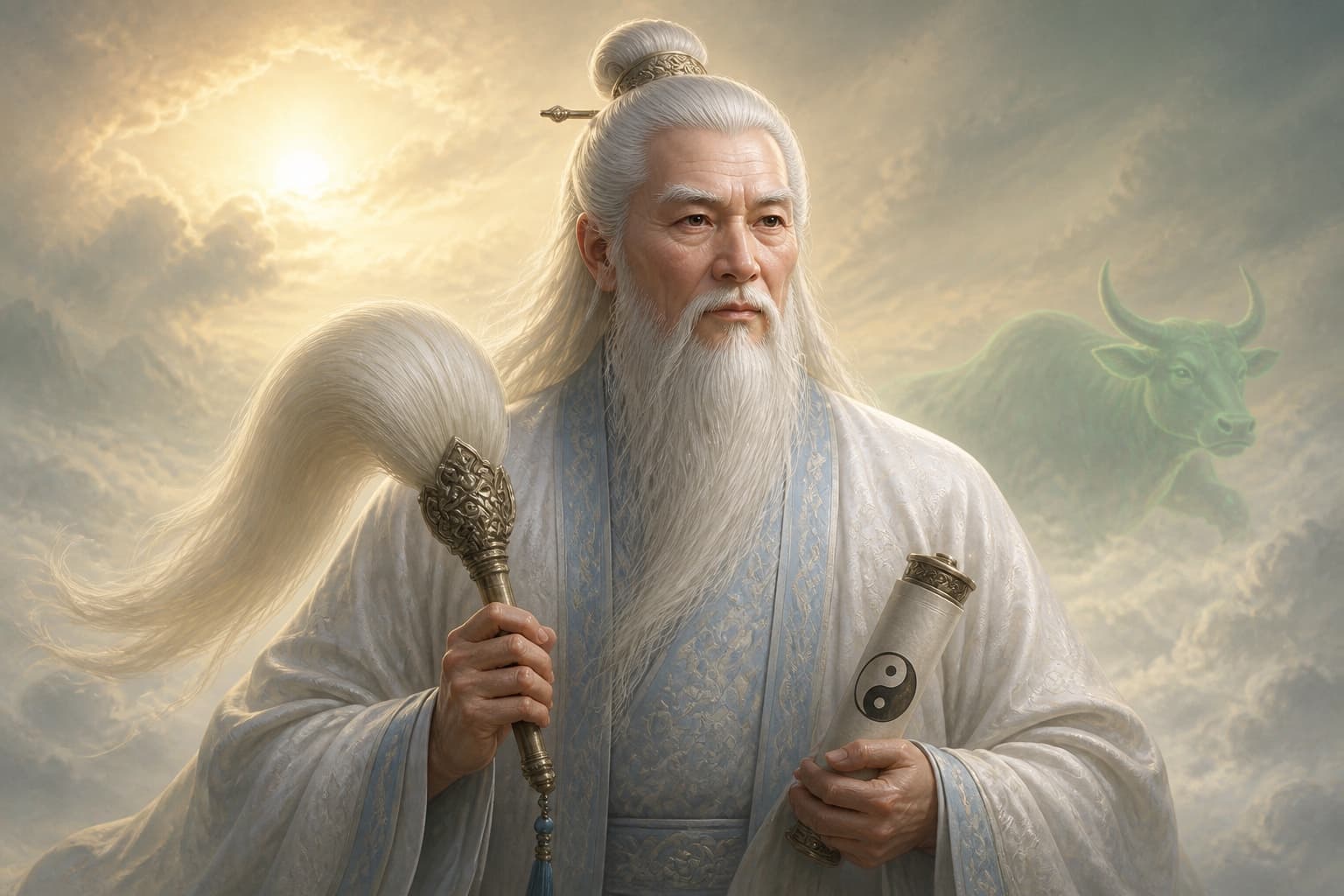
- TierSaintSect / factionRenjiaoTaiqing LaoziFirst of the Three Pure Ones · head of the Human Sect
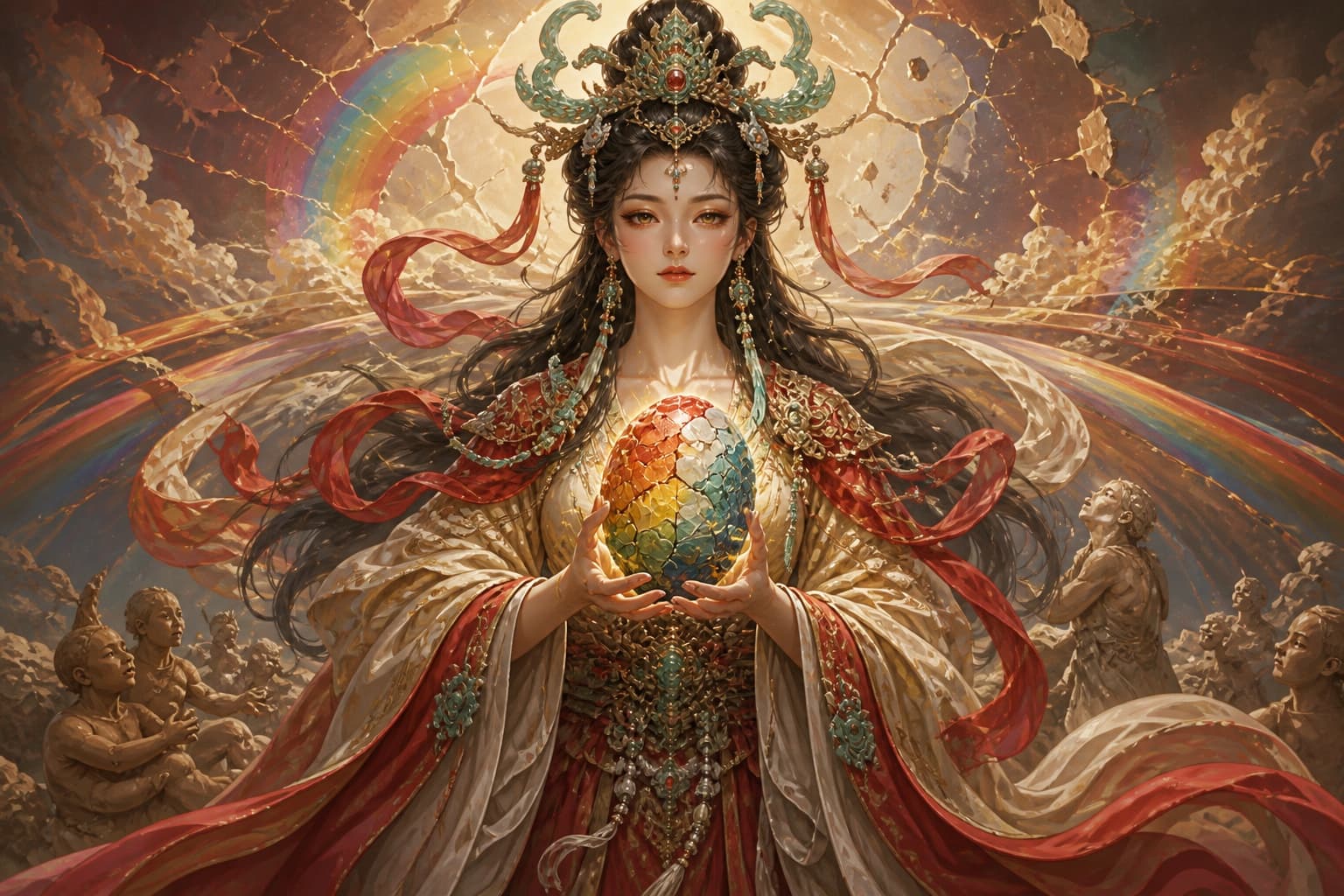
- TierSaintSect / factionWahuang Palace / close to the Yao clanNüwaMaker of humankind · mistress of Wahuang Palace
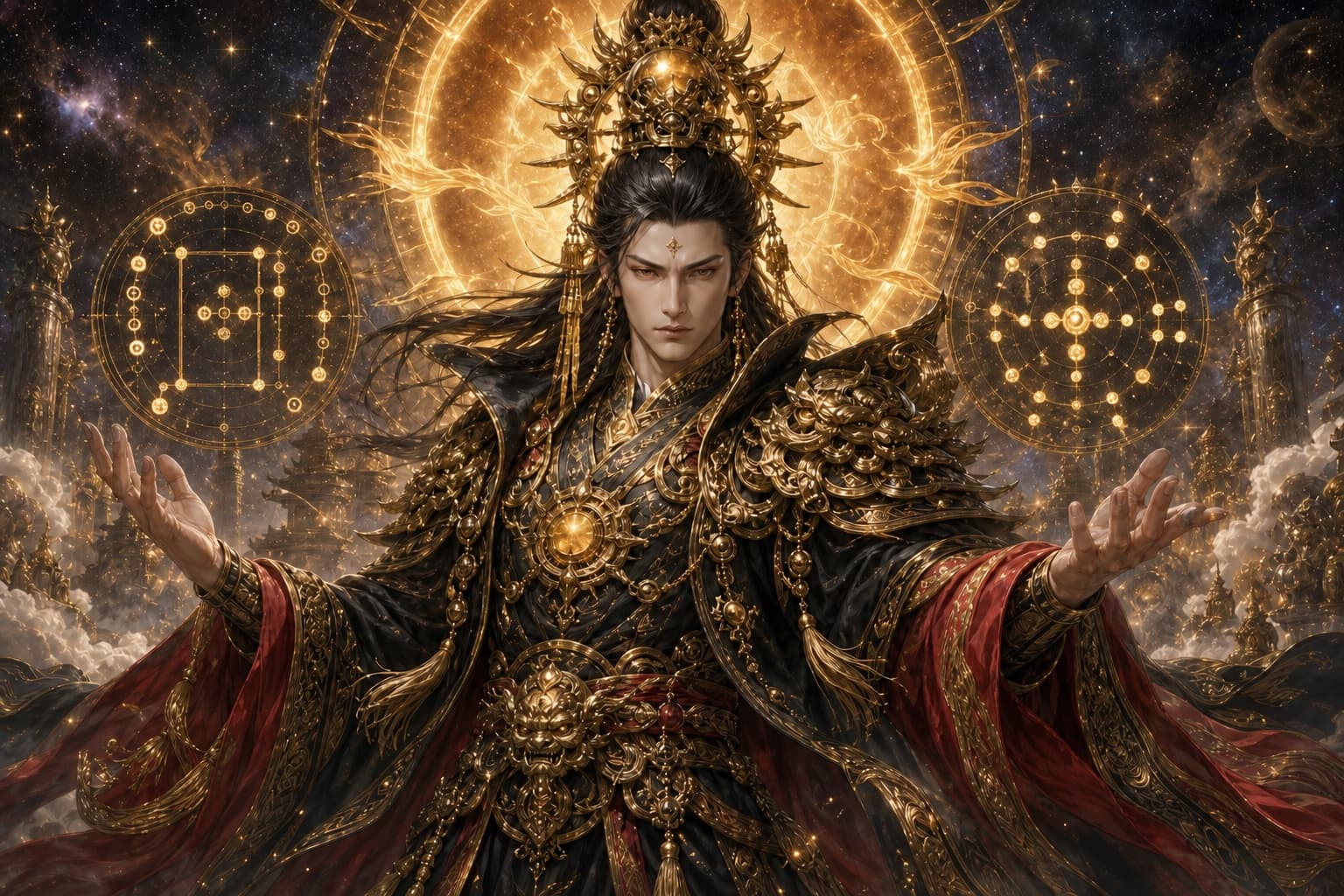
- TierQuasi-SaintSect / factionYao Heavenly CourtDijunHeavenly emperor of the Yao clan
- TierQuasi-Saint peakSect / factionYao Heavenly CourtDonghuang TaiyiWar god of the Yao clan
- TierSaintSect / factionWestern SectZhunti DaorenOne of the two saints of the West
- TierSaintSect / factionWestern SectJieyin DaorenOne of the two saints of the West
- TierSaint-level / Earthly Saint / Hunyuan Da LuoSect / factionWu clan → the underworldHoutuShe who became the six paths of rebirth
- TierGreat-Dao tier / Beyond Heaven’s WaySect / factionNonePanguHe who split heaven from earth
- TierQuasi-Saint peak / Hunyuan Da Luo / Saint-levelSect / factionModaoLuohouAncestor of the demonic path
- TierQuasi-SaintSect / factionNorthern sea / Yao Heavenly CourtKunpengLord of the northern sea · Yao preceptor
- TierQuasi-Saint peakSect / factionSea of blood / Asura SectMinghe LaozuLord of the sea of blood
- TierQuasi-SaintSect / factionIndependent / the earthbound immortal lineageZhenyuanziAncestor of the earthbound immortals
- TierDa Luo peak / Quasi-SaintSect / factionIndependentHongyun LaozuAt the centre of the quarrel over sainthood
- TierQuasi-SaintSect / factionYao clan / humankindFuxiBrother of Nüwa · Heavenly Sovereign of humankind
- TierQuasi-Saint / Da LuoSect / factionChanjiao, later the WestRandeng DaorenDeputy head of the Chan Sect
- TierDa Luo Golden Immortal, roughly / Great WitchSect / factionHuman hero / Great Witch of the Wu clanHou YiThe archer who shot down the suns
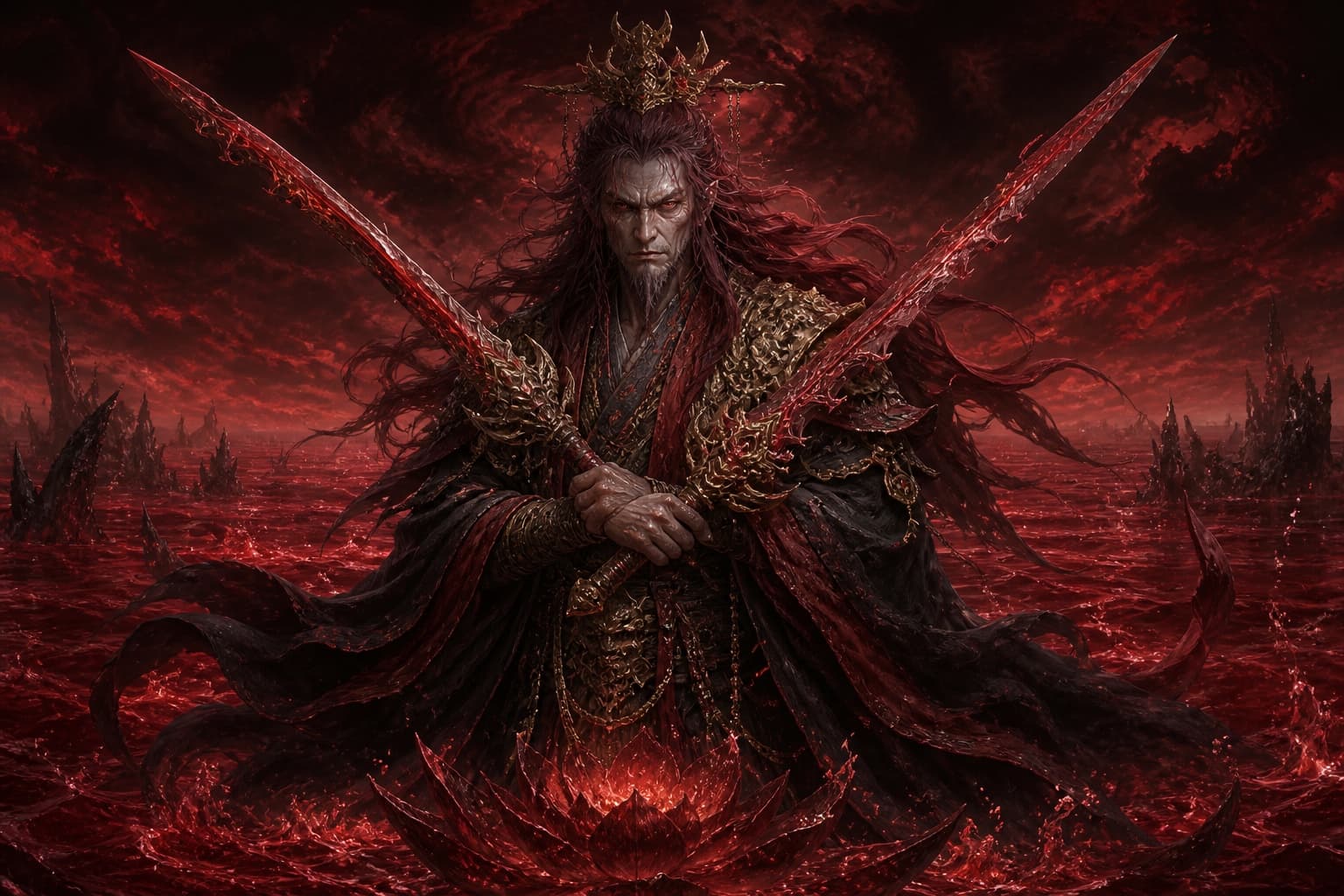
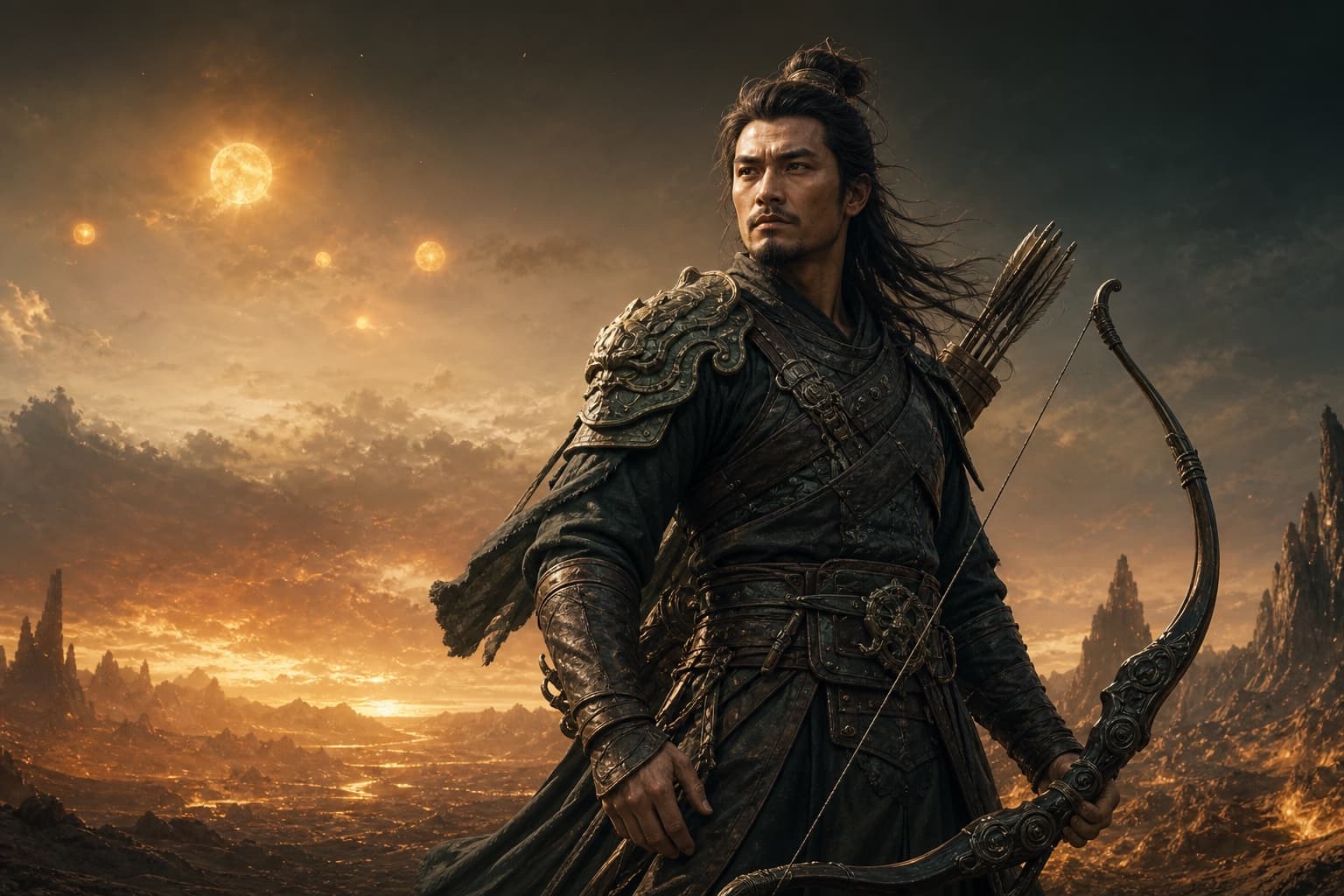
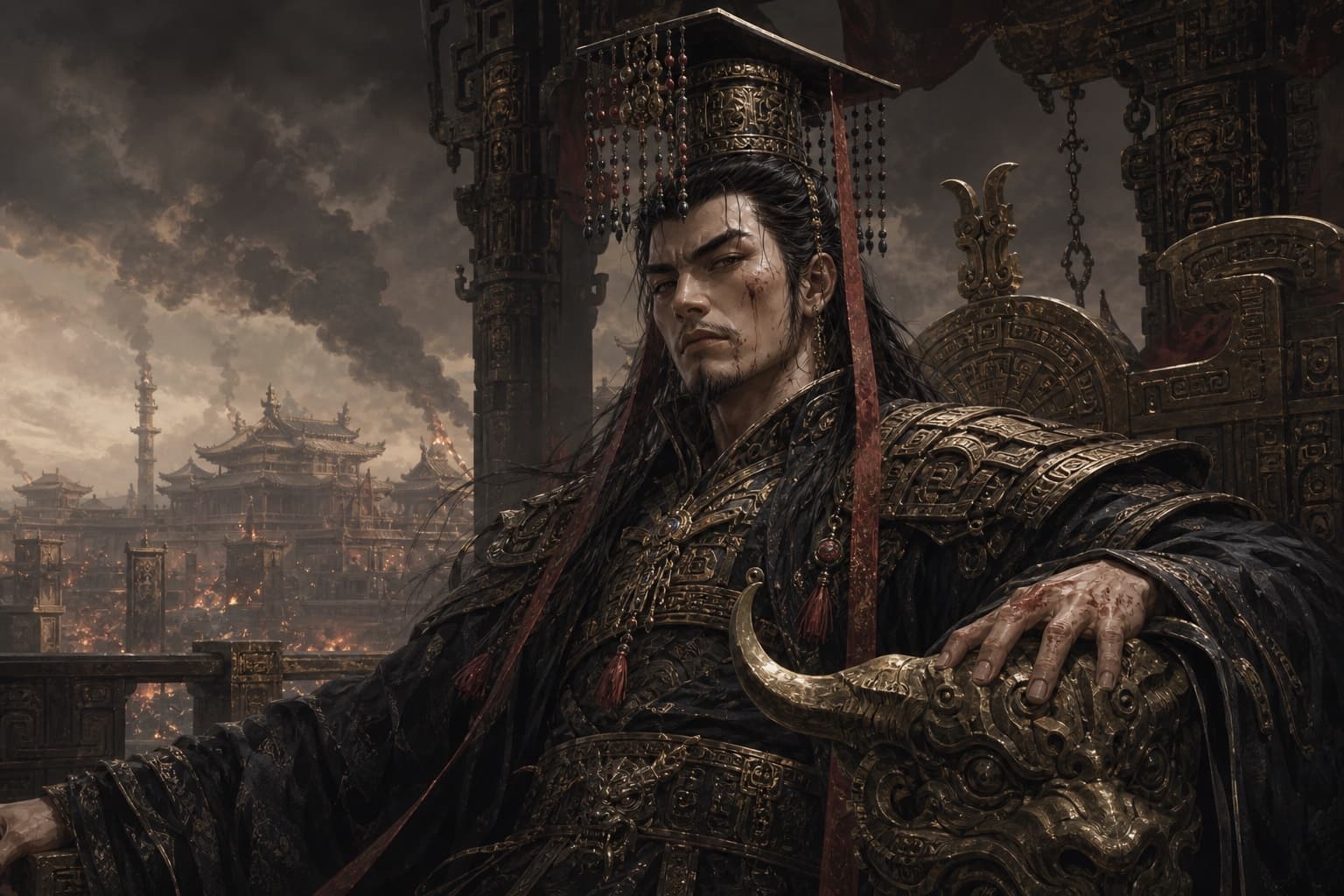
Di Xin
The story
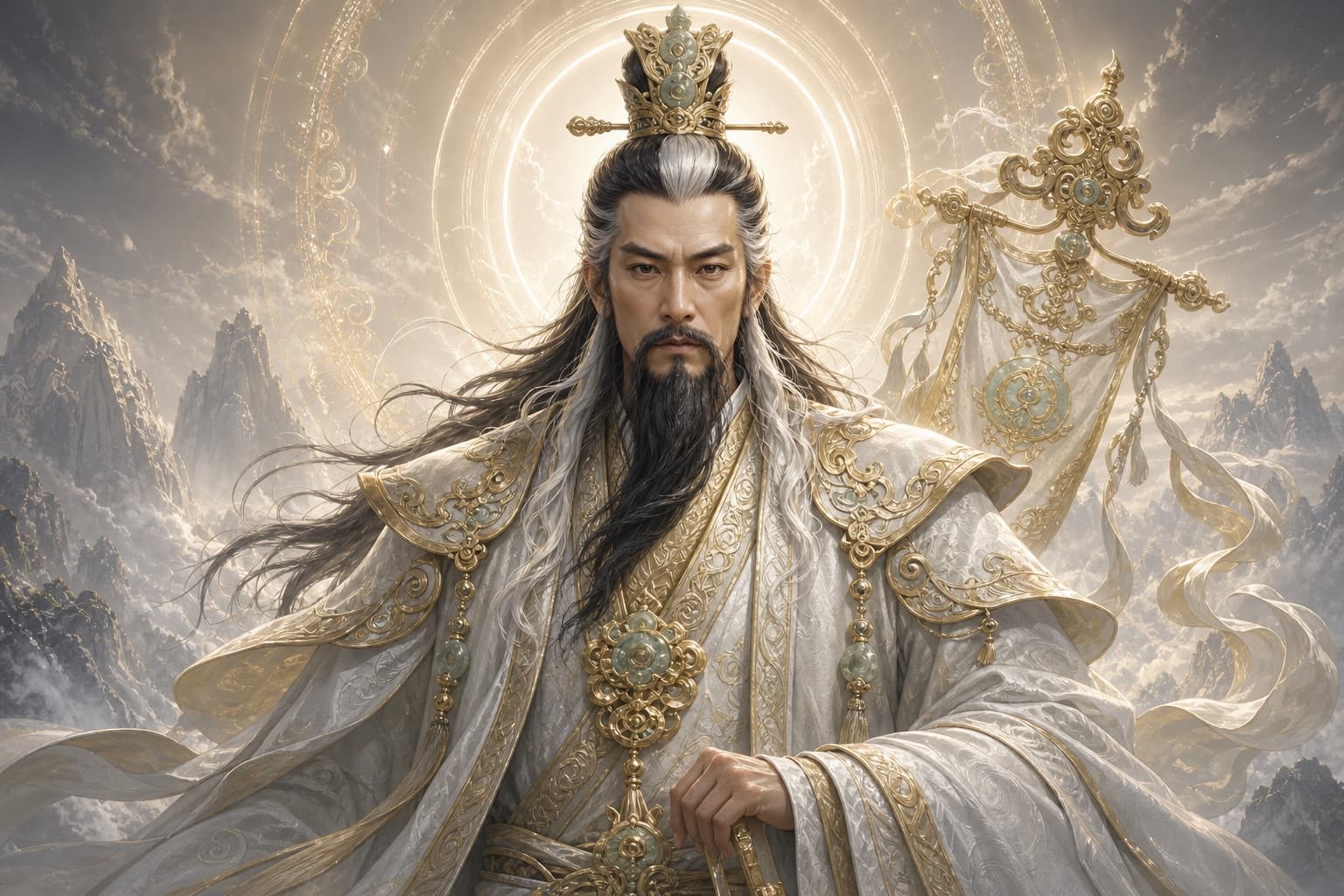
Di Xin inherited the great line of Shang. He was brave by nature and could fight a beast bare-handed, was quick of speech, widely read and retentive; at the beginning of his reign he had real dignity, and the lords of the four quarters still feared him.
On Nüwa’s feast day Di Xin led his officers to burn incense at her temple. The image of the goddess in the hall was of surpassing beauty, and on an impulse he called for brush and ink, wrote an insulting poem on the wall, and then had his carriage turned for home.
Nüwa, returning from her travels, saw the poem on the wall and was furious. She meant to punish him at once, but seeing that a term of fortune still shielded him and that she could not harm him yet, she called out the three demons of the tomb of Xuanyuan and told them to lead the king astray and hasten the appointed end of Shang’s mandate.
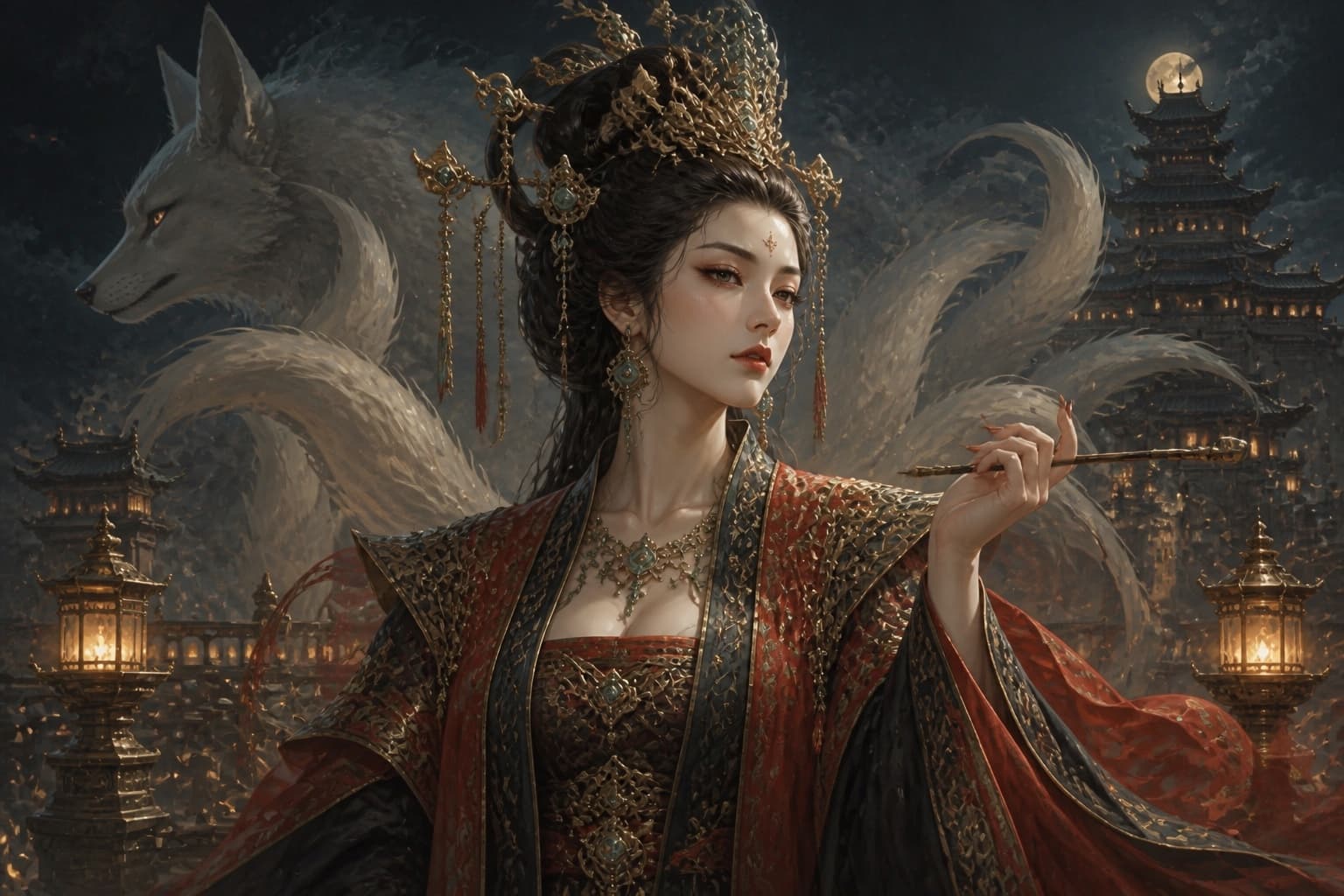
Su Hu, Marquis of Jizhou, was ordered to send a beauty as tribute. He first wrote a defiant poem on the gate of Chaoge, and only after Fei Zhong and others had reasoned with him did he give up his daughter Daji and send an escort with her to the capital. While the carriage lodged at a post station, the fox spirit of the tomb of Xuanyuan killed the true Daji, took her shape, and arrived at Chaoge with Su Hu’s carriage to enter the palace and receive the king’s favour.
From the time he had Daji, Di Xin drew away from his ministers and gave himself to pleasure. He ordered the Deer Terrace built, exhausting timber and earth on it, and instituted the roasting punishment, in which a bronze pillar was smeared with grease and hung over charcoal for officials who remonstrated; pools of wine and forests of meat were never out of the palace. The old minister Shang Rong was dismissed for speaking plainly and died by striking his head against the steps; the remonstrating officer Yang Ren had his eyes cut out for opposing the Deer Terrace.
Jiang Huanchu, Marquis of the East, and E Chongyu, Marquis of the South, both angered by the king’s cruelty, were lured to Chaoge and put to death; Chong Houhu, Marquis of the North, took the chance to frame Ji Chang, Earl of the West, and the king shut Ji Chang up at Youli for seven years. Ji Chang’s eldest son Bo Yikao came to Chaoge to save him, offended Daji, and was killed and made into a broth that was given to Ji Chang to eat.
Queen Jiang was framed and killed for remonstrating with the king; Bi Gan had his heart cut out for speaking plainly; Weizi left carrying the vessels of the ancestral temple; Jizi feigned madness and was made a slave. Huang Feihu’s wife, Lady Jia, was driven to her death from the Star-Plucking Tower at a banquet by Daji, and when his sister Consort Huang came to the palace to demand an answer, the king threw her from the tower with his own hands, and Huang Feihu broke out of Chaoge in his grief and rage. Loyal men were condemned or fled one after another, and few were left at court who dared speak.
Wen Zhong campaigned abroad for years, and though he set the court briefly in order on his return he could not stop the decline; he then went west and died at Jueleng Ridge, and Shang lost its pillar. The king sent Yin Pobai, Lei Kai and others against Western Qi with troops, and both were beaten in turn; he set Kong Xuan to hold Jinji Ridge and his generals to hold the five passes to slow the Zhou advance, and still could not stop the allied army. Report after report of defeat came to Chaoge, and Di Xin did not change his ways; the court fell apart.
With Jiang Shang beside him, Ji Fa gathered the lords and raised an army against King Zhou; the Shang armies were beaten again and again and fell back step by step. At Muye the front rank turned its weapons about, the flatterer Elai died before the lines, Fei Lian fled abroad, the Shang army broke completely, and Di Xin withdrew in haste to Chaoge.
Di Xin climbed the Deer Terrace, put on robes covered with pearl and jade, and set fire to himself; the flames rose and reddened half the night sky, and Shang was at an end. Jiang Shang entered Chaoge with the Zhou army, took the palaces and treasuries in hand, and the old government of Shang was finished.
Relationship story
Select a label on one of the lines to read when the two met, what happened next, and how it ended.
Selecting a portrait still opens that entry directly.