Complete index · 96
- Sun Wukong
- Hongjun Daozu
- Yuanshi Tianzun
- Tongtian Jiaozhu
- Taiqing Laozi
- Nüwa
- Dijun
- Donghuang Taiyi
- Zhunti Daoren
- Jieyin Daoren
- Houtu
- Pangu
- Luohou
- Kunpeng
- Minghe Laozu
- Zhenyuanzi
- Hongyun Laozu
- Fuxi
- Randeng Daoren
- Hou Yi
- Chang’e
- Dijiang
- Zhujiuyin
- Jumang
- Zhurong
- Gonggong
- Rushou
- Xuanming
- Qiangliang
- Xizi
- Tianwu
- Shebishi
- Guangchengzi
- Chijingzi
- Taiyi Zhenren
- Yuding Zhenren
- Huanglong Zhenren
- Wenshu Guangfa Tianzun
- Puxian Zhenren
- Cihang Daoren
- Juliusun
- Daoxing Tianzun
- Qingxu Daode Zhenjun
- Lingbao Dafashi
- Xuandu Dafashi
- Nanji Xianweng
- Yunzhongzi
- Yang Jian
- Nezha
- Duobao Daoren
- Jinling Shengmu
- Wudang Shengmu
- Guiling Shengmu
- Zhao Gongming
- Yunxiao
- Qiongxiao
- Bixiao
- Jiang Ziya
- Shen Gongbao
- Wen Zhong
- Di Xin
- Su Daji
- Ji Chang
- Ji Fa
- Huang Feihu
- Lei Zhenzi
- Kong Xuan
- Luya Daoren
- Tu Xingsun
- Deng Chanyu
- Jinzha
- Muzha
- Huang Tianhua
- Rulai
- Puti Zushi
- Guanyin
- Niu Mowang
- Zhu Bajie
- Sha Seng
- Four Heavenly Kings
- Li Jing
- Tang Sanzang
- Jade Emperor
- Queen Mother of the West
- Taibai Jinxing
- Bailongma
- Ao Guang
- Princess Iron Fan
- Red Boy
- Six-Eared Macaque
- Golden Horn and Silver Horn
- Yellow Brow
- Golden-Winged Great Peng
- Maitreya
- White Bone Demon
- Yellow Wind Demon
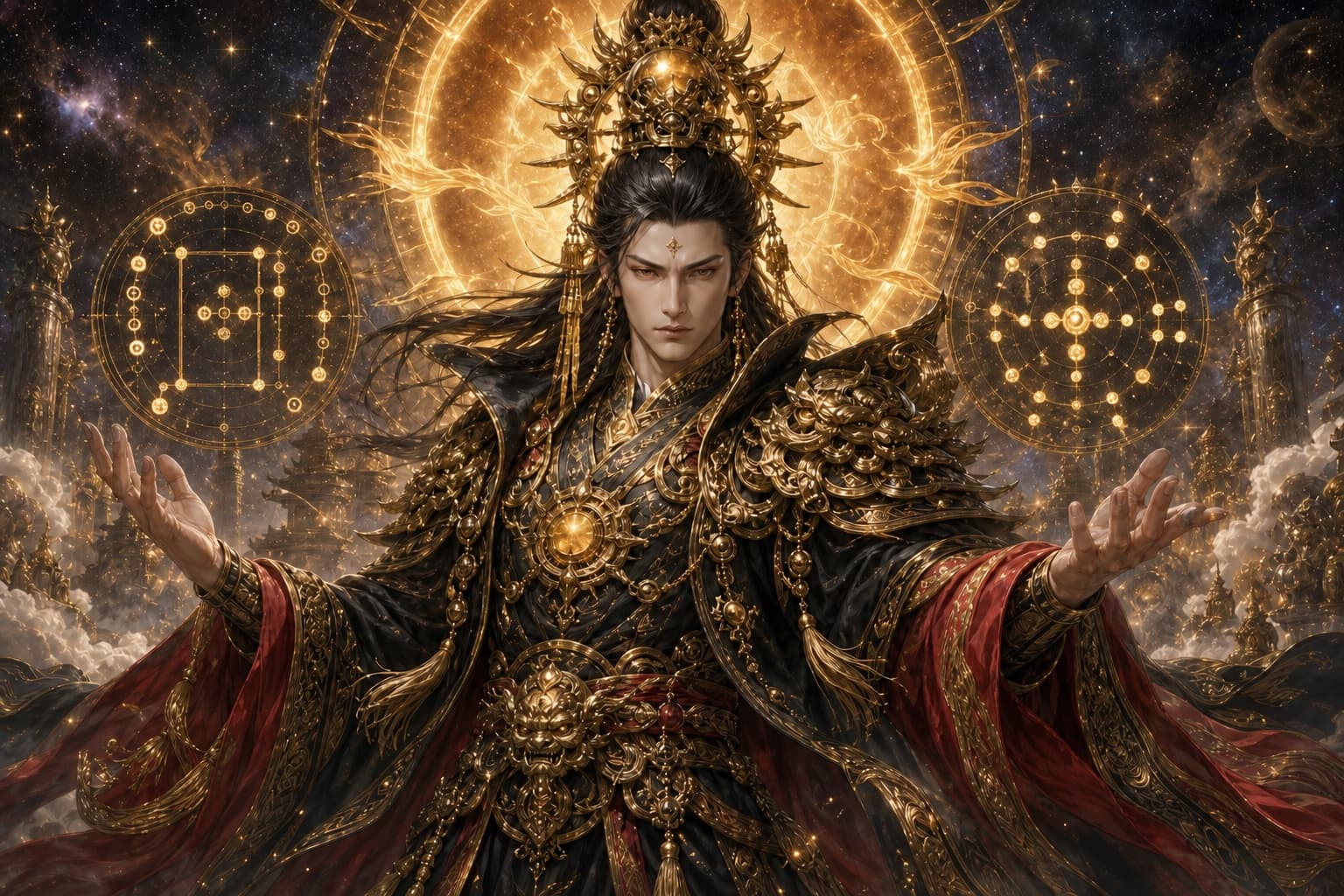
- TierDa Luo Golden Immortal, roughlySect / factionMount Huaguo / Buddhist attainmentSun WukongGreat Sage Equal to Heaven · Victorious Fighting Buddha
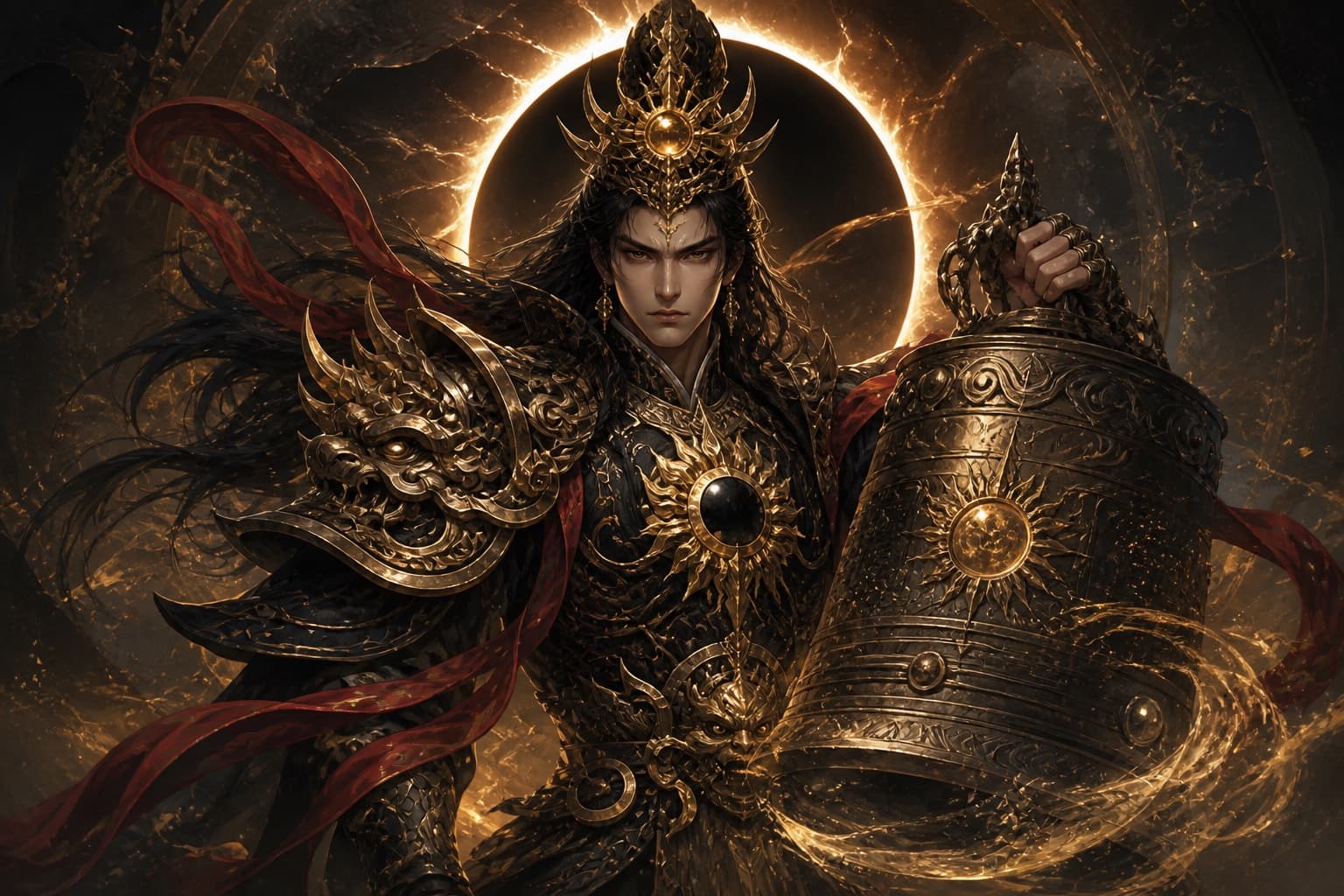
- TierHeaven’s-Way tier / Merged with the DaoSect / factionXuanmenHongjun DaozuAncestor of the Mystic Gate · merged himself into Heaven’s Way
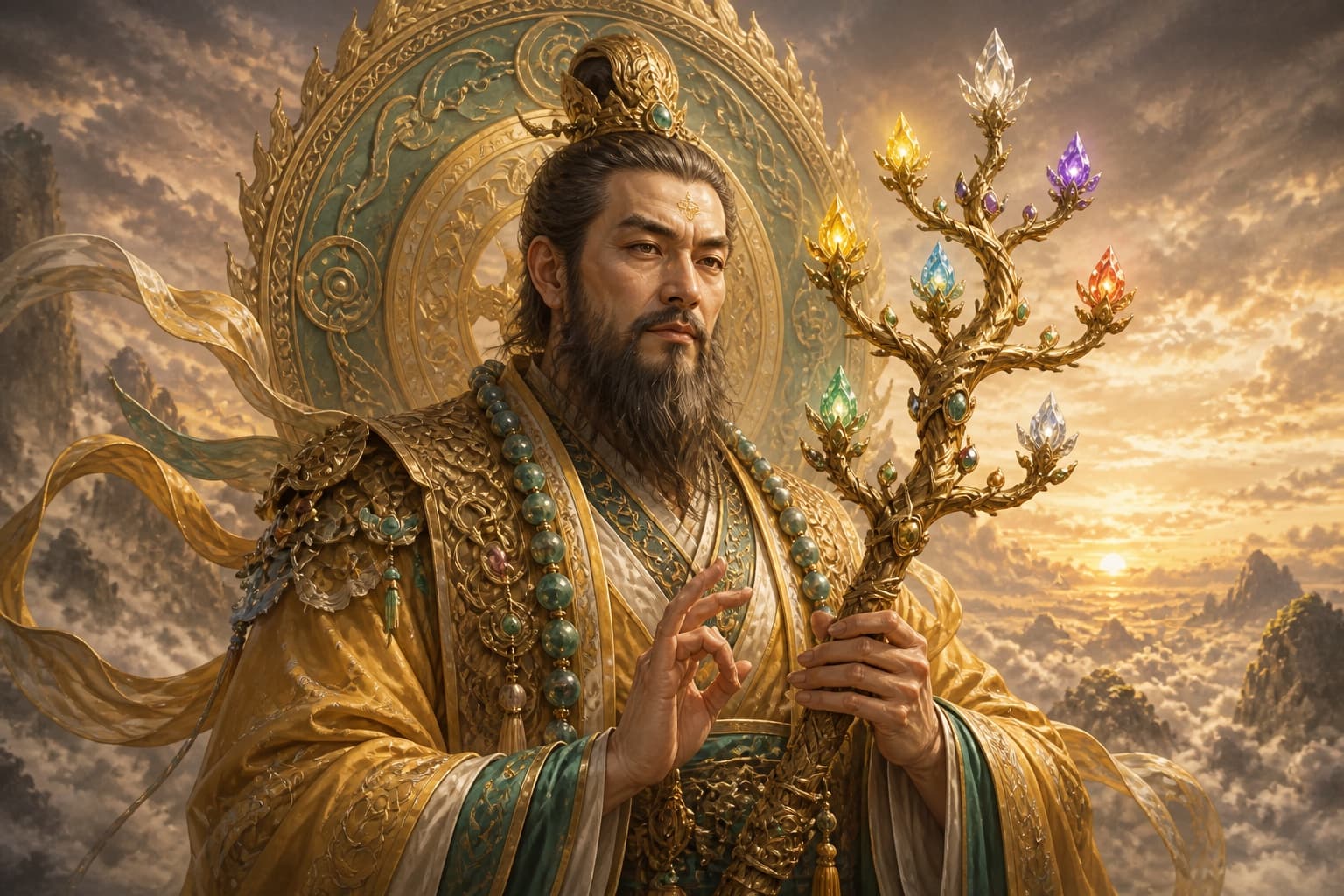
- TierSaintSect / factionChanjiaoYuanshi TianzunSecond of the Three Pure Ones · head of the Chan Sect
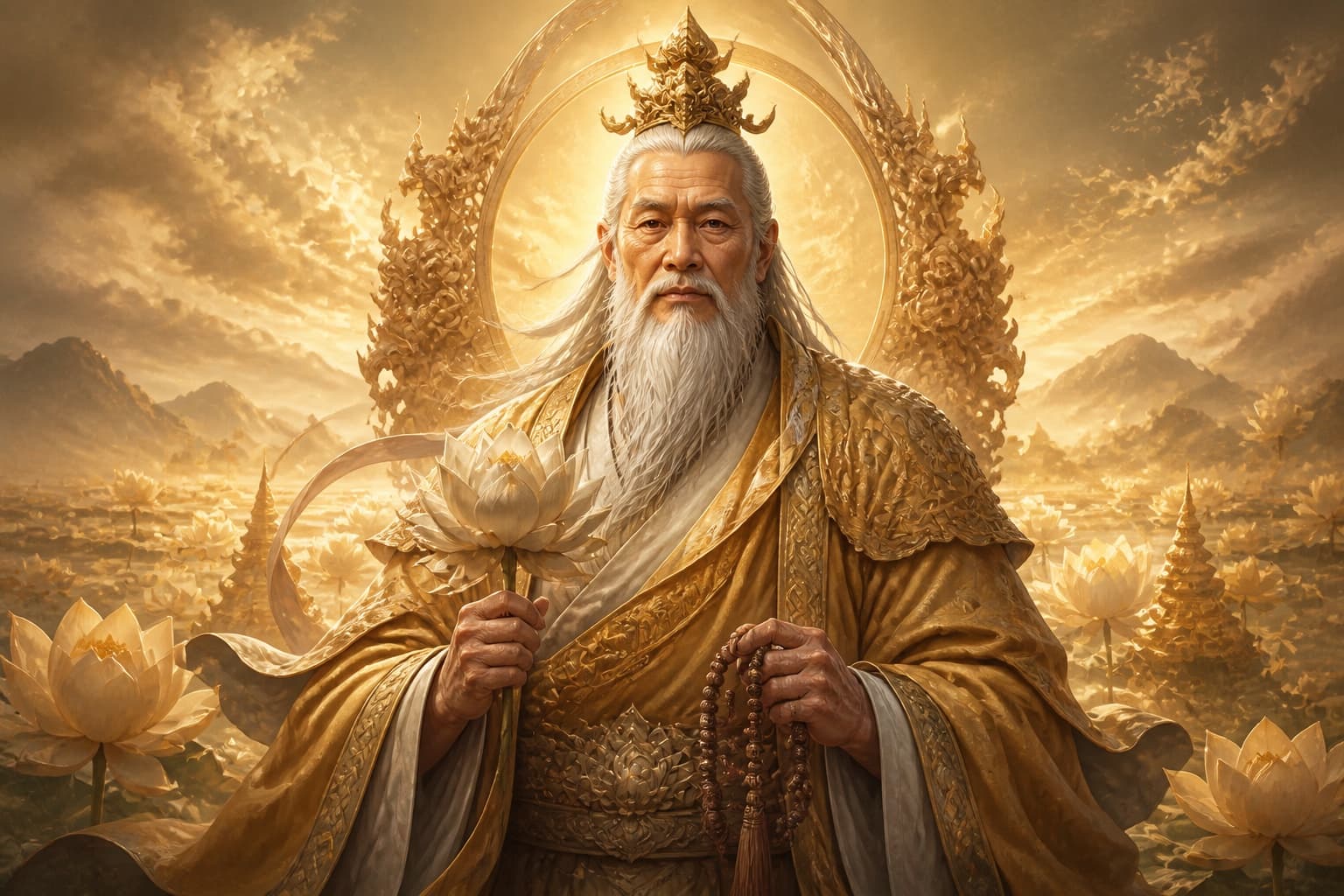
- TierSaintSect / factionJiejiaoTongtian JiaozhuThird of the Three Pure Ones · head of the Jie Sect
- TierSaintSect / factionRenjiaoTaiqing LaoziFirst of the Three Pure Ones · head of the Human Sect
- TierSaintSect / factionWahuang Palace / close to the Yao clanNüwaMaker of humankind · mistress of Wahuang Palace
- TierQuasi-SaintSect / factionYao Heavenly CourtDijunHeavenly emperor of the Yao clan
- TierQuasi-Saint peakSect / factionYao Heavenly CourtDonghuang TaiyiWar god of the Yao clan
- TierSaintSect / factionWestern SectZhunti DaorenOne of the two saints of the West
- TierSaintSect / factionWestern SectJieyin DaorenOne of the two saints of the West
- TierSaint-level / Earthly Saint / Hunyuan Da LuoSect / factionWu clan → the underworldHoutuShe who became the six paths of rebirth
- TierGreat-Dao tier / Beyond Heaven’s WaySect / factionNonePanguHe who split heaven from earth
- TierQuasi-Saint peak / Hunyuan Da Luo / Saint-levelSect / factionModaoLuohouAncestor of the demonic path
- TierQuasi-SaintSect / factionNorthern sea / Yao Heavenly CourtKunpengLord of the northern sea · Yao preceptor
- TierQuasi-Saint peakSect / factionSea of blood / Asura SectMinghe LaozuLord of the sea of blood
- TierQuasi-SaintSect / factionIndependent / the earthbound immortal lineageZhenyuanziAncestor of the earthbound immortals
- TierDa Luo peak / Quasi-SaintSect / factionIndependentHongyun LaozuAt the centre of the quarrel over sainthood
- TierQuasi-SaintSect / factionYao clan / humankindFuxiBrother of Nüwa · Heavenly Sovereign of humankind
- TierQuasi-Saint / Da LuoSect / factionChanjiao, later the WestRandeng DaorenDeputy head of the Chan Sect
- TierDa Luo Golden Immortal, roughly / Great WitchSect / factionHuman hero / Great Witch of the Wu clanHou YiThe archer who shot down the suns
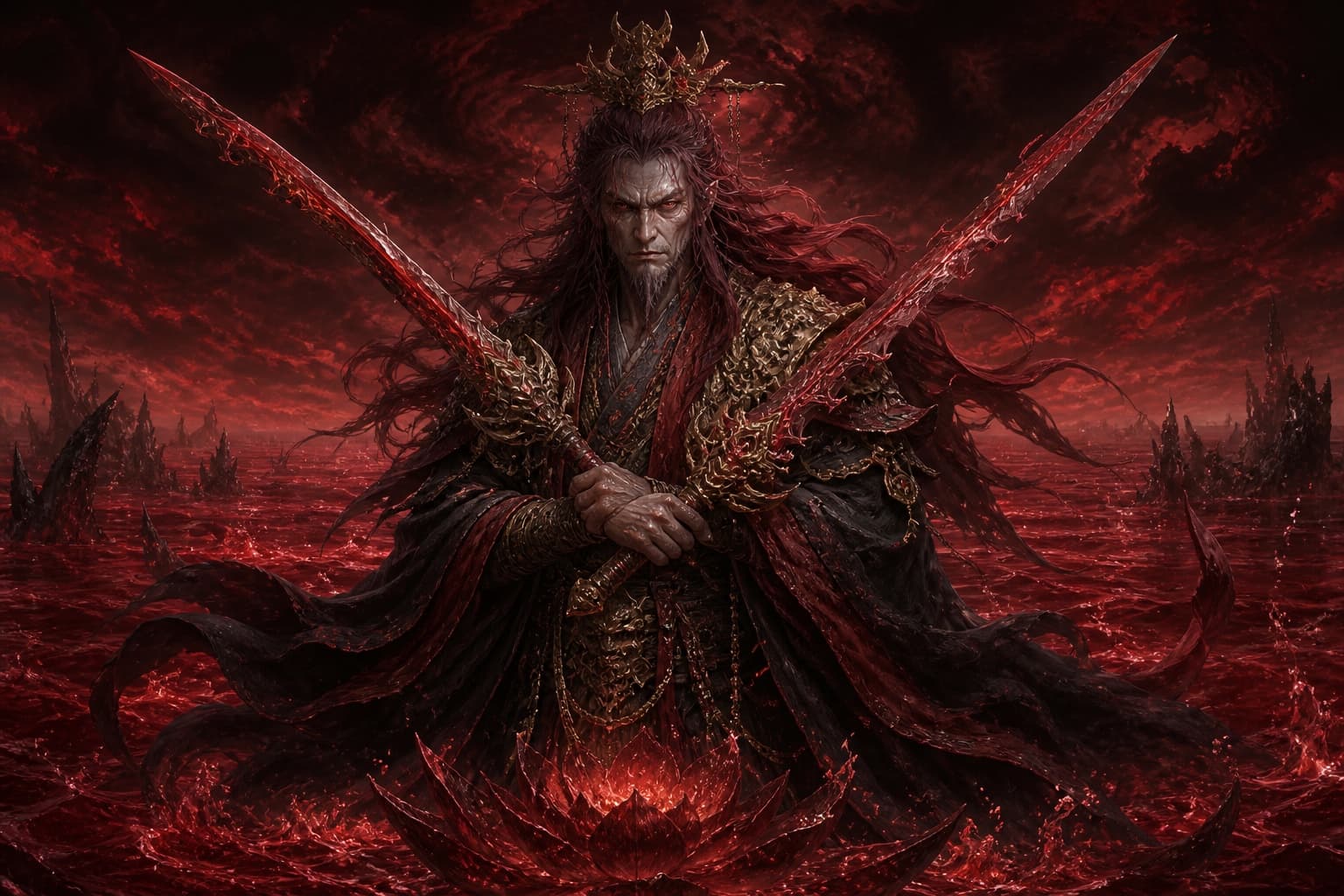
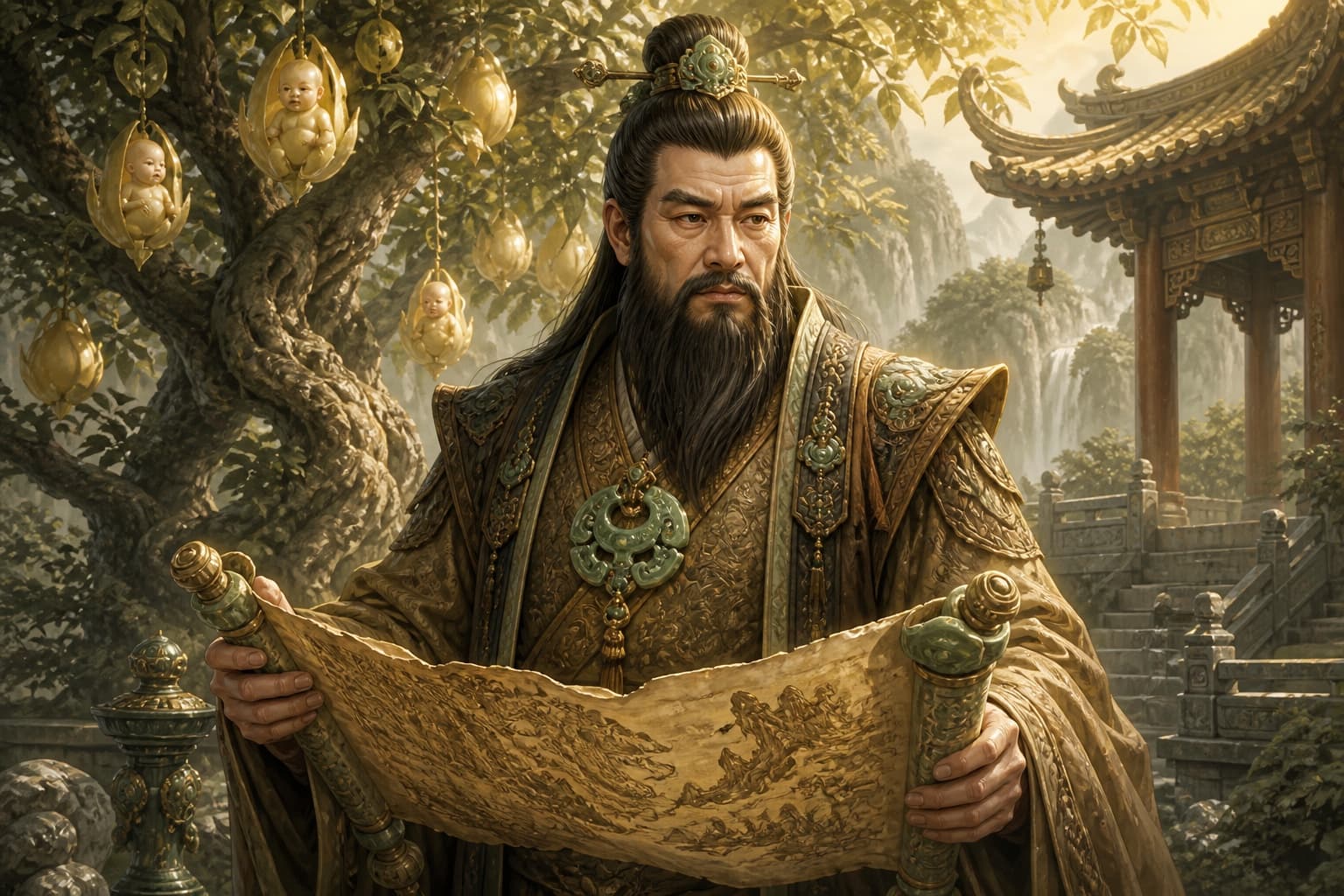
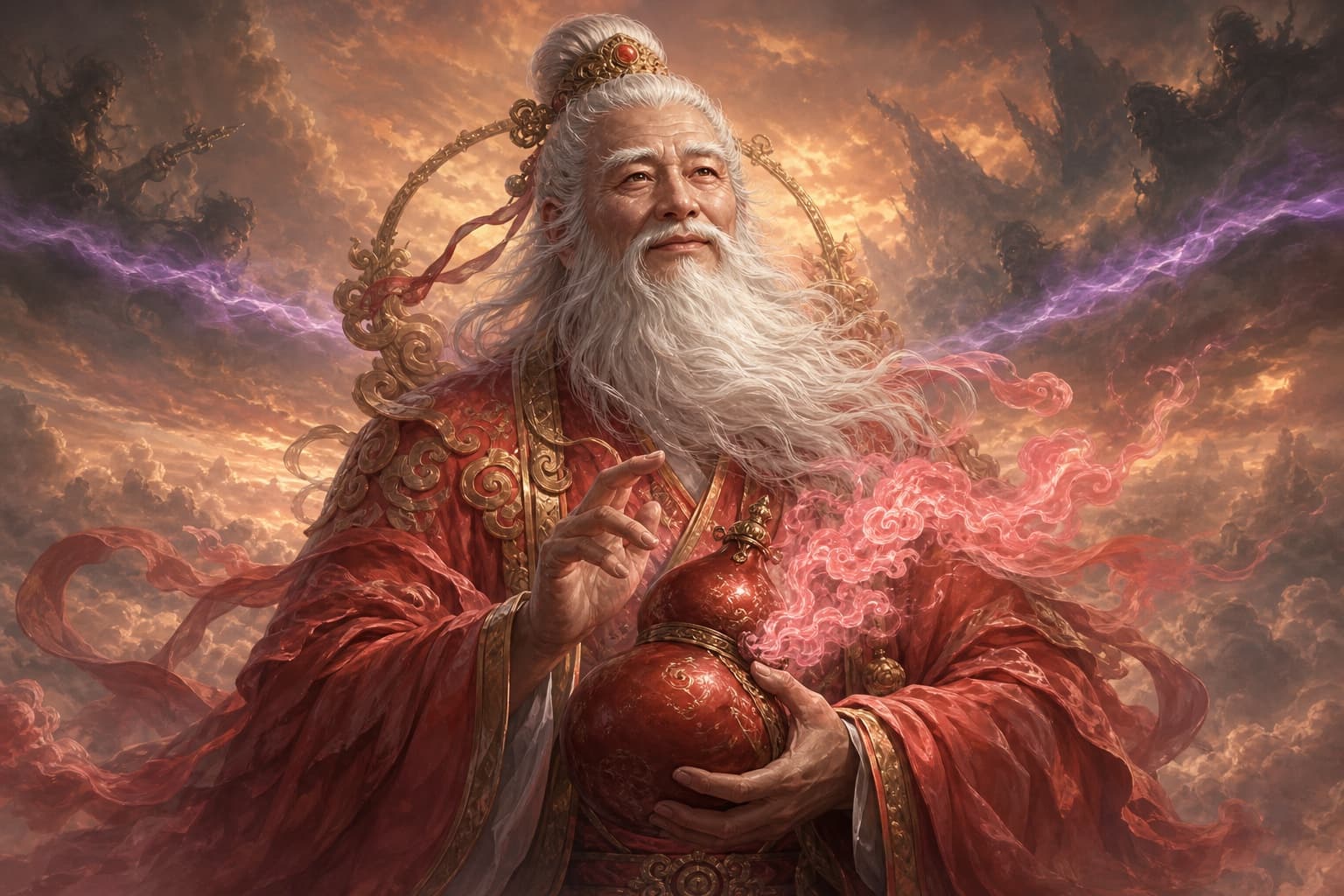
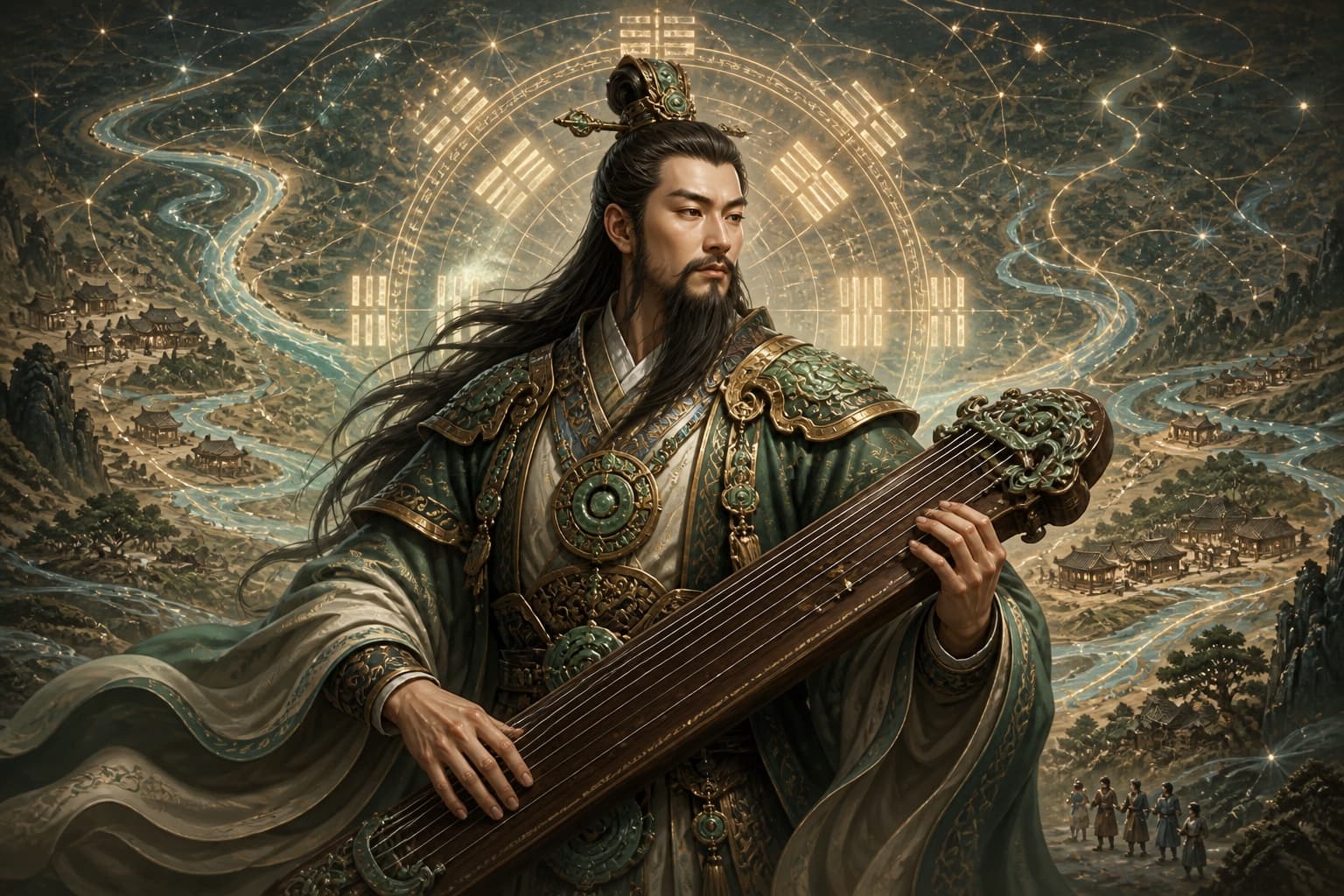
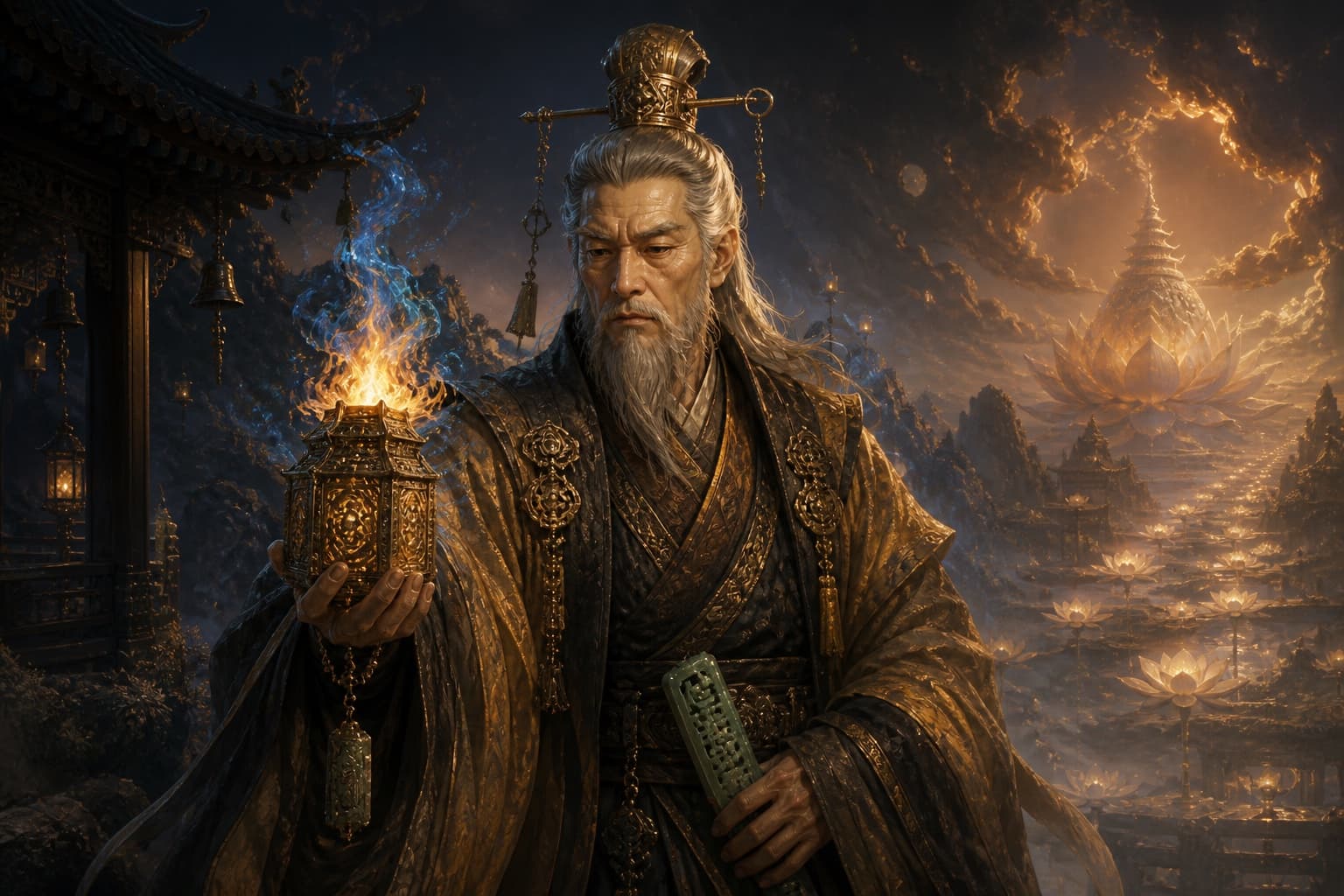
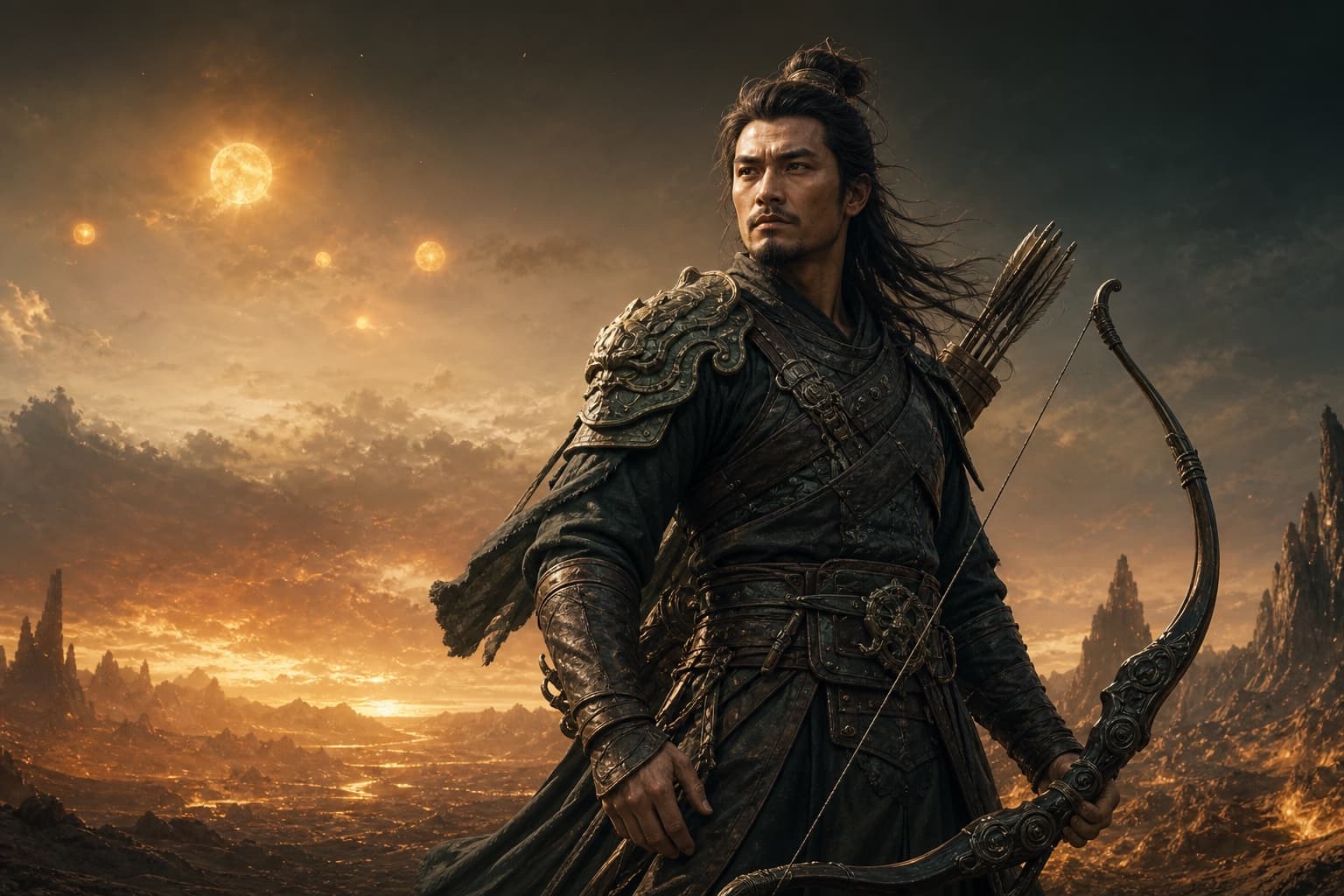
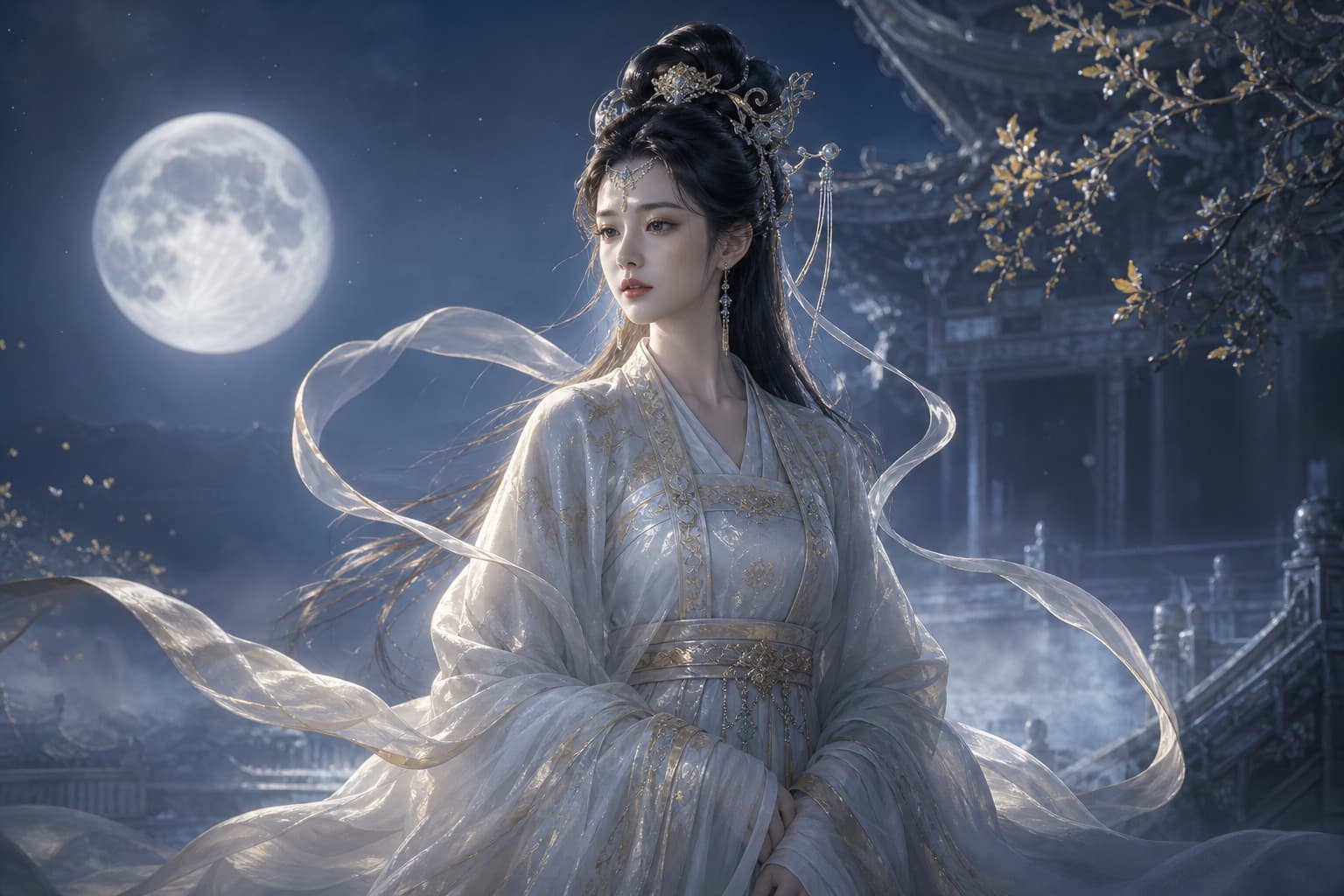
Chang’e
The story
Chang’e’s name was originally Heng’e, and she was Hou Yi’s wife. Hou Yi’s fame for shooting down the suns and clearing away the scourges spread everywhere, and yet it was a single elixir in his own house that gave rise to the tangled tradition of the flight to the moon.
One thread, from the Huainanzi, says Hou Yi travelled west to Mount Kunlun, crossed the shifting sands and the weak water, and after great hardship was received by the Queen Mother of the West and asked her for the elixir of deathlessness, hoping for long life.
The Queen Mother brought out the elixir and gave it to him, telling him that if one person ate it alone that person would rise at once and become an immortal, but that if two shared it both would live long without ageing and stay in the human world — two quite different endings.
Hou Yi carried the elixir home, and before he had discussed the sharing of it with his wife he hid it in a brocade box in an inner room and went on hunting and patrolling as before, saying nothing more about it.
A second and widely told thread says that Hou Yi’s disciple Feng Meng learned where the elixir was, and while his master was away broke into the house with a weapon and demanded that Chang’e hand it over.
In her extremity, Chang’e turned, opened the box and swallowed the whole of it. The scent of the elixir filled the room, and Feng Meng, giving chase with his weapon, was too late; he saw her body grow light before his eyes.
An older version has no Feng Meng and no demand at all: it says only that Chang’e opened the box and took the elixir herself while Hou Yi was away, and is vague about why.
The elixir took hold. Chang’e’s feet left the ground, she passed out through the window with her sleeves flying, and rose slowly into the night sky, her figure growing distant, with only the scent of the elixir left in the courtyard.
Hou Yi came home from the hunt and could not find her; there were only her footprints in the yard. Looking up at the moon he saw a figure faintly moving within its disc, and knew his wife had gone to the moon.
Hou Yi raised his bow and shot upward, meaning to bring her back, but a great wind rose and held him below the clouds; struggle as he might, he could not go one step further.
Chang’e flew on towards the moon, through cloud and mist, and came at last into a cold palace within it, cassia trees planted all round and a chill in the air. She has lived there ever since.
Later ages called the palace in the moon the Guanghan Palace: high and cold, with no summer in any season, only the scent of cassia drifting, while she looks out night after night at the lamps of the human world.
An older fragmentary tradition says that after entering the moon Chang’e’s body changed and she became a toad crouched in the moon’s disc; later tellers have mostly dropped this.
Knowing his wife was beyond him in the sky, Hou Yi could do nothing with his bow. He set out a table in the courtyard with the melons, fruits and cakes she had liked, and bowed towards the moon.
On every night of the full moon afterwards he set out the table and made the same distant offering, and over time the custom spread through the human world, becoming one of the origins of the mid-autumn rite of worshipping the moon.
Beneath the cassia tree in the Guanghan Palace there is also a jade hare, which pounds elixir with a pestle all day and keeps Chang’e company; this figure was only later joined to the story of her flight.
Beside the cassia stands a man who fells it year after year: Wu Gang, punished for a fault committed while studying immortality by being set to cut down the tree, which closes as fast as he cuts and can never be brought down.
One night Hou Yi came back to an empty house and found the box that had held the elixir open and nothing in the courtyard but moonlight. He searched the house and the hills, and when he looked up again there was a solitary figure in the moon.
In some modern Honghuang novels the Heavenly Court is rebuilt after the Wu–Yao war, and Chang’e is placed as the Star Lord of the Lunar Star, still living in the Guanghan Palace and rising and setting with the moon.
A few of those novels also make her a daughter of Xihe, living with her mother in the Valley of Hot Water as a girl before moving to the moon palace. That parentage appears only in some novels; other Honghuang stories do not use it.
Other Honghuang novels keep her as Hou Yi’s wife: the elixir goes down, and woman and bow are parted for good, and she only looks out from the gate of the Guanghan Palace at the world below, with no connection to Xihe and the golden crows.
A few novels write a sequel to the old bond, letting Hou Yi climb to the moon palace after ten thousand years so that the two meet beneath the cassia tree, only to be parted again a moment later by the codes of heaven and by the turning moon. These sequels too belong only to particular novels.
Relationship map
Relationship story
Select a label on one of the lines to read when the two met, what happened next, and how it ended.
Selecting a portrait still opens that entry directly.