Complete index · 96
- Sun Wukong
- Hongjun Daozu
- Yuanshi Tianzun
- Tongtian Jiaozhu
- Taiqing Laozi
- Nüwa
- Dijun
- Donghuang Taiyi
- Zhunti Daoren
- Jieyin Daoren
- Houtu
- Pangu
- Luohou
- Kunpeng
- Minghe Laozu
- Zhenyuanzi
- Hongyun Laozu
- Fuxi
- Randeng Daoren
- Hou Yi
- Chang’e
- Dijiang
- Zhujiuyin
- Jumang
- Zhurong
- Gonggong
- Rushou
- Xuanming
- Qiangliang
- Xizi
- Tianwu
- Shebishi
- Guangchengzi
- Chijingzi
- Taiyi Zhenren
- Yuding Zhenren
- Huanglong Zhenren
- Wenshu Guangfa Tianzun
- Puxian Zhenren
- Cihang Daoren
- Juliusun
- Daoxing Tianzun
- Qingxu Daode Zhenjun
- Lingbao Dafashi
- Xuandu Dafashi
- Nanji Xianweng
- Yunzhongzi
- Yang Jian
- Nezha
- Duobao Daoren
- Jinling Shengmu
- Wudang Shengmu
- Guiling Shengmu
- Zhao Gongming
- Yunxiao
- Qiongxiao
- Bixiao
- Jiang Ziya
- Shen Gongbao
- Wen Zhong
- Di Xin
- Su Daji
- Ji Chang
- Ji Fa
- Huang Feihu
- Lei Zhenzi
- Kong Xuan
- Luya Daoren
- Tu Xingsun
- Deng Chanyu
- Jinzha
- Muzha
- Huang Tianhua
- Rulai
- Puti Zushi
- Guanyin
- Niu Mowang
- Zhu Bajie
- Sha Seng
- Four Heavenly Kings
- Li Jing
- Tang Sanzang
- Jade Emperor
- Queen Mother of the West
- Taibai Jinxing
- Bailongma
- Ao Guang
- Princess Iron Fan
- Red Boy
- Six-Eared Macaque
- Golden Horn and Silver Horn
- Yellow Brow
- Golden-Winged Great Peng
- Maitreya
- White Bone Demon
- Yellow Wind Demon
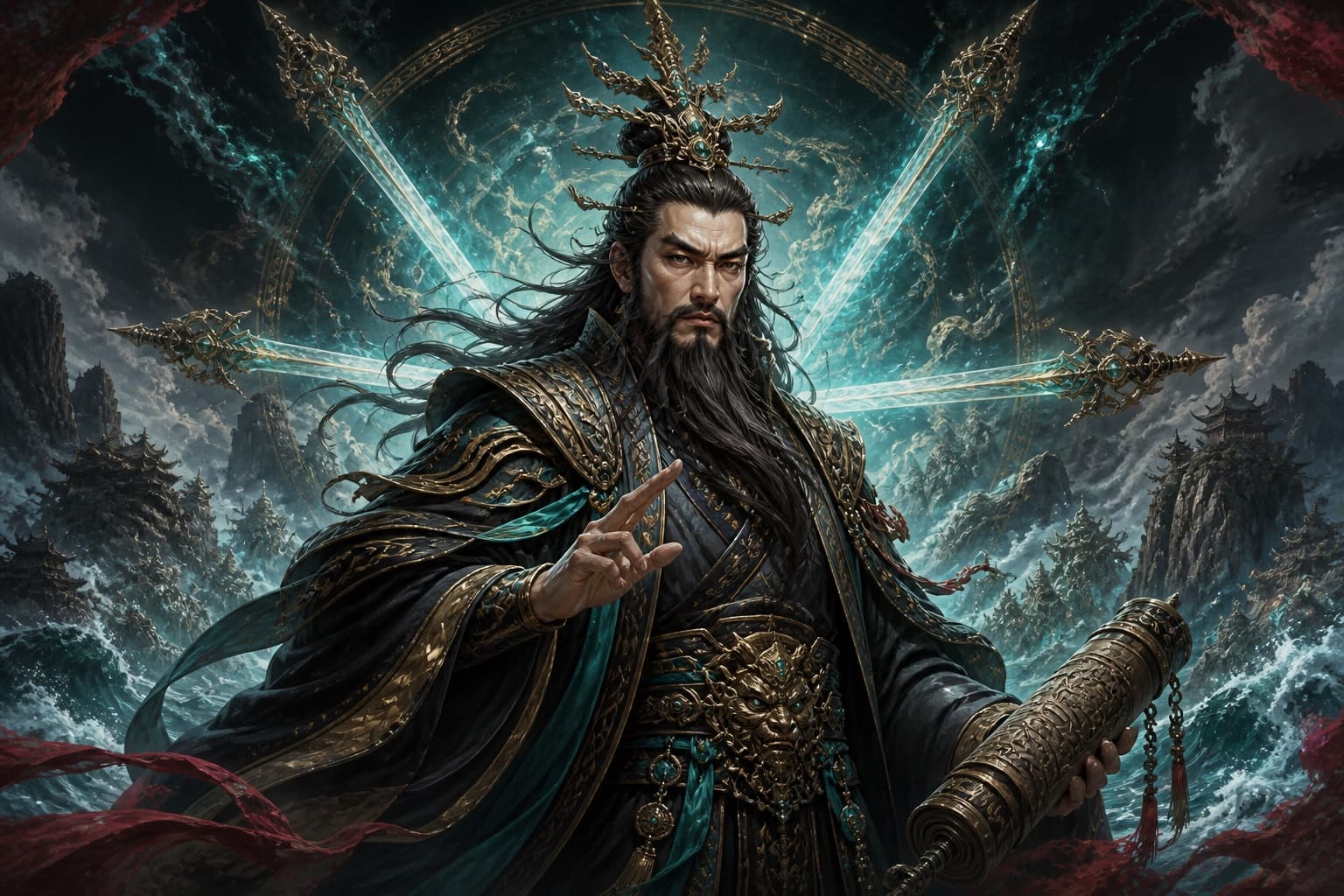
- TierDa Luo Golden Immortal, roughlySect / factionMount Huaguo / Buddhist attainmentSun WukongGreat Sage Equal to Heaven · Victorious Fighting Buddha
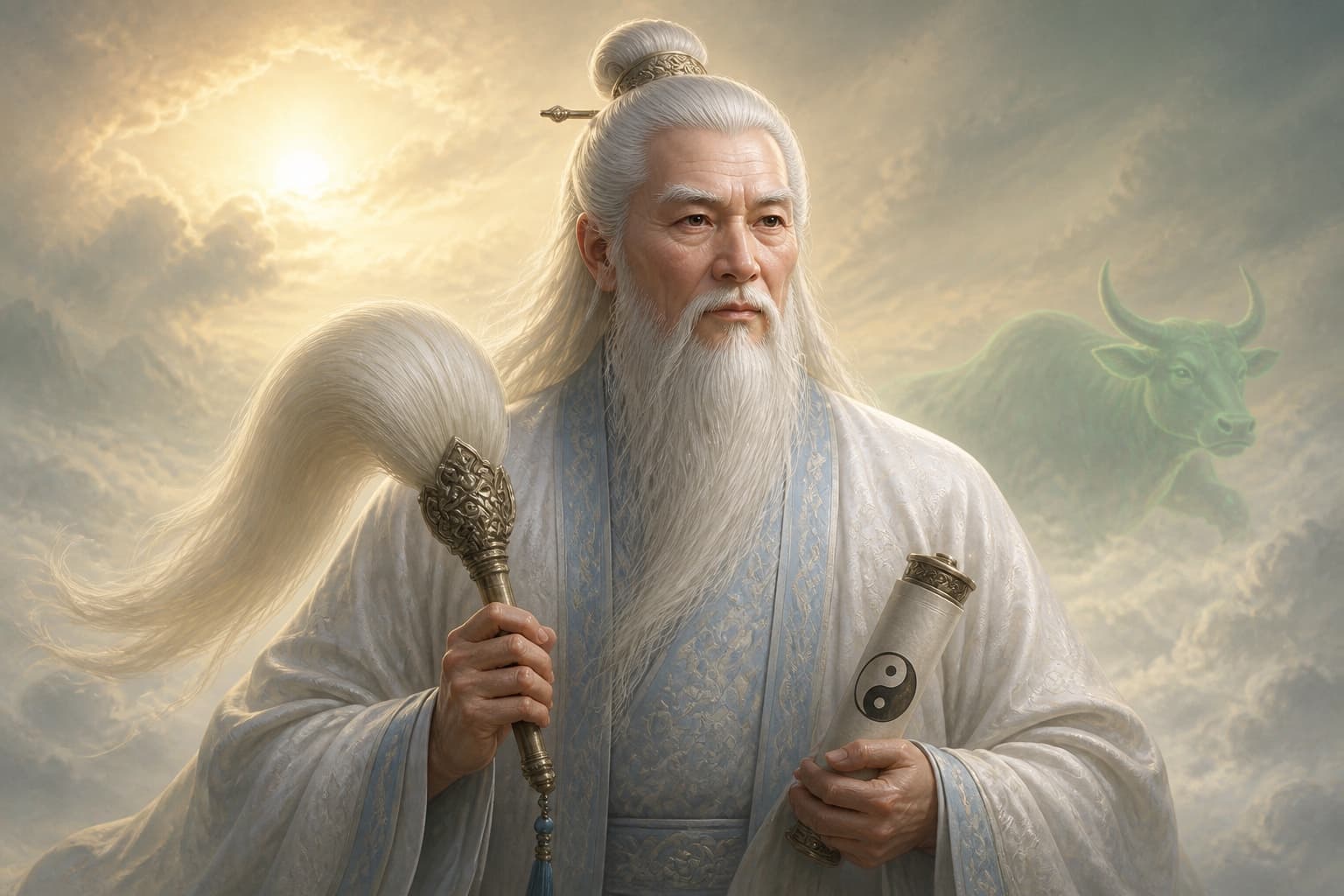
- TierHeaven’s-Way tier / Merged with the DaoSect / factionXuanmenHongjun DaozuAncestor of the Mystic Gate · merged himself into Heaven’s Way
- TierSaintSect / factionChanjiaoYuanshi TianzunSecond of the Three Pure Ones · head of the Chan Sect
- TierSaintSect / factionJiejiaoTongtian JiaozhuThird of the Three Pure Ones · head of the Jie Sect
- TierSaintSect / factionRenjiaoTaiqing LaoziFirst of the Three Pure Ones · head of the Human Sect
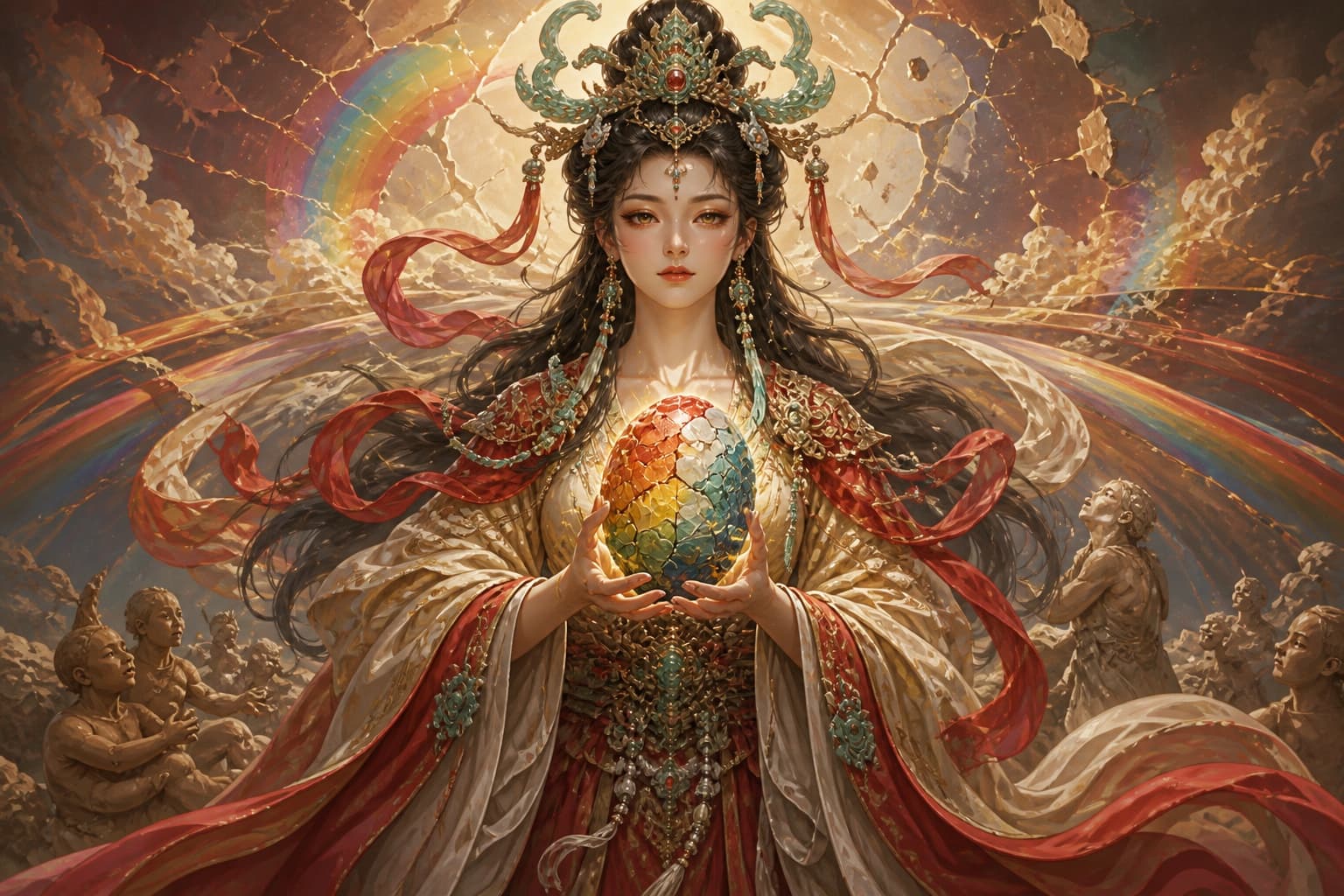
- TierSaintSect / factionWahuang Palace / close to the Yao clanNüwaMaker of humankind · mistress of Wahuang Palace
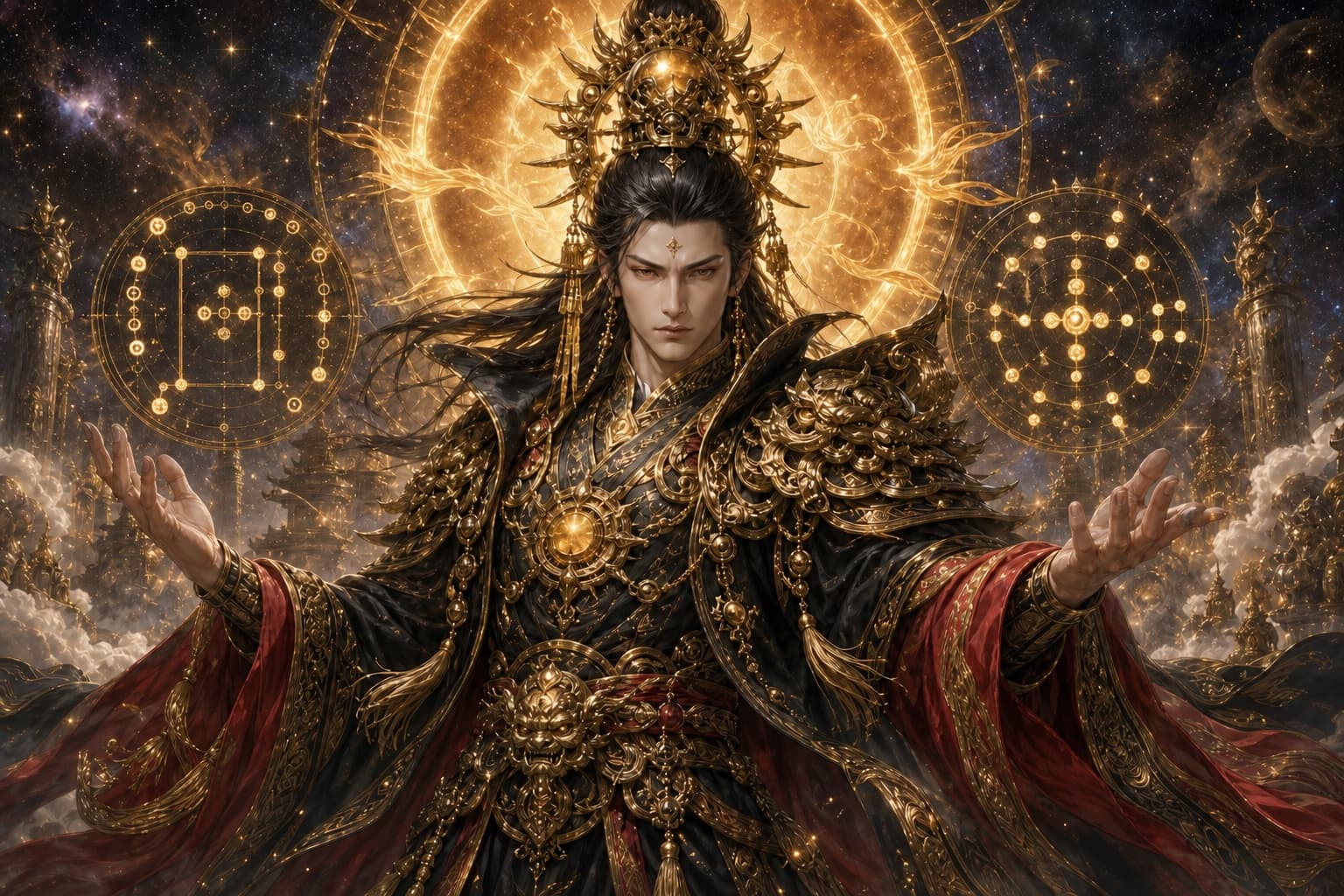
- TierQuasi-SaintSect / factionYao Heavenly CourtDijunHeavenly emperor of the Yao clan
- TierQuasi-Saint peakSect / factionYao Heavenly CourtDonghuang TaiyiWar god of the Yao clan
- TierSaintSect / factionWestern SectZhunti DaorenOne of the two saints of the West
- TierSaintSect / factionWestern SectJieyin DaorenOne of the two saints of the West
- TierSaint-level / Earthly Saint / Hunyuan Da LuoSect / factionWu clan → the underworldHoutuShe who became the six paths of rebirth
- TierGreat-Dao tier / Beyond Heaven’s WaySect / factionNonePanguHe who split heaven from earth
- TierQuasi-Saint peak / Hunyuan Da Luo / Saint-levelSect / factionModaoLuohouAncestor of the demonic path
- TierQuasi-SaintSect / factionNorthern sea / Yao Heavenly CourtKunpengLord of the northern sea · Yao preceptor
- TierQuasi-Saint peakSect / factionSea of blood / Asura SectMinghe LaozuLord of the sea of blood
- TierQuasi-SaintSect / factionIndependent / the earthbound immortal lineageZhenyuanziAncestor of the earthbound immortals
- TierDa Luo peak / Quasi-SaintSect / factionIndependentHongyun LaozuAt the centre of the quarrel over sainthood
- TierQuasi-SaintSect / factionYao clan / humankindFuxiBrother of Nüwa · Heavenly Sovereign of humankind
- TierQuasi-Saint / Da LuoSect / factionChanjiao, later the WestRandeng DaorenDeputy head of the Chan Sect
- TierDa Luo Golden Immortal, roughly / Great WitchSect / factionHuman hero / Great Witch of the Wu clanHou YiThe archer who shot down the suns
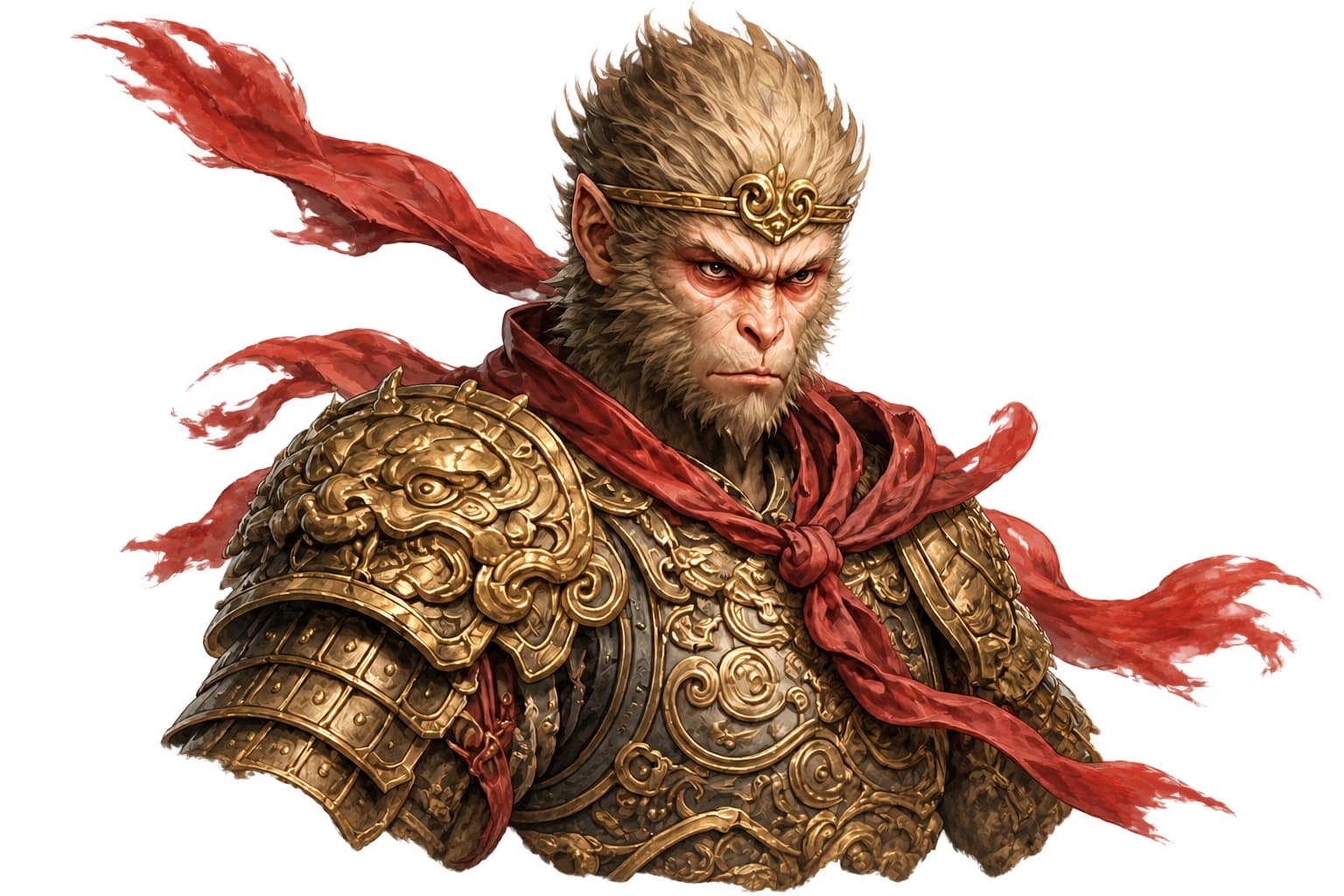
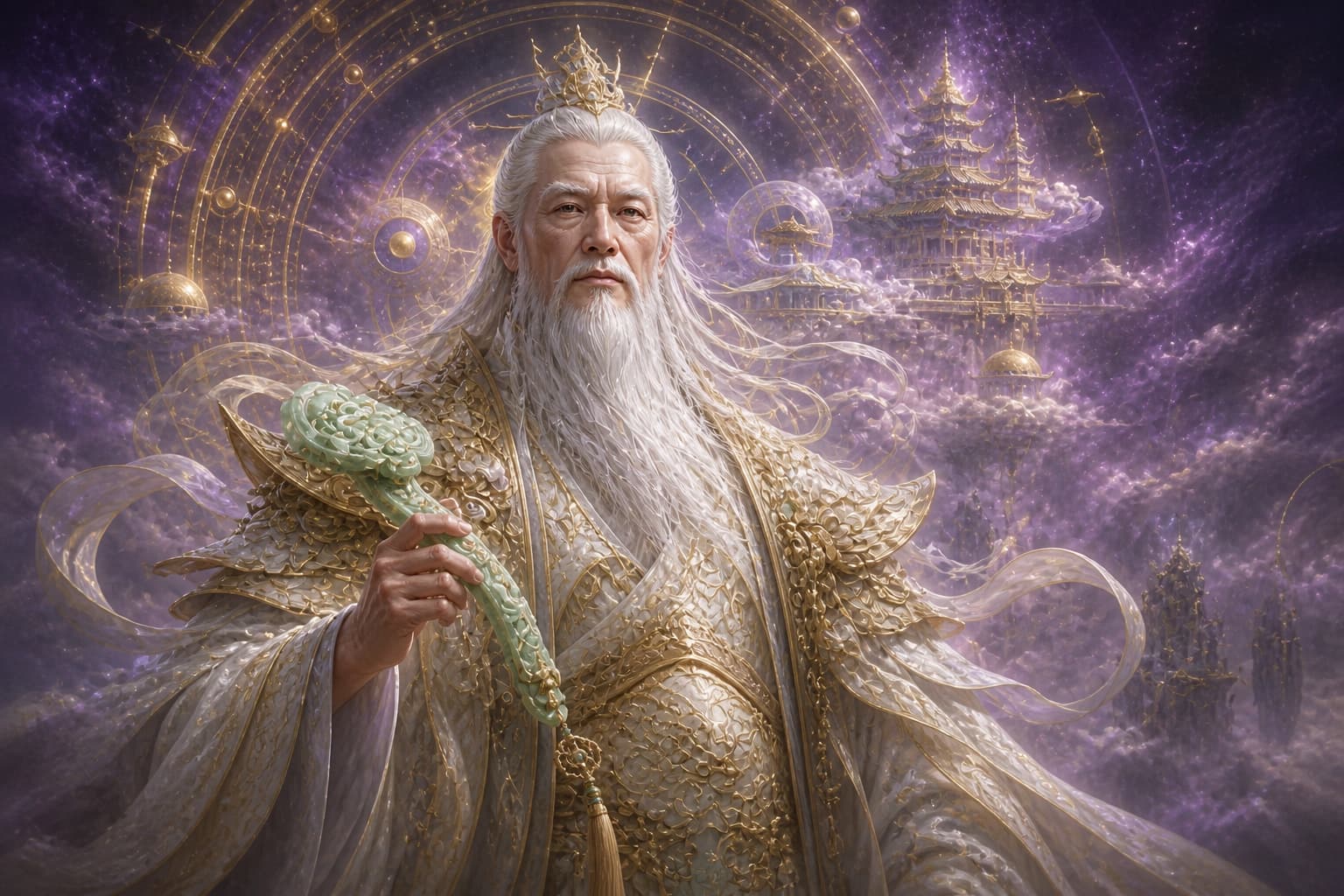
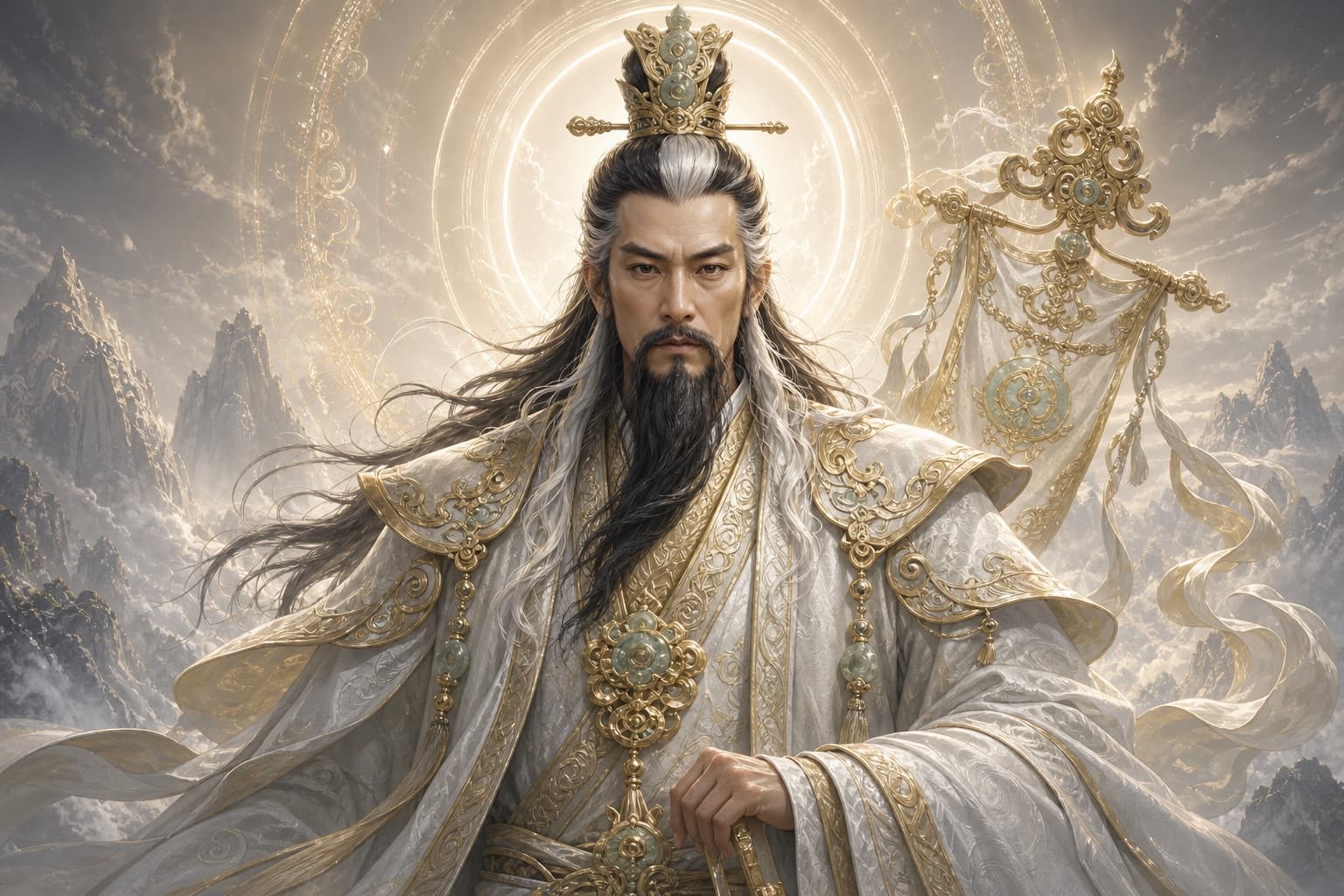
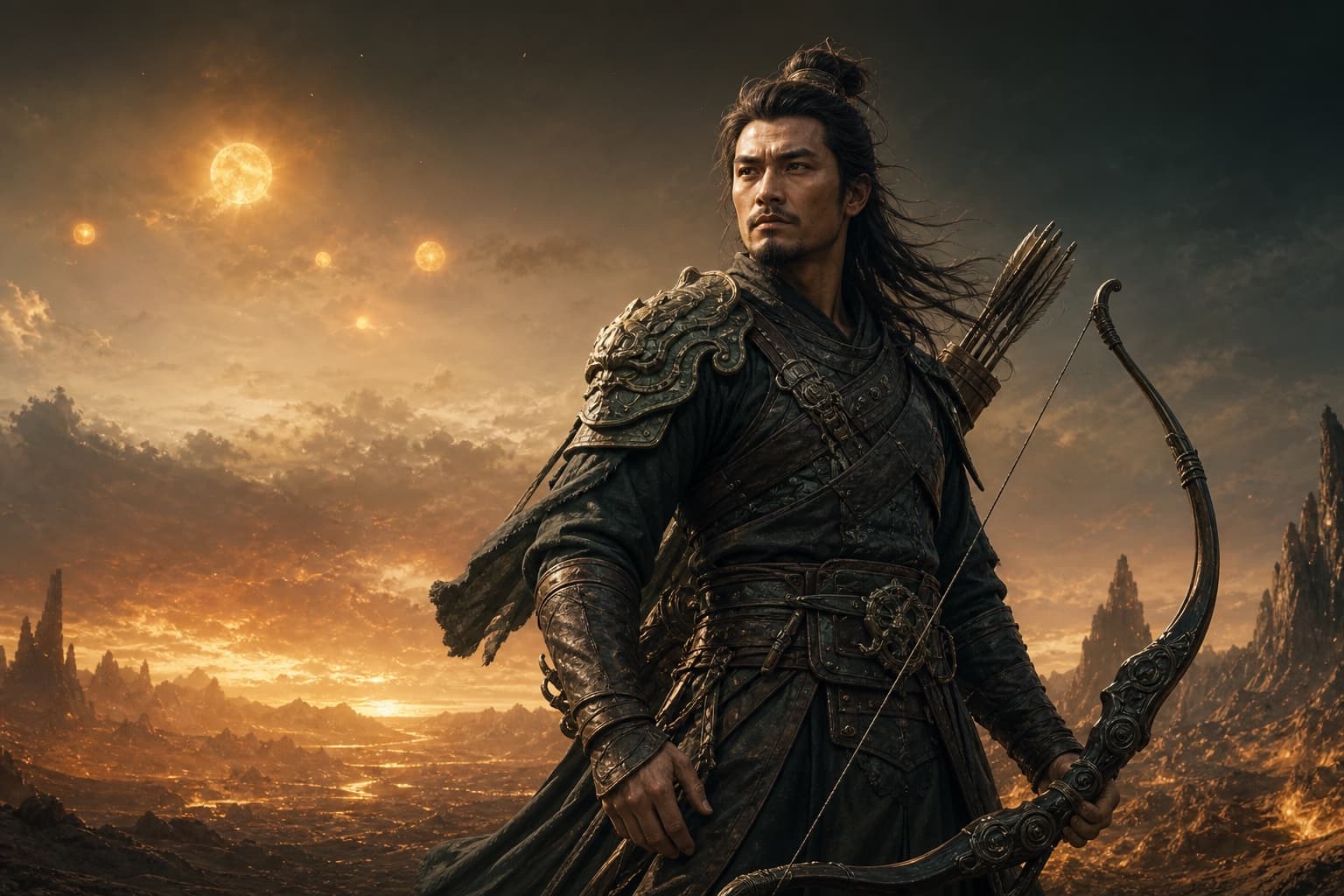
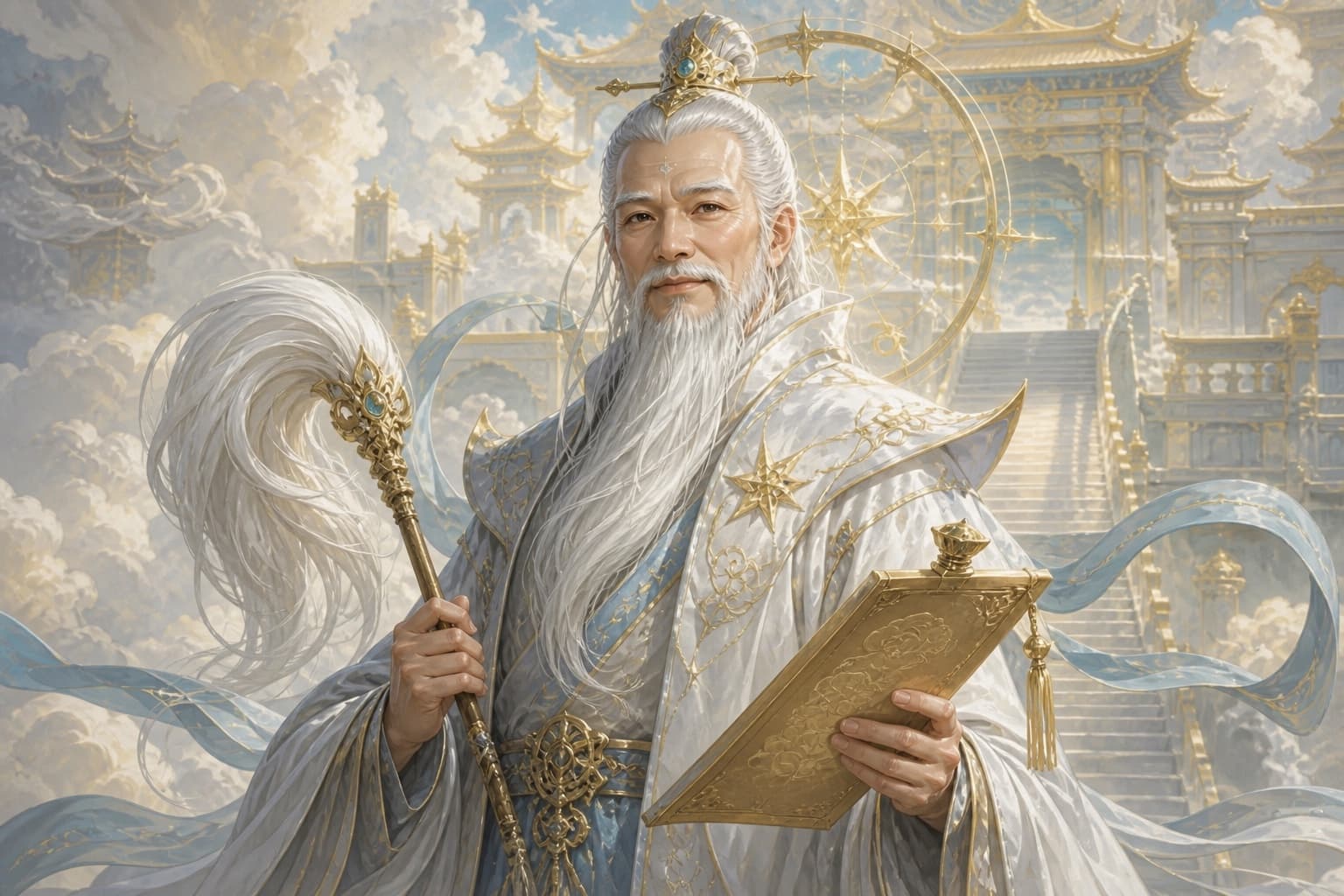
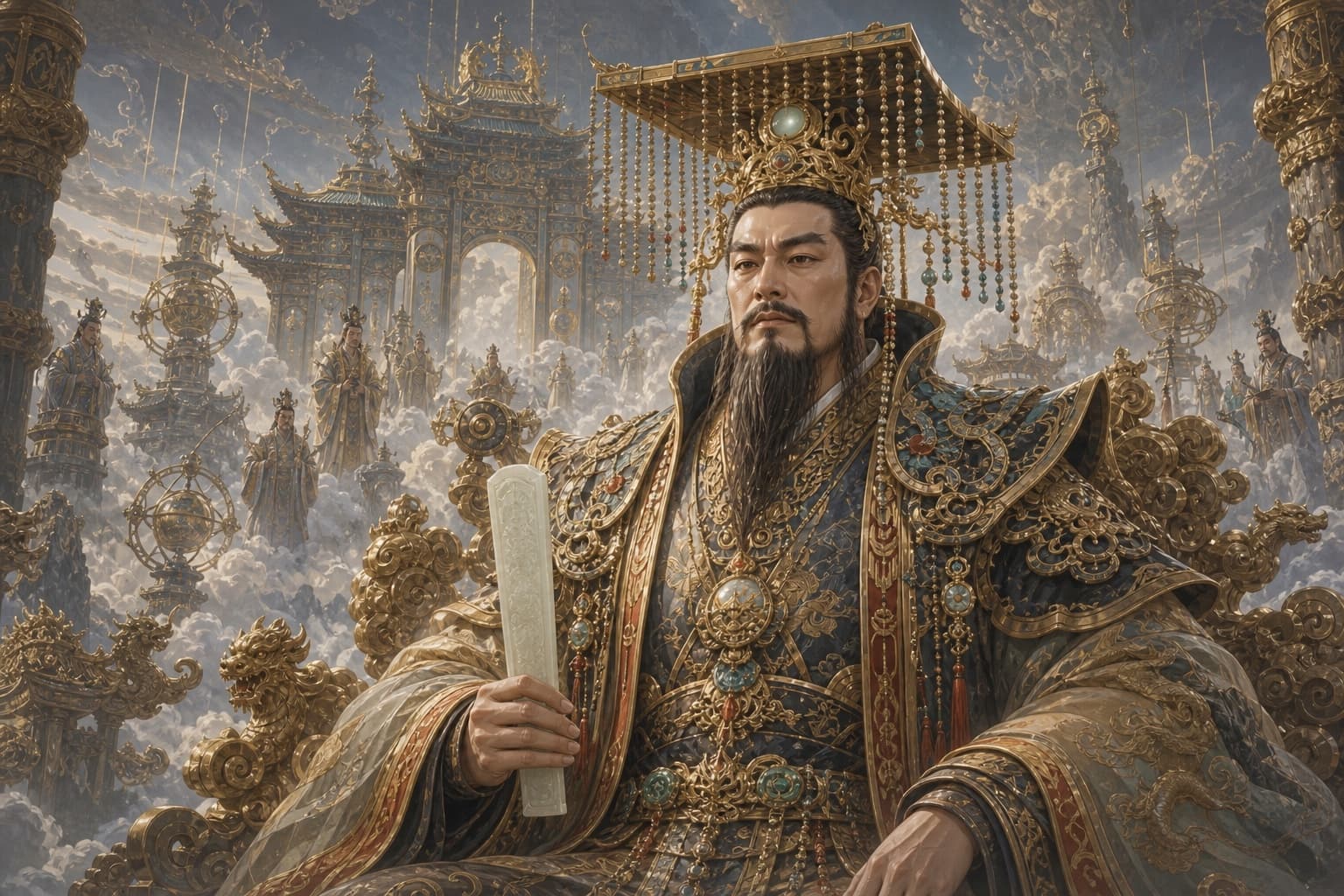
Taibai Jinxing
The story
Taibai Jinxing had long lived in the Heavenly Court, old in years and high in standing. Since the founding of the new court after the Wu–Yao war he had, as its senior minister, carried its edicts to the three realms year after year, travelling between the Numinous Empyrean Hall and the cloud-roads of the thirty-three heavens; whenever the Jade Emperor sent an order down to the human world it was usually he who bore it, and through calamity after calamity his office never changed.
When the stone monkey of Mount Huaguo came home from his studies, broke into the dragon palace of the Eastern Sea for the Ruyi Jingu Bang and then into the underworld to strike out the register of life and death, the dragon king and the Ten Kings both submitted memorials, and the Jade Emperor read them in fury and meant to send the host below.
Taibai Jinxing came forward at the audience, bowed before the throne, and argued that it would be better to offer an amnesty and hold him with an immortal office, which would keep the dignity of heaven and spare the trouble of a campaign. The Jade Emperor approved, and Taibai Jinxing took the decree and rode a cloud below.
Taibai Jinxing came down at Mount Huaguo, set his cloud down and read the decree to the monkeys, inviting Wukong to come up and take office. Wukong accepted gladly and rode the cloud up with him, past the southern gate of heaven straight to the Numinous Empyrean Hall.
Taibai Jinxing presented Wukong to the Jade Emperor and set out his errand, and the Jade Emperor had him placed in the imperial stables as Bimawen, in charge of the pasturing of the heavenly horses. Wukong had held the post half a month when someone told him that Bimawen was not even ranked among the grades; in anger he broke back down out of heaven, returned to Mount Huaguo and raised the banner of the Great Sage Equal to Heaven.
The Jade Emperor, furious at the news, sent the Pagoda-Bearing Heavenly King Li Jing and Nezha with troops below. The two armies met before Mount Huaguo, the heavenly host could not prevail, and it came back beaten.
Taibai Jinxing came forward again and argued that they should take him at his own word and invest him as Great Sage Equal to Heaven — a bare title with office but no stipend — so that he would settle and make no more trouble. The Jade Emperor approved, and Taibai Jinxing carried a second decree to Mount Huaguo.
Taibai Jinxing read the new decree at Mount Huaguo, and Wukong went up with him again to the Numinous Empyrean Hall and was invested as Great Sage Equal to Heaven; the Heavenly Court set up a residence for him beside the peach garden, gave him the title, and let him enjoy the empty office while the fighting stopped.
When Wukong afterwards ruined the peach banquet and blundered drunk into the Tushita Palace to eat the golden elixir, the policy of amnesty had failed, and the Heavenly Court resolved to send an army against Mount Huaguo. From then Taibai Jinxing stayed in the Numinous Empyrean Hall, took part in council and carried the edicts, and did not go to the front as Li Jing and Nezha did.
Five hundred years after Wukong was pinned under Five Elements Mountain, when Tang Sanzang went west by imperial charge and Sun Wukong came up to heaven for help in his troubles, Taibai Jinxing carried word outside the Numinous Empyrean Hall each time, reporting to the Jade Emperor or sending him on to other ranks of immortals for aid, going to and fro along the cloud stairs without slackening.
When the journey west was done and the pilgrims returned east, Taibai Jinxing remained in his office, travelling between the Numinous Empyrean Hall and the cloud-roads of the human world, carrying edicts as he always had, with nothing changed.
Relationship map
Relationship story
Select a label on one of the lines to read when the two met, what happened next, and how it ended.
Selecting a portrait still opens that entry directly.