Complete index · 96
- Sun Wukong
- Hongjun Daozu
- Yuanshi Tianzun
- Tongtian Jiaozhu
- Taiqing Laozi
- Nüwa
- Dijun
- Donghuang Taiyi
- Zhunti Daoren
- Jieyin Daoren
- Houtu
- Pangu
- Luohou
- Kunpeng
- Minghe Laozu
- Zhenyuanzi
- Hongyun Laozu
- Fuxi
- Randeng Daoren
- Hou Yi
- Chang’e
- Dijiang
- Zhujiuyin
- Jumang
- Zhurong
- Gonggong
- Rushou
- Xuanming
- Qiangliang
- Xizi
- Tianwu
- Shebishi
- Guangchengzi
- Chijingzi
- Taiyi Zhenren
- Yuding Zhenren
- Huanglong Zhenren
- Wenshu Guangfa Tianzun
- Puxian Zhenren
- Cihang Daoren
- Juliusun
- Daoxing Tianzun
- Qingxu Daode Zhenjun
- Lingbao Dafashi
- Xuandu Dafashi
- Nanji Xianweng
- Yunzhongzi
- Yang Jian
- Nezha
- Duobao Daoren
- Jinling Shengmu
- Wudang Shengmu
- Guiling Shengmu
- Zhao Gongming
- Yunxiao
- Qiongxiao
- Bixiao
- Jiang Ziya
- Shen Gongbao
- Wen Zhong
- Di Xin
- Su Daji
- Ji Chang
- Ji Fa
- Huang Feihu
- Lei Zhenzi
- Kong Xuan
- Luya Daoren
- Tu Xingsun
- Deng Chanyu
- Jinzha
- Muzha
- Huang Tianhua
- Rulai
- Puti Zushi
- Guanyin
- Niu Mowang
- Zhu Bajie
- Sha Seng
- Four Heavenly Kings
- Li Jing
- Tang Sanzang
- Jade Emperor
- Queen Mother of the West
- Taibai Jinxing
- Bailongma
- Ao Guang
- Princess Iron Fan
- Red Boy
- Six-Eared Macaque
- Golden Horn and Silver Horn
- Yellow Brow
- Golden-Winged Great Peng
- Maitreya
- White Bone Demon
- Yellow Wind Demon
- TierDa Luo Golden Immortal, roughlySect / factionMount Huaguo / Buddhist attainmentSun WukongGreat Sage Equal to Heaven · Victorious Fighting Buddha
- TierHeaven’s-Way tier / Merged with the DaoSect / factionXuanmenHongjun DaozuAncestor of the Mystic Gate · merged himself into Heaven’s Way
- TierSaintSect / factionChanjiaoYuanshi TianzunSecond of the Three Pure Ones · head of the Chan Sect
- TierSaintSect / factionJiejiaoTongtian JiaozhuThird of the Three Pure Ones · head of the Jie Sect
- TierSaintSect / factionRenjiaoTaiqing LaoziFirst of the Three Pure Ones · head of the Human Sect
- TierSaintSect / factionWahuang Palace / close to the Yao clanNüwaMaker of humankind · mistress of Wahuang Palace
- TierQuasi-SaintSect / factionYao Heavenly CourtDijunHeavenly emperor of the Yao clan
- TierQuasi-Saint peakSect / factionYao Heavenly CourtDonghuang TaiyiWar god of the Yao clan
- TierSaintSect / factionWestern SectZhunti DaorenOne of the two saints of the West
- TierSaintSect / factionWestern SectJieyin DaorenOne of the two saints of the West
- TierSaint-level / Earthly Saint / Hunyuan Da LuoSect / factionWu clan → the underworldHoutuShe who became the six paths of rebirth
- TierGreat-Dao tier / Beyond Heaven’s WaySect / factionNonePanguHe who split heaven from earth
- TierQuasi-Saint peak / Hunyuan Da Luo / Saint-levelSect / factionModaoLuohouAncestor of the demonic path
- TierQuasi-SaintSect / factionNorthern sea / Yao Heavenly CourtKunpengLord of the northern sea · Yao preceptor
- TierQuasi-Saint peakSect / factionSea of blood / Asura SectMinghe LaozuLord of the sea of blood
- TierQuasi-SaintSect / factionIndependent / the earthbound immortal lineageZhenyuanziAncestor of the earthbound immortals
- TierDa Luo peak / Quasi-SaintSect / factionIndependentHongyun LaozuAt the centre of the quarrel over sainthood
- TierQuasi-SaintSect / factionYao clan / humankindFuxiBrother of Nüwa · Heavenly Sovereign of humankind
- TierQuasi-Saint / Da LuoSect / factionChanjiao, later the WestRandeng DaorenDeputy head of the Chan Sect
- TierDa Luo Golden Immortal, roughly / Great WitchSect / factionHuman hero / Great Witch of the Wu clanHou YiThe archer who shot down the suns
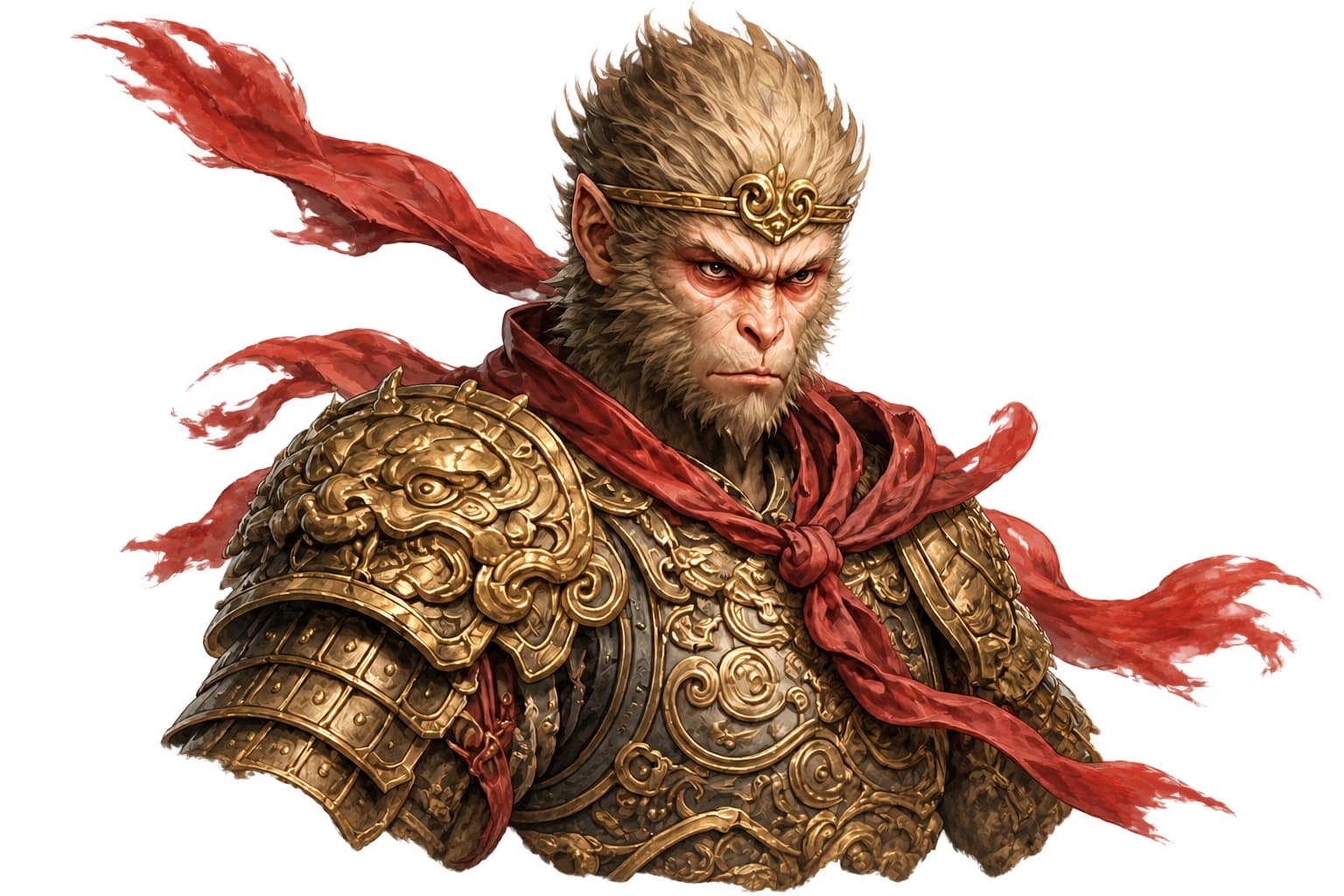
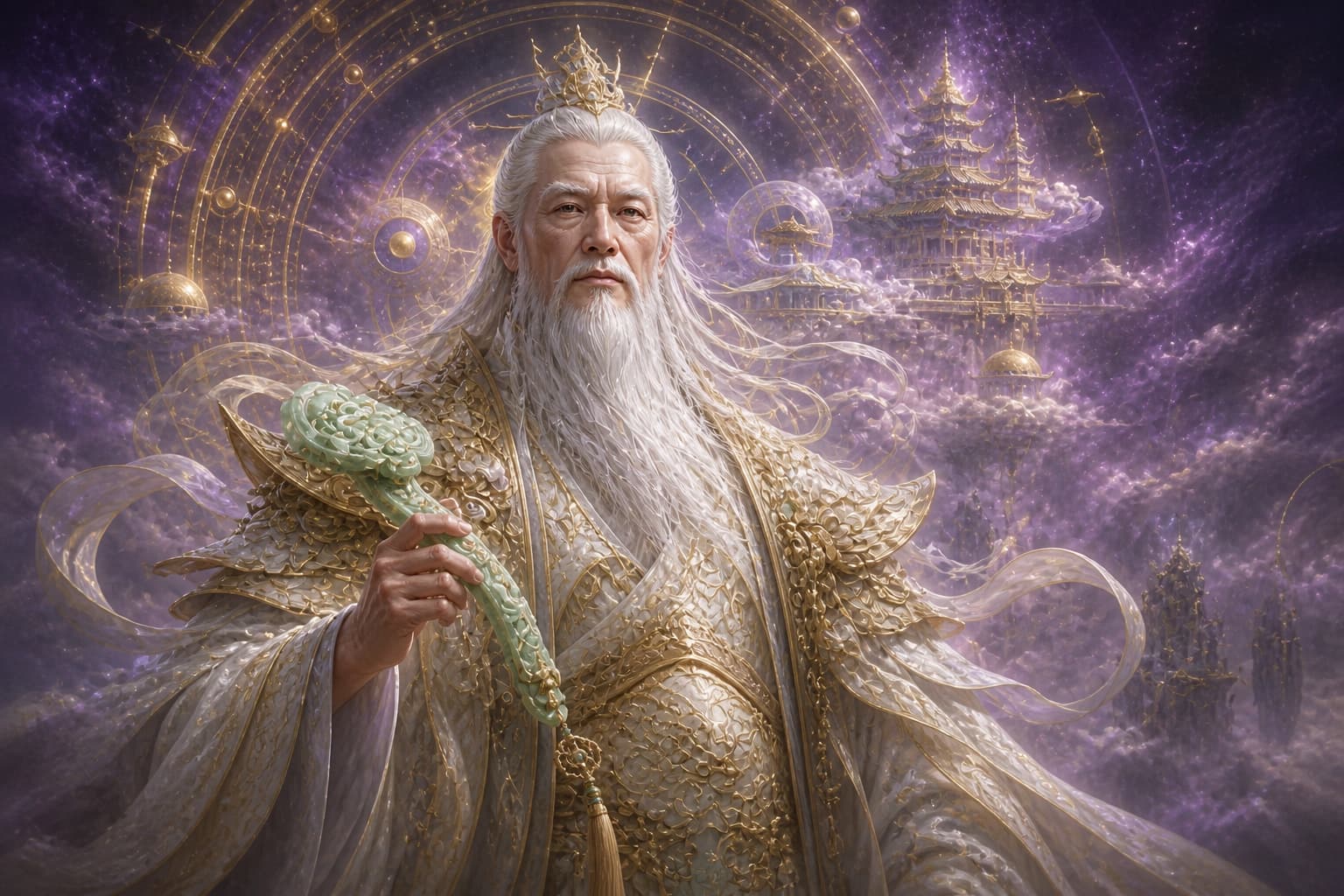
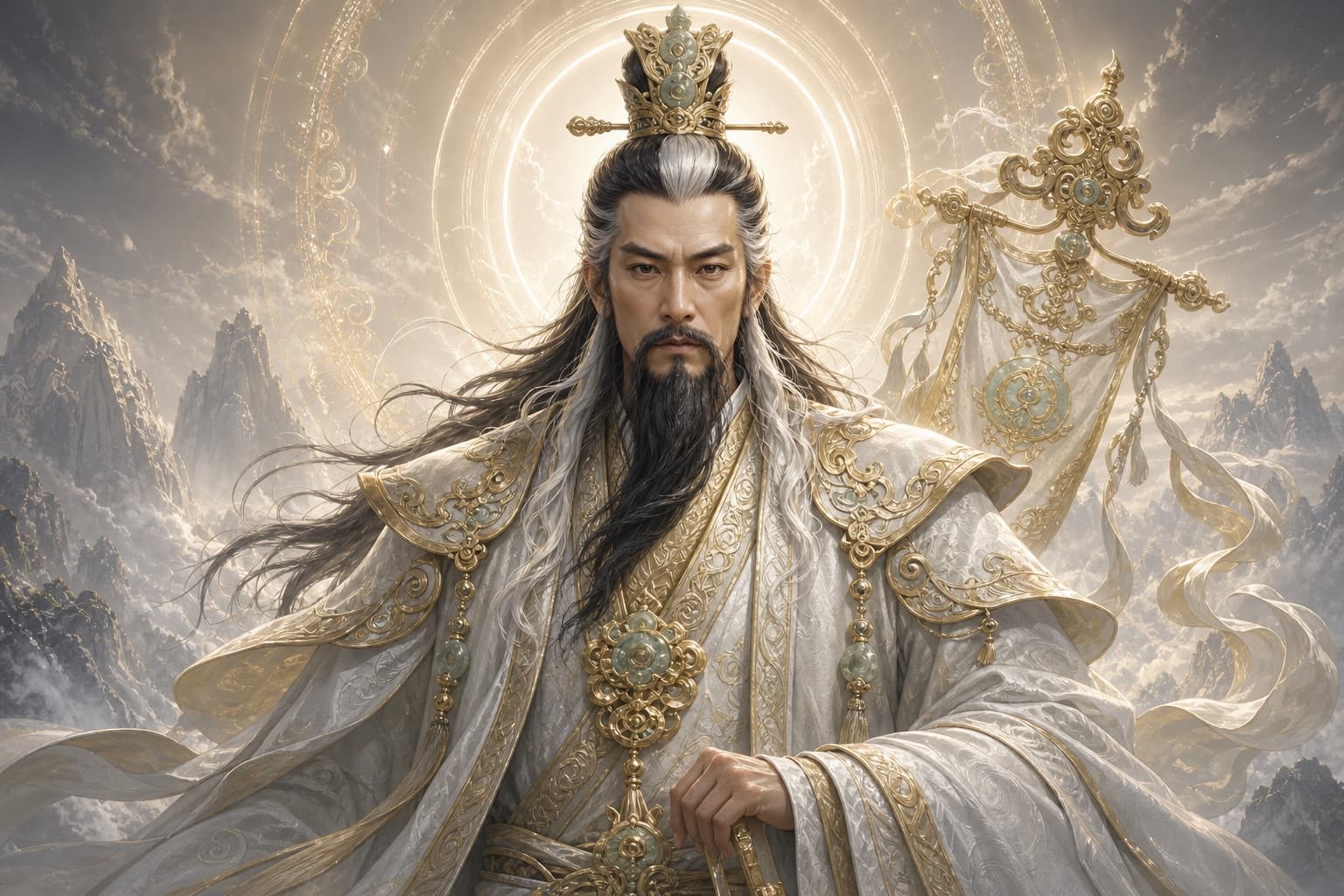
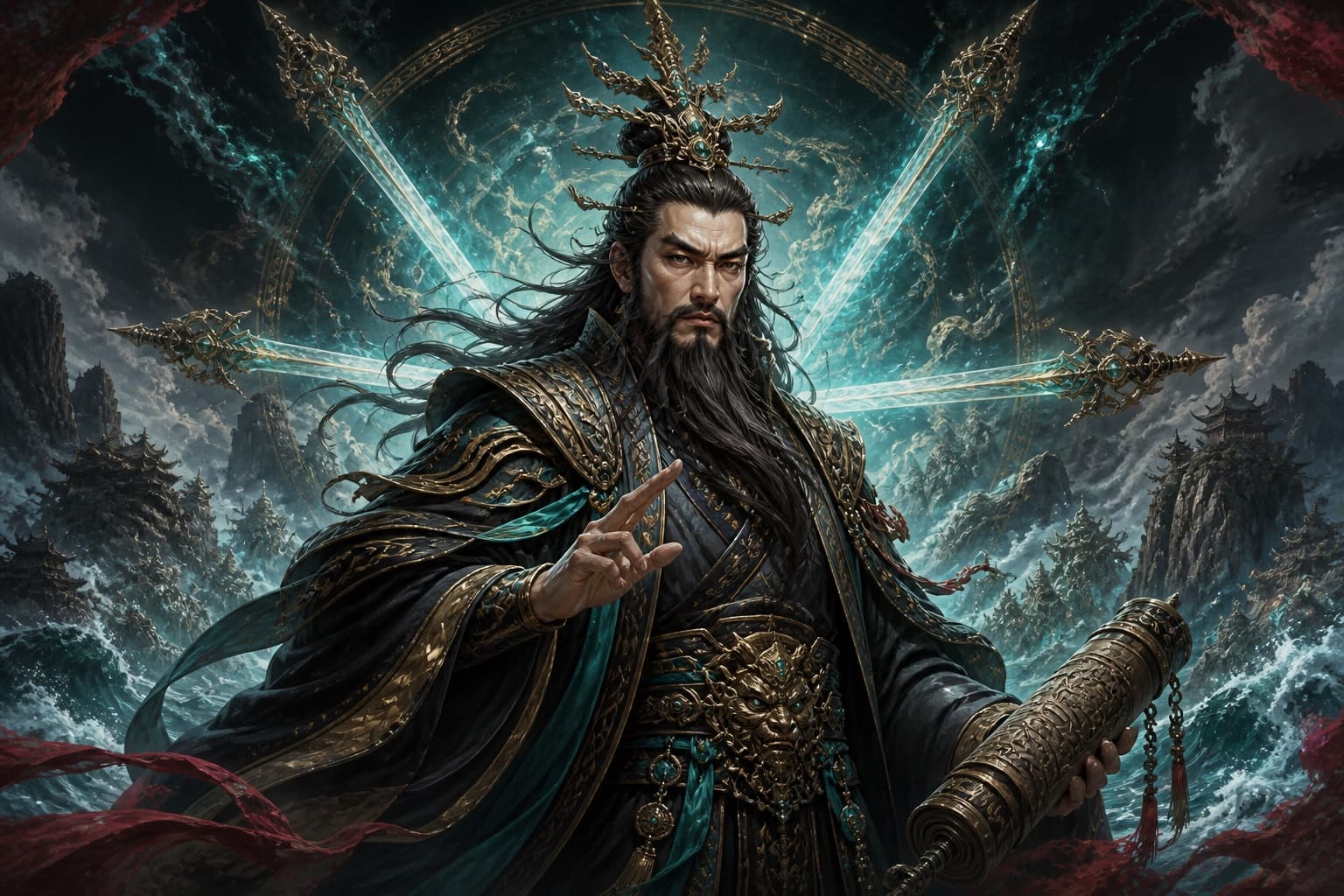
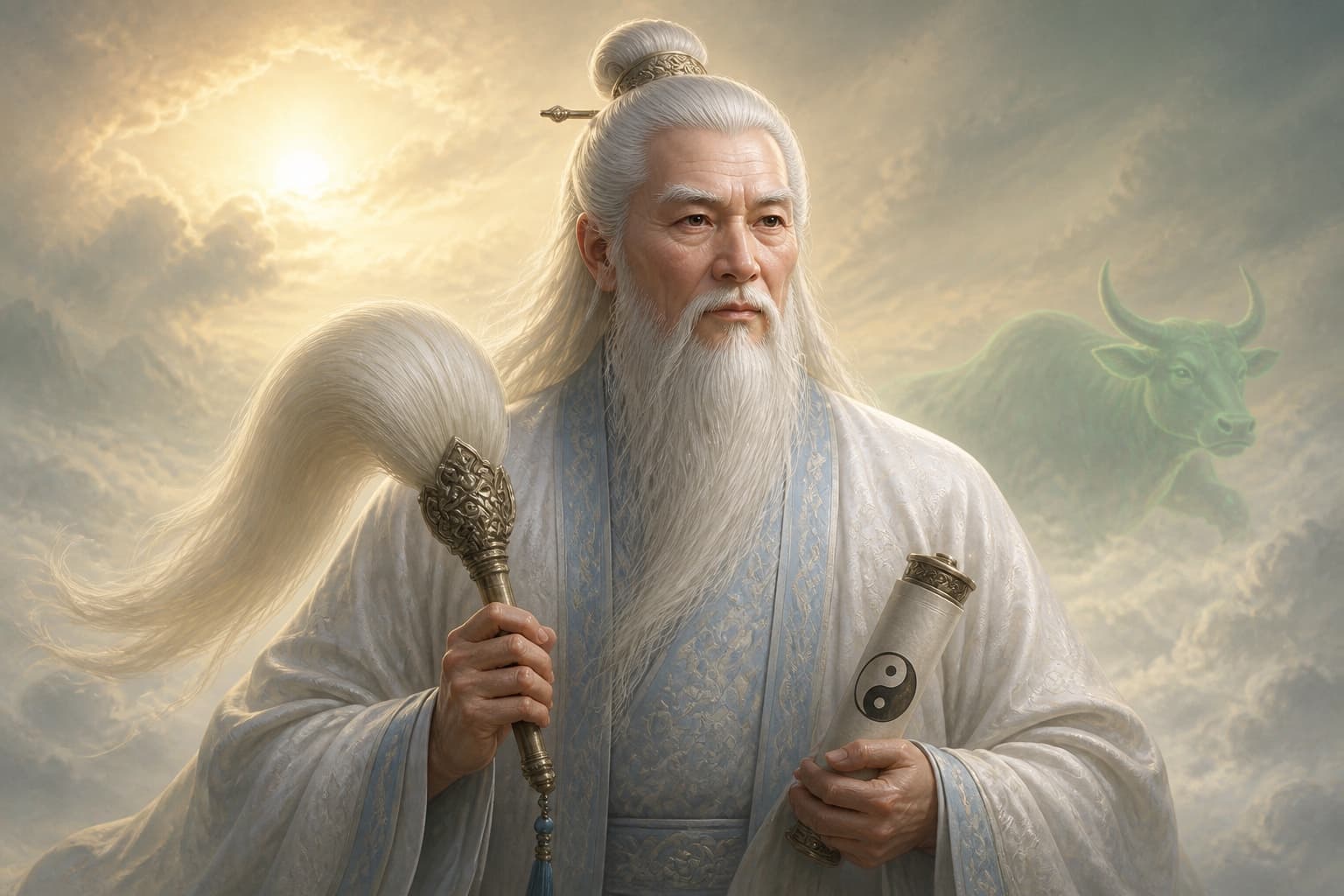
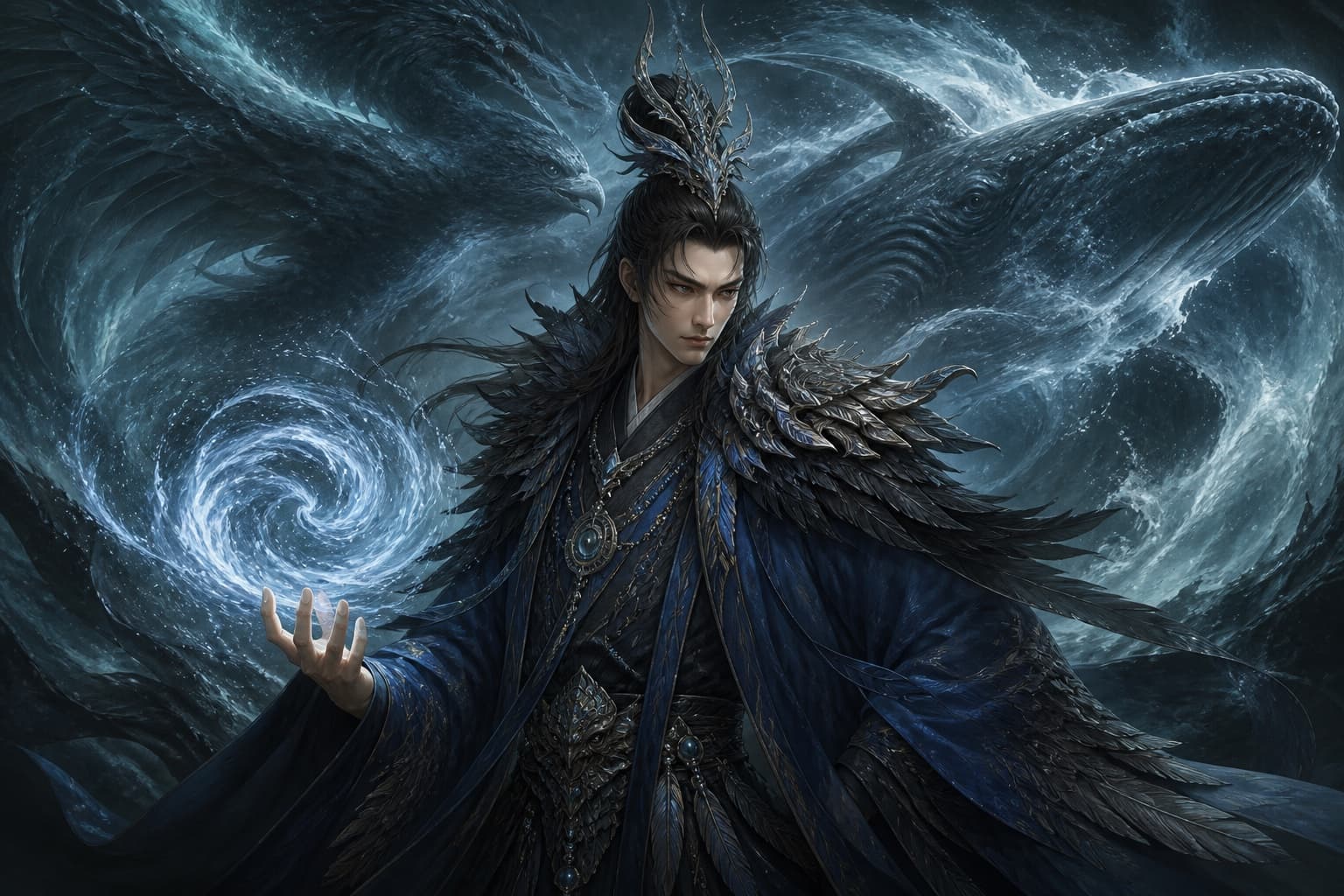
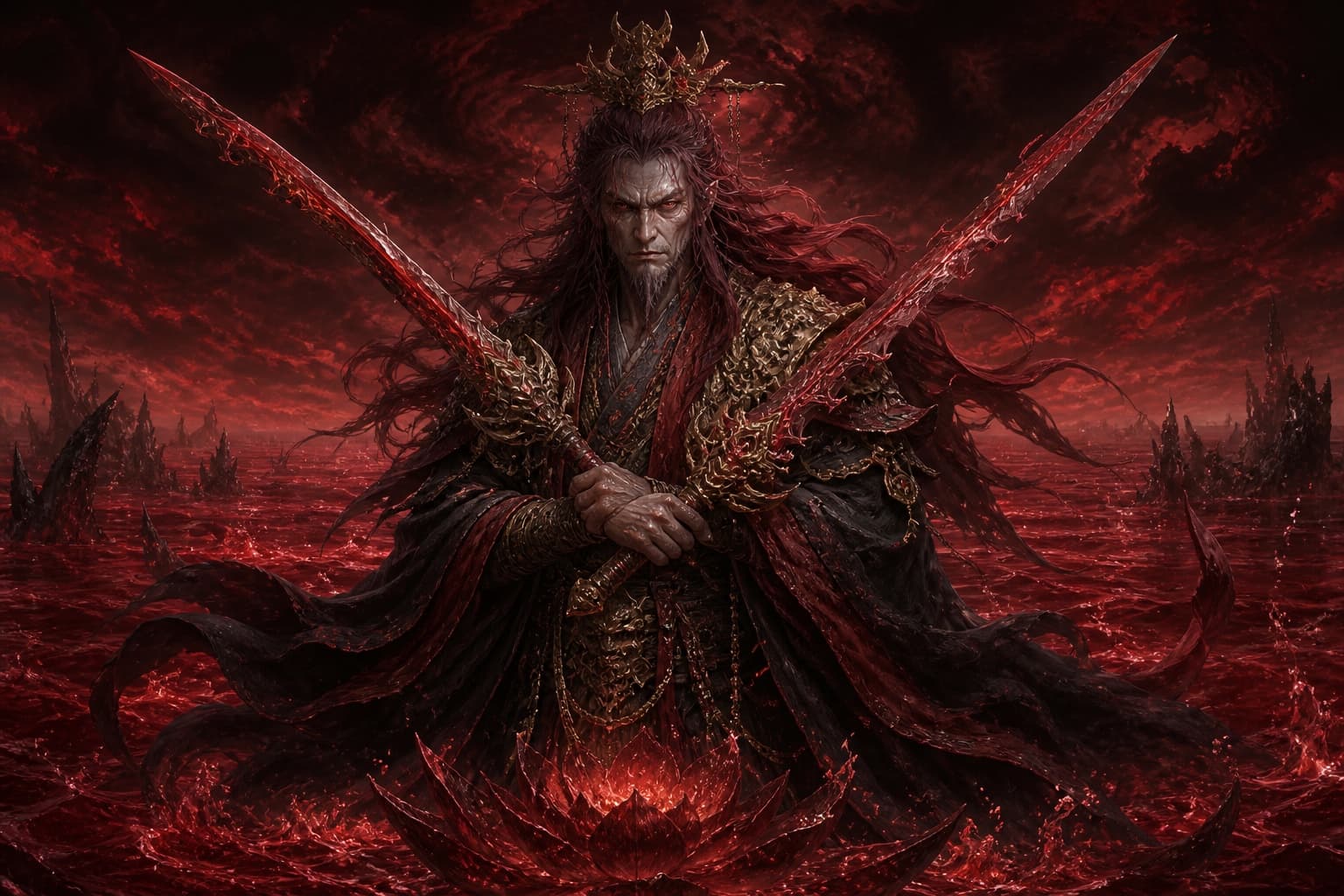
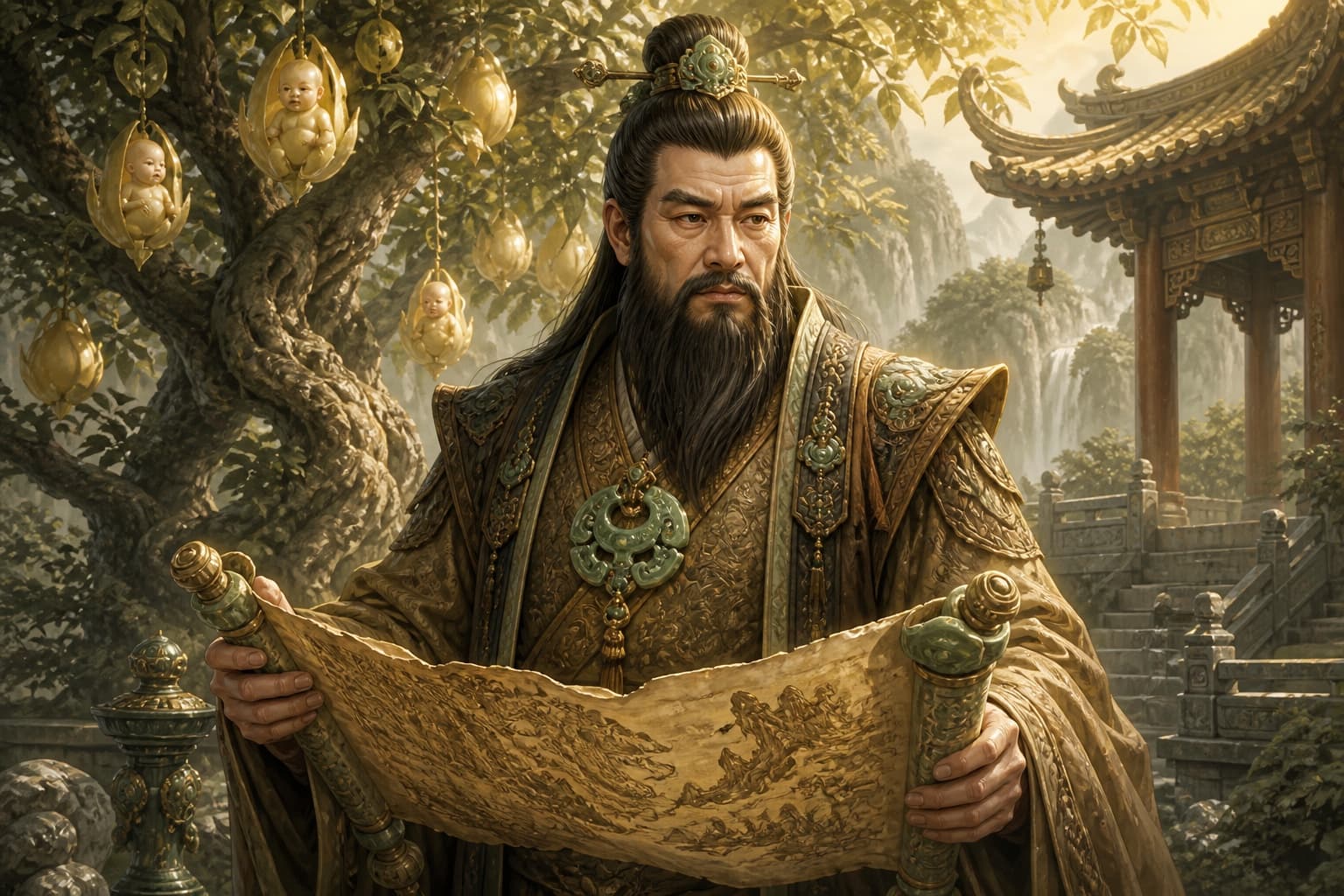
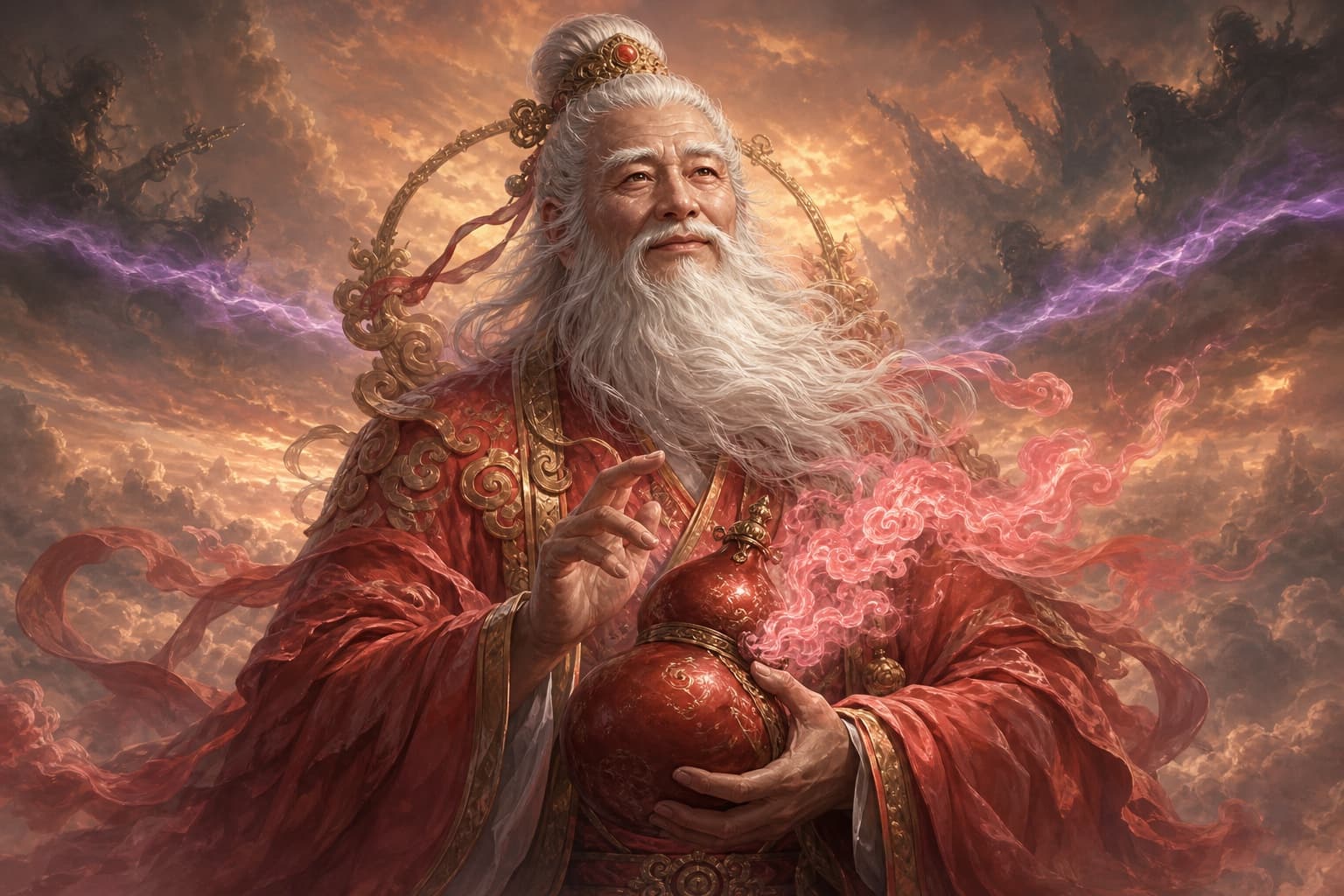
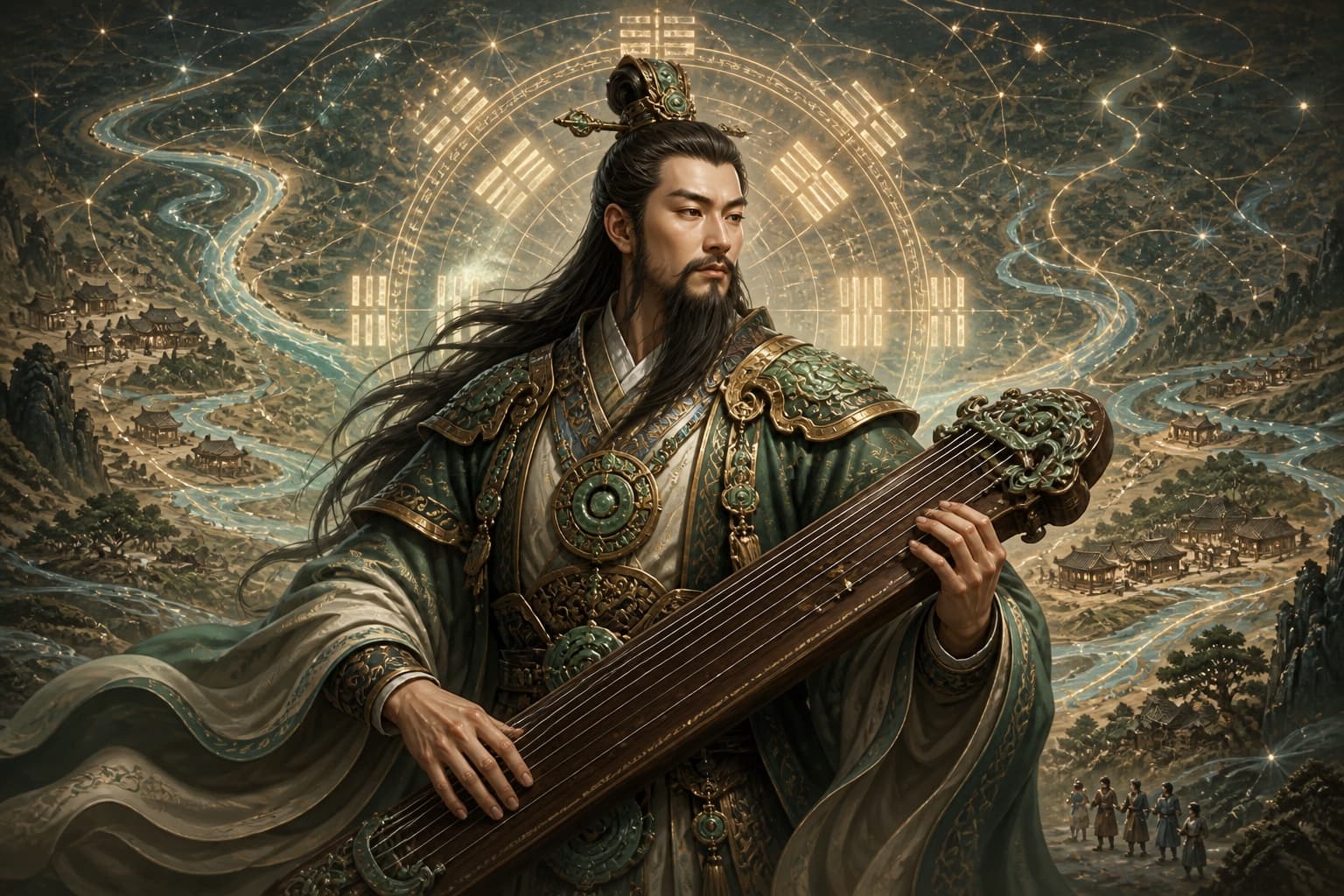
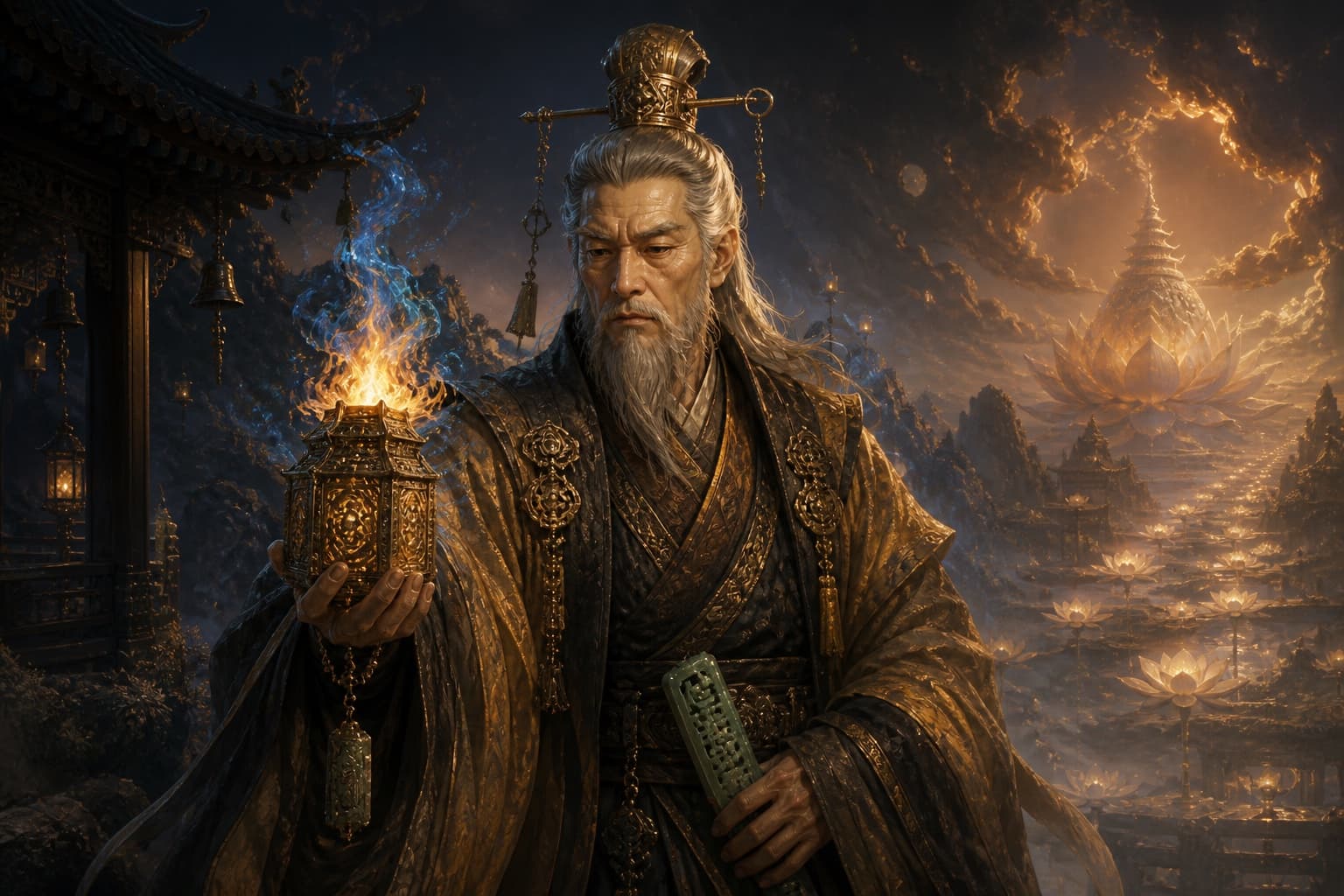
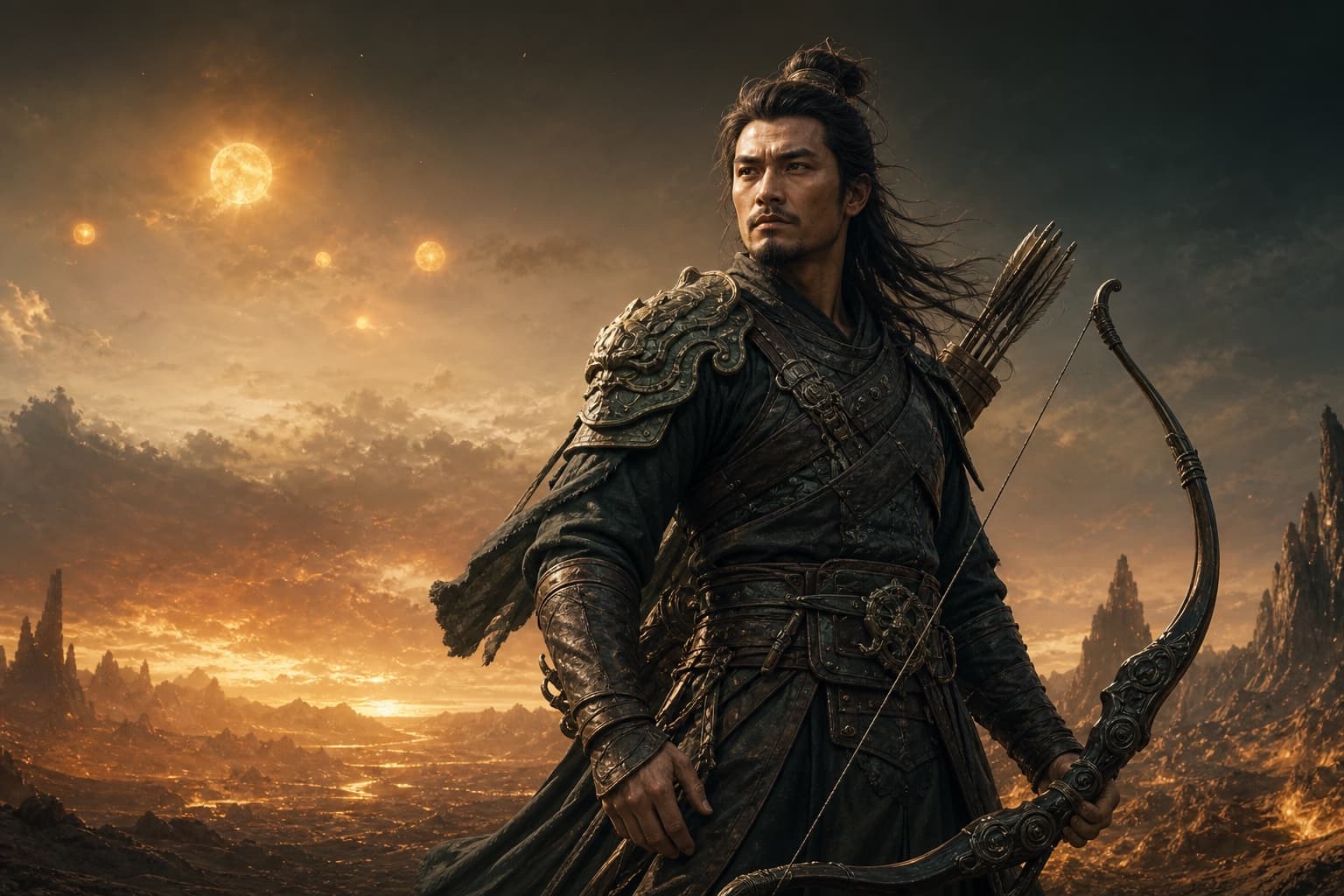
Hou Yi
The story
Before Hou Yi shot the suns, some old texts say there were ten suns in the sky, the sons of Dijun and Xihe, who lived in the Fusang tree in the Valley of Hot Water and took the sky in turn, each rising in its order.
The Huainanzi says instead that in the reign of Yao the ten suns suddenly rose together, so that crops and plants were scorched, and that the Yayu, the Zaochi, the Jiuying, the Dafeng, the Fengxi and the Xiushe all came out to prey on the human world at the same time.
In the Huainanzi tradition, Dijun — some say Diku — gave Hou Yi a bow and arrows and sent him down to rid the people of these evils, both to shoot down the extra suns and to cut off the beasts and serpents that were ravaging the land.
Hou Yi took the charge, shot upward at nine suns, and the golden crows in them fell one after another, leaving one in the sky to go on turning. He then killed the Yayu and the five other scourges in turn and freed the people from them.
Another account has it that although Hou Yi shot the suns for Yao and for the people, he angered heaven by killing the sons of the heavenly emperor and was demoted to mortal rank, never to return above, and had to live out his days in the human world.
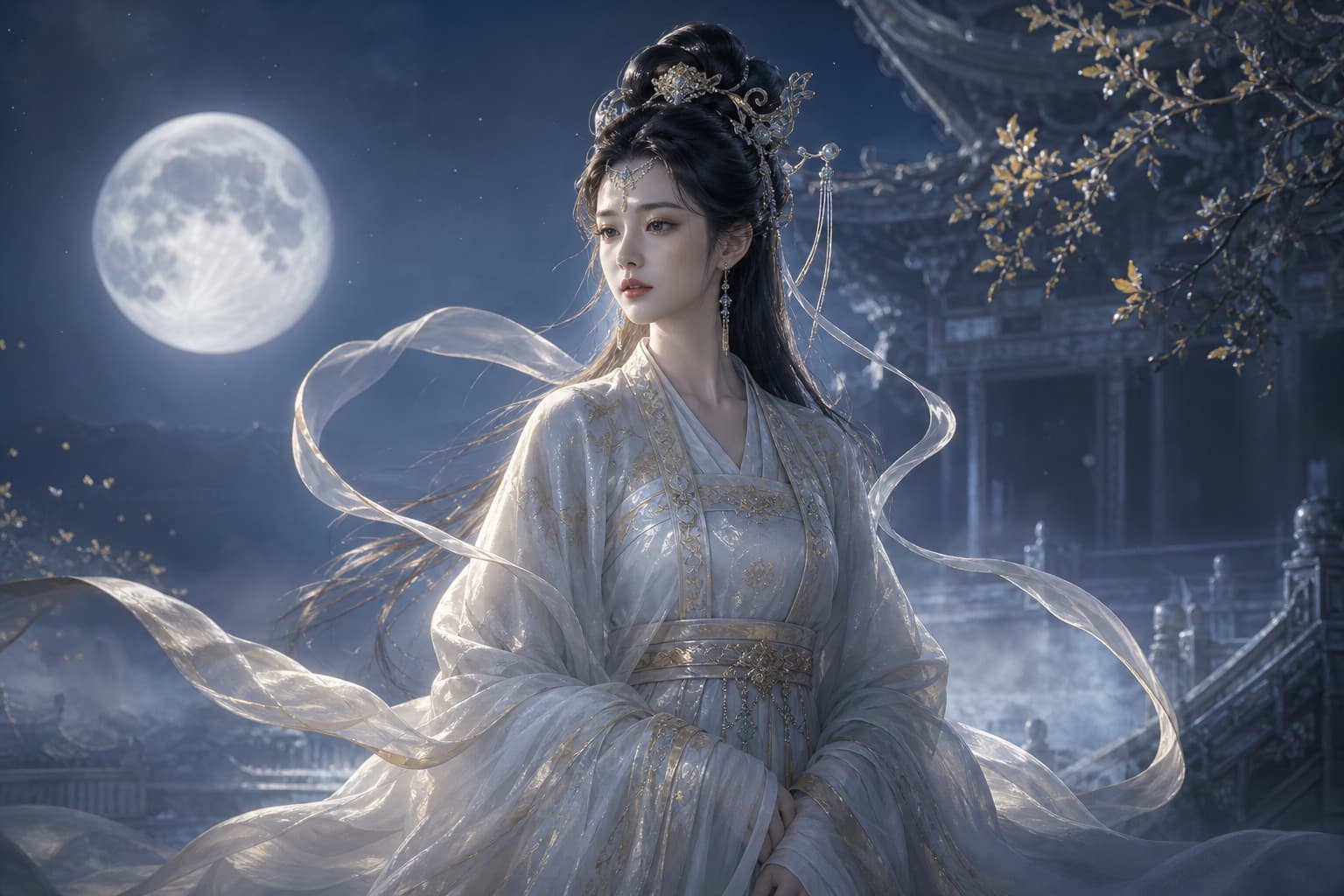
On Chang’e and the elixir the Huainanzi says: Hou Yi obtained the elixir of deathlessness from the Queen Mother of the West, and before he could take it his wife Heng’e — Chang’e — stole and swallowed it, whereupon she became light and rose into the moon palace.
A different later account says that Hou Yi’s disciple Feng Meng broke into the house with a weapon and demanded the elixir, and that Chang’e in her extremity swallowed it on the spot and so flew to the moon. This does not agree with the Huainanzi’s account of a theft and is a later version.
Another says that Chang’e swallowed the elixir not out of self-interest but to keep it from Feng Meng’s hands. The accounts of her motive differ, and there is no settled version.
On Hou Yi’s death the old texts say something else again: his disciple Feng Meng, believing he had learned all his master could teach and full of envy, struck him down with a peachwood club when he was off his guard. This is preserved in traditions cited by the Mencius and the Huainanzi, and does not belong to the same thread as Chang’e’s flight.
This identity was added by later web fiction and is not a single account found in the old texts.
In that thread, the great witch Kuafu chased the ten golden crows, drank whole rivers dry and could not slake his thirst, and fell at last under the burning sun; the staff in his hand fell and became a peach grove.
Hou Yi came to the place where Kuafu had fallen, took bow and arrow, and shot along the paths the golden crows flew. Nine of them came down one by one, and only the last was left in the sky.
When word of the nine dead sons reached the Yao Heavenly Court, Dijun and Xihe hurried to the Valley of Hot Water and found only one son left in the Fusang tree. The Yao clan called up its troops at once and the Wu clan gathered its people to meet them.
Hou Yi returned to the Wu camp and stood watch with his bow on the earth’s side. How the Wu–Yao war went on from there is told differently in different Honghuang novels: some keep him in the field with the army, and some write nothing of him after the shooting.
Others keep the old ending in which Feng Meng kills him, leaving Hou Yi in the human world after the shooting; still others have him die on the Wu–Yao battlefield. The two endings do not join.
The thread of Chang’e swallowing the elixir is often joined to the Honghuang story too: the moon palace is cold, with only the cassia tree and the jade hare for company, while Hou Yi stays in the world below, the two of them divided between heaven and earth.
Relationship map
Relationship story
Select a label on one of the lines to read when the two met, what happened next, and how it ended.
Selecting a portrait still opens that entry directly.