Complete index · 96
- Sun Wukong
- Hongjun Daozu
- Yuanshi Tianzun
- Tongtian Jiaozhu
- Taiqing Laozi
- Nüwa
- Dijun
- Donghuang Taiyi
- Zhunti Daoren
- Jieyin Daoren
- Houtu
- Pangu
- Luohou
- Kunpeng
- Minghe Laozu
- Zhenyuanzi
- Hongyun Laozu
- Fuxi
- Randeng Daoren
- Hou Yi
- Chang’e
- Dijiang
- Zhujiuyin
- Jumang
- Zhurong
- Gonggong
- Rushou
- Xuanming
- Qiangliang
- Xizi
- Tianwu
- Shebishi
- Guangchengzi
- Chijingzi
- Taiyi Zhenren
- Yuding Zhenren
- Huanglong Zhenren
- Wenshu Guangfa Tianzun
- Puxian Zhenren
- Cihang Daoren
- Juliusun
- Daoxing Tianzun
- Qingxu Daode Zhenjun
- Lingbao Dafashi
- Xuandu Dafashi
- Nanji Xianweng
- Yunzhongzi
- Yang Jian
- Nezha
- Duobao Daoren
- Jinling Shengmu
- Wudang Shengmu
- Guiling Shengmu
- Zhao Gongming
- Yunxiao
- Qiongxiao
- Bixiao
- Jiang Ziya
- Shen Gongbao
- Wen Zhong
- Di Xin
- Su Daji
- Ji Chang
- Ji Fa
- Huang Feihu
- Lei Zhenzi
- Kong Xuan
- Luya Daoren
- Tu Xingsun
- Deng Chanyu
- Jinzha
- Muzha
- Huang Tianhua
- Rulai
- Puti Zushi
- Guanyin
- Niu Mowang
- Zhu Bajie
- Sha Seng
- Four Heavenly Kings
- Li Jing
- Tang Sanzang
- Jade Emperor
- Queen Mother of the West
- Taibai Jinxing
- Bailongma
- Ao Guang
- Princess Iron Fan
- Red Boy
- Six-Eared Macaque
- Golden Horn and Silver Horn
- Yellow Brow
- Golden-Winged Great Peng
- Maitreya
- White Bone Demon
- Yellow Wind Demon
- TierDa Luo Golden Immortal, roughlySect / factionMount Huaguo / Buddhist attainmentSun WukongGreat Sage Equal to Heaven · Victorious Fighting Buddha
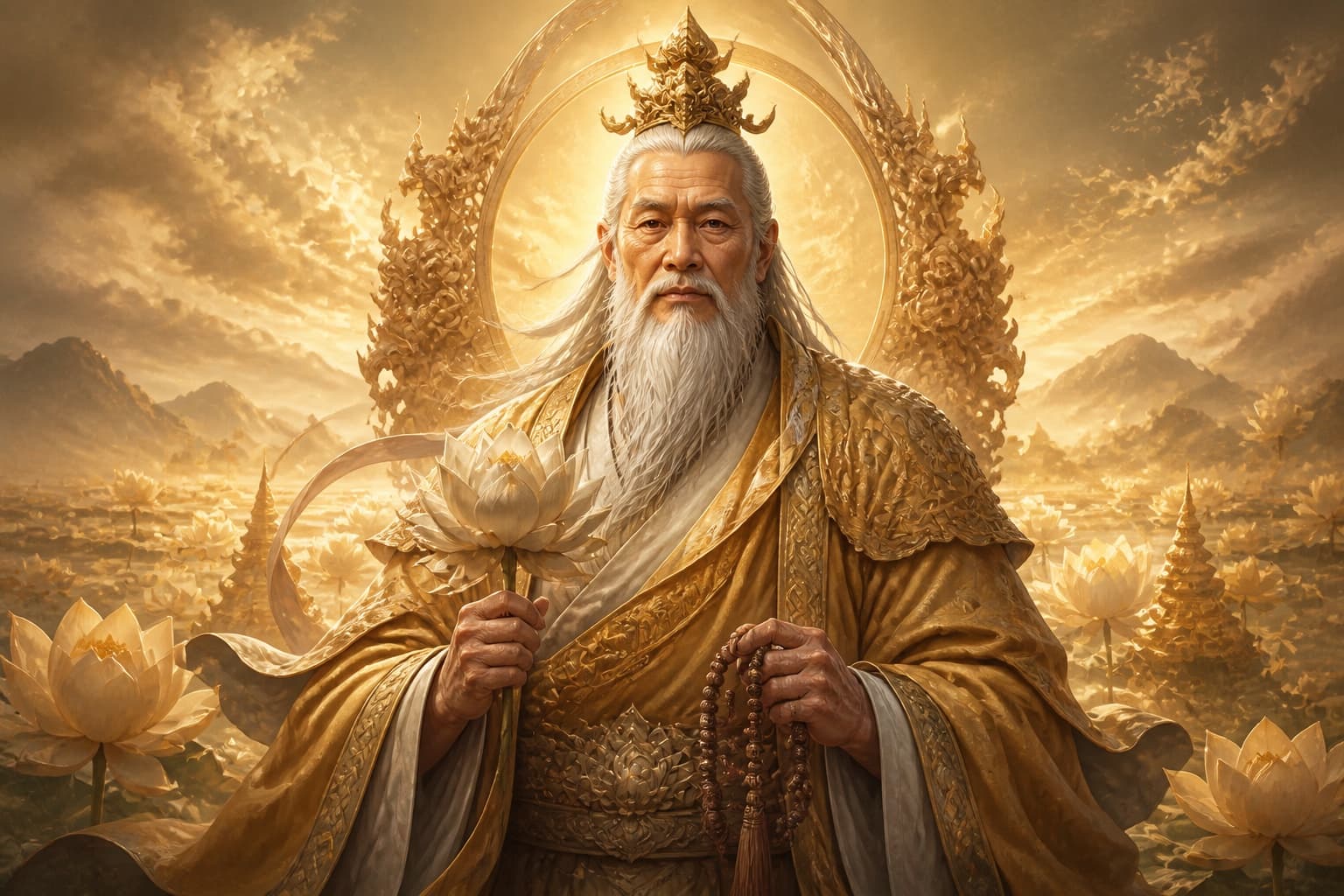
- TierHeaven’s-Way tier / Merged with the DaoSect / factionXuanmenHongjun DaozuAncestor of the Mystic Gate · merged himself into Heaven’s Way
- TierSaintSect / factionChanjiaoYuanshi TianzunSecond of the Three Pure Ones · head of the Chan Sect
- TierSaintSect / factionJiejiaoTongtian JiaozhuThird of the Three Pure Ones · head of the Jie Sect
- TierSaintSect / factionRenjiaoTaiqing LaoziFirst of the Three Pure Ones · head of the Human Sect
- TierSaintSect / factionWahuang Palace / close to the Yao clanNüwaMaker of humankind · mistress of Wahuang Palace
- TierQuasi-SaintSect / factionYao Heavenly CourtDijunHeavenly emperor of the Yao clan
- TierQuasi-Saint peakSect / factionYao Heavenly CourtDonghuang TaiyiWar god of the Yao clan
- TierSaintSect / factionWestern SectZhunti DaorenOne of the two saints of the West
- TierSaintSect / factionWestern SectJieyin DaorenOne of the two saints of the West
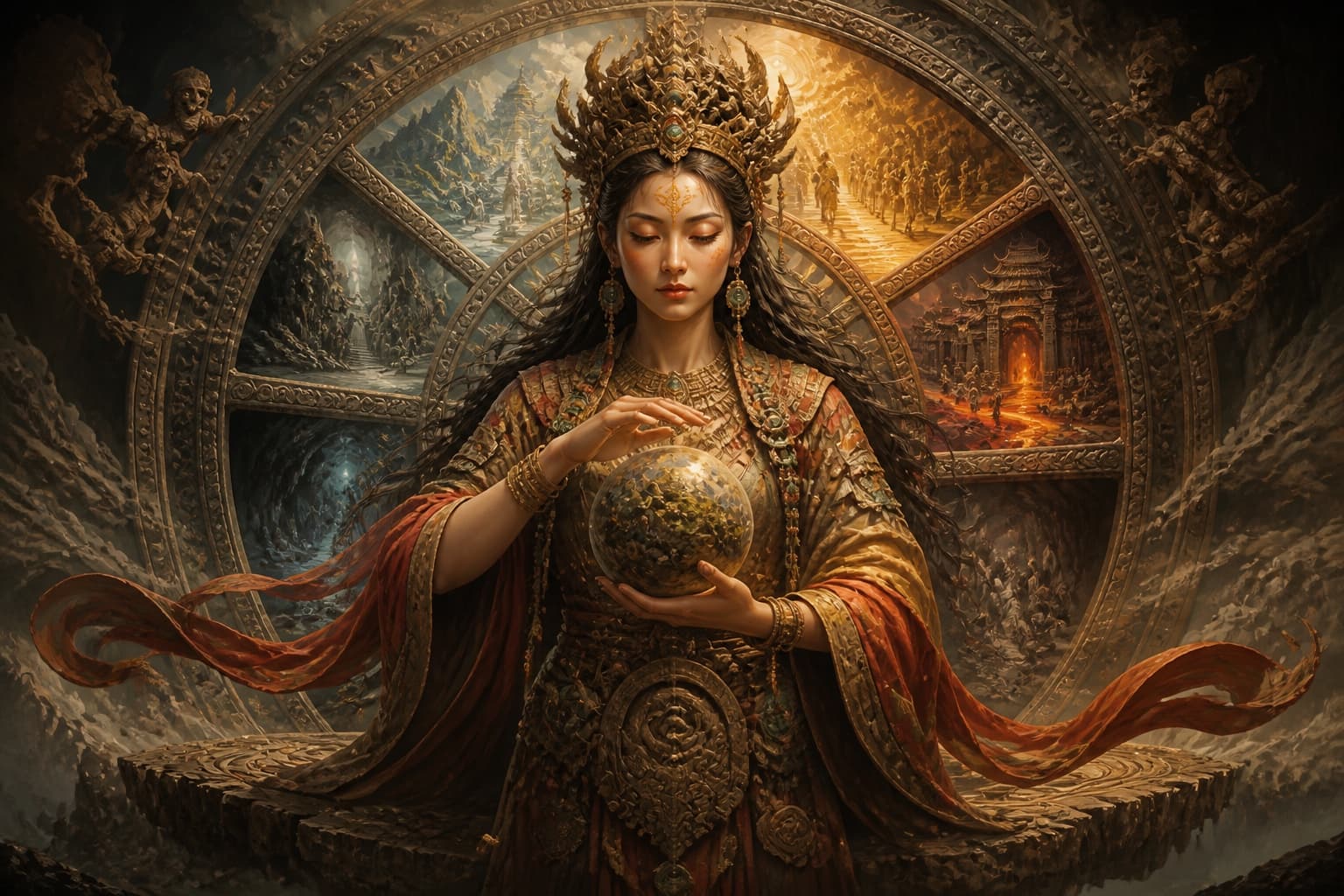
- TierSaint-level / Earthly Saint / Hunyuan Da LuoSect / factionWu clan → the underworldHoutuShe who became the six paths of rebirth
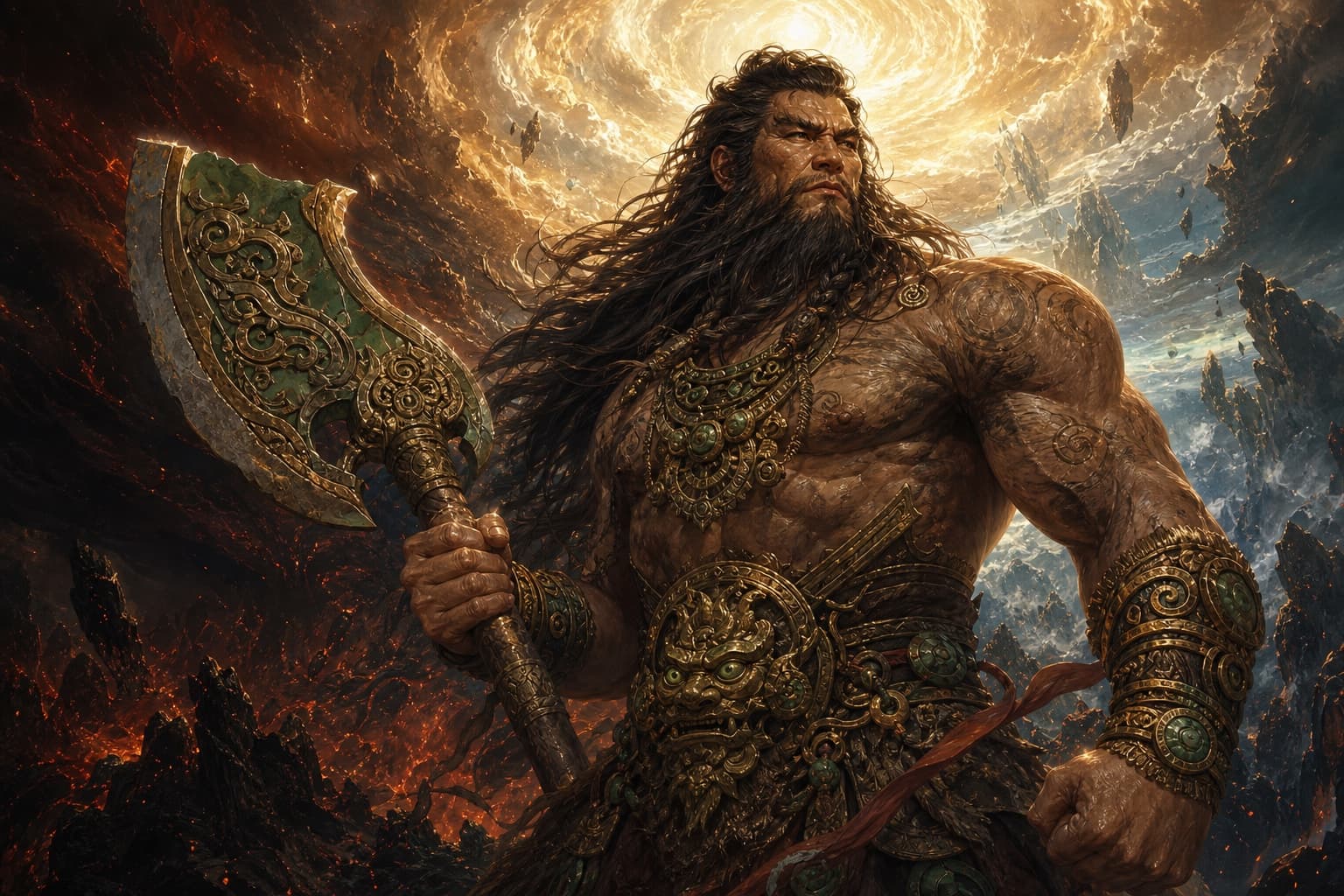
- TierGreat-Dao tier / Beyond Heaven’s WaySect / factionNonePanguHe who split heaven from earth
- TierQuasi-Saint peak / Hunyuan Da Luo / Saint-levelSect / factionModaoLuohouAncestor of the demonic path
- TierQuasi-SaintSect / factionNorthern sea / Yao Heavenly CourtKunpengLord of the northern sea · Yao preceptor
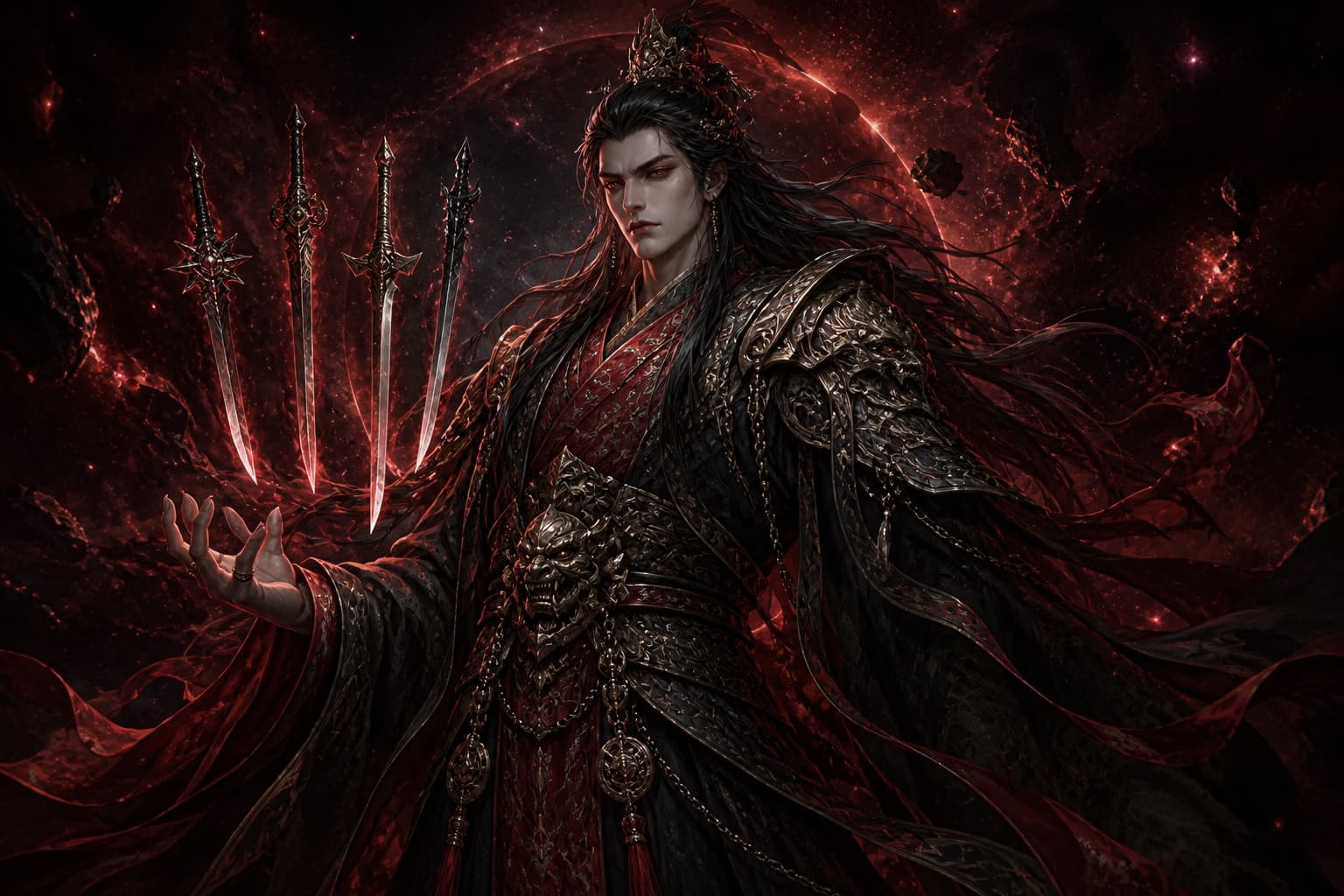
- TierQuasi-Saint peakSect / factionSea of blood / Asura SectMinghe LaozuLord of the sea of blood
- TierQuasi-SaintSect / factionIndependent / the earthbound immortal lineageZhenyuanziAncestor of the earthbound immortals
- TierDa Luo peak / Quasi-SaintSect / factionIndependentHongyun LaozuAt the centre of the quarrel over sainthood
- TierQuasi-SaintSect / factionYao clan / humankindFuxiBrother of Nüwa · Heavenly Sovereign of humankind
- TierQuasi-Saint / Da LuoSect / factionChanjiao, later the WestRandeng DaorenDeputy head of the Chan Sect
- TierDa Luo Golden Immortal, roughly / Great WitchSect / factionHuman hero / Great Witch of the Wu clanHou YiThe archer who shot down the suns
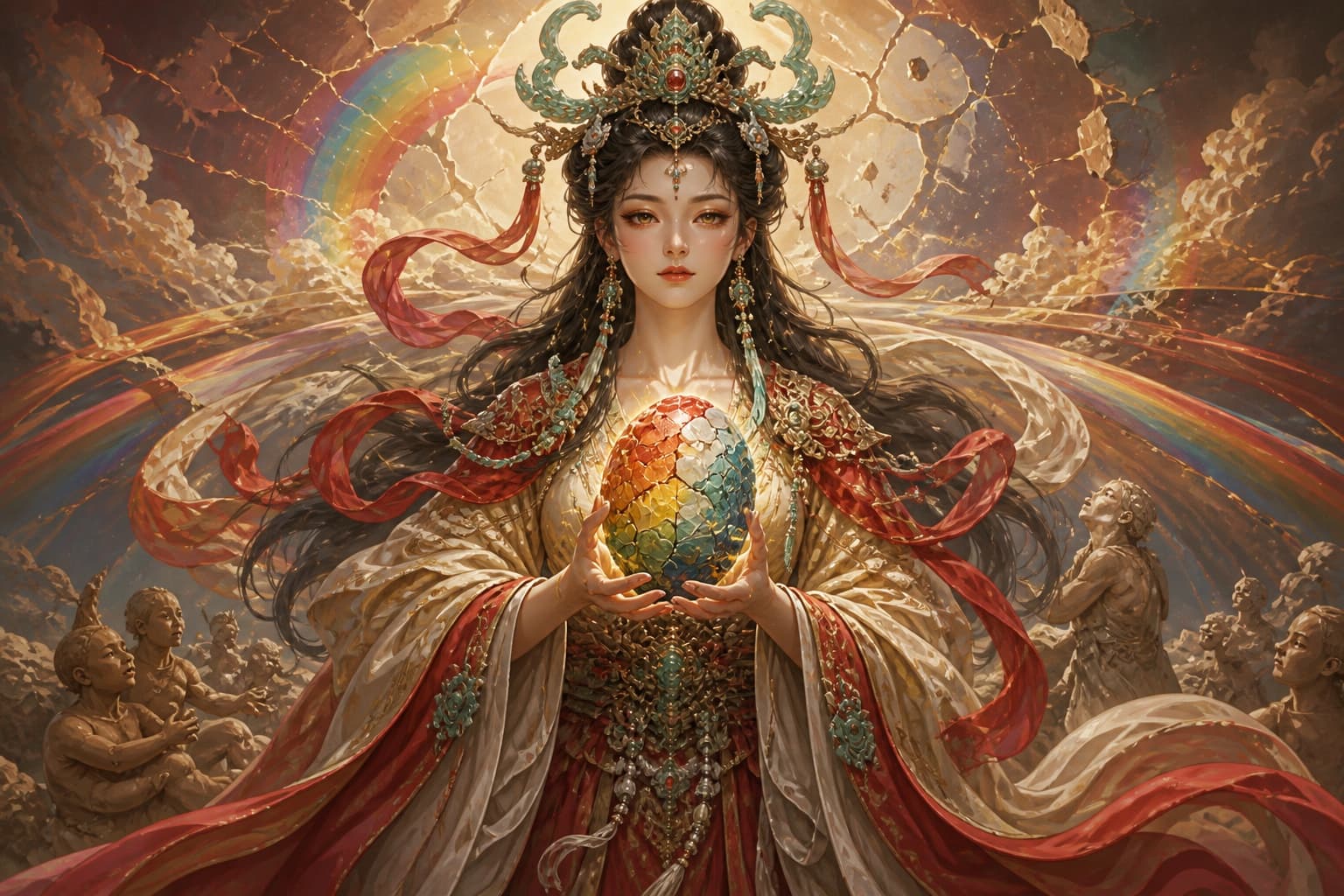
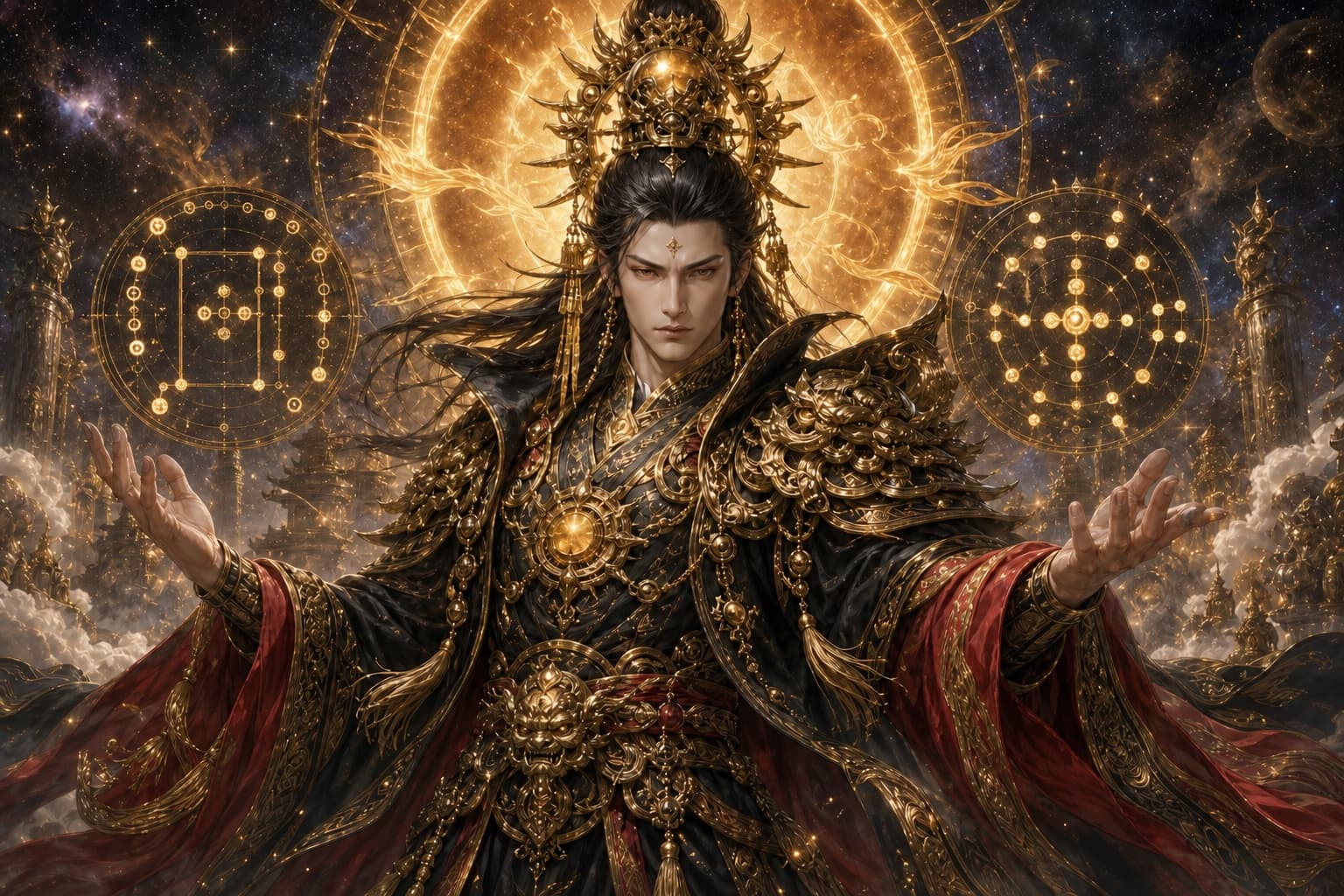
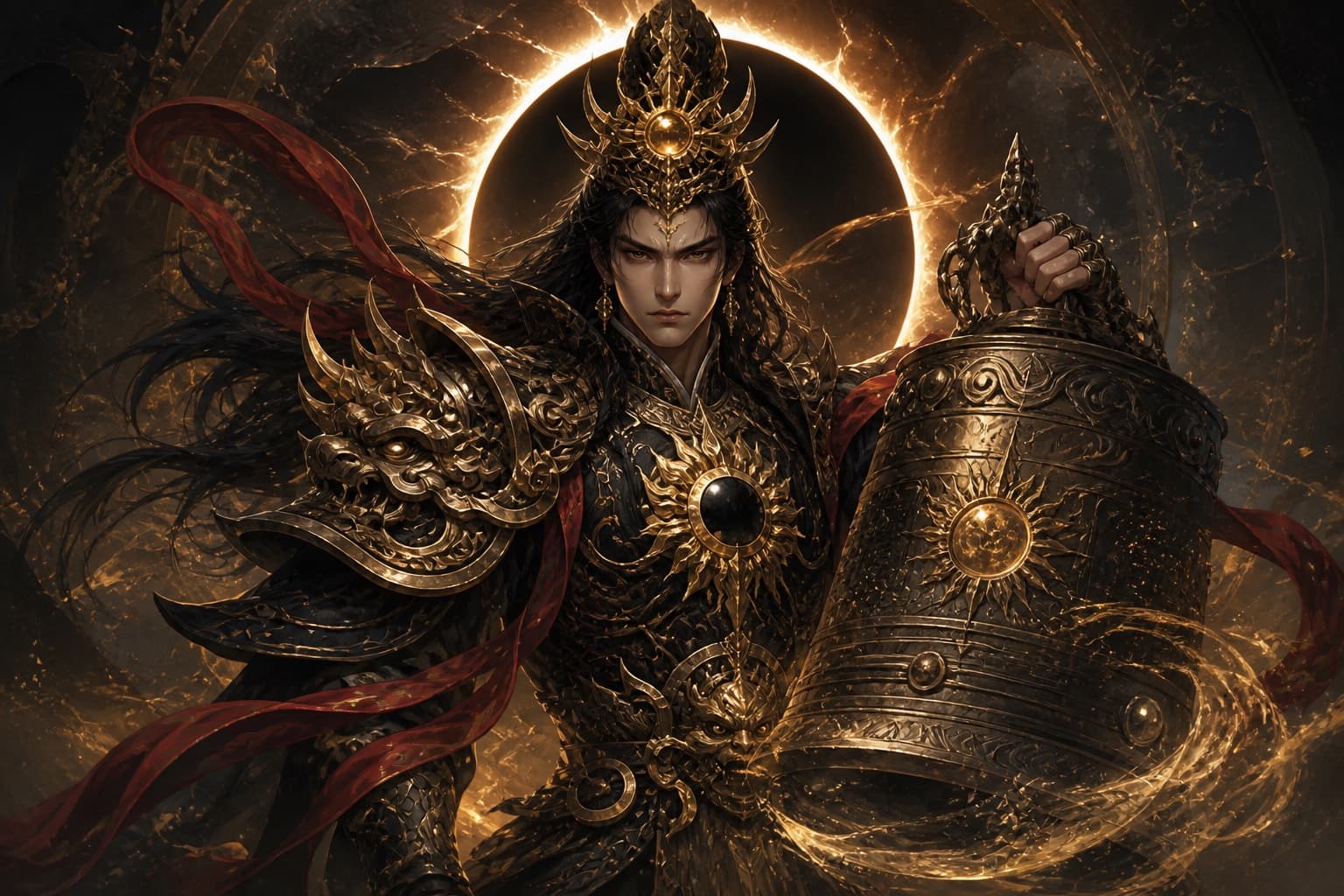
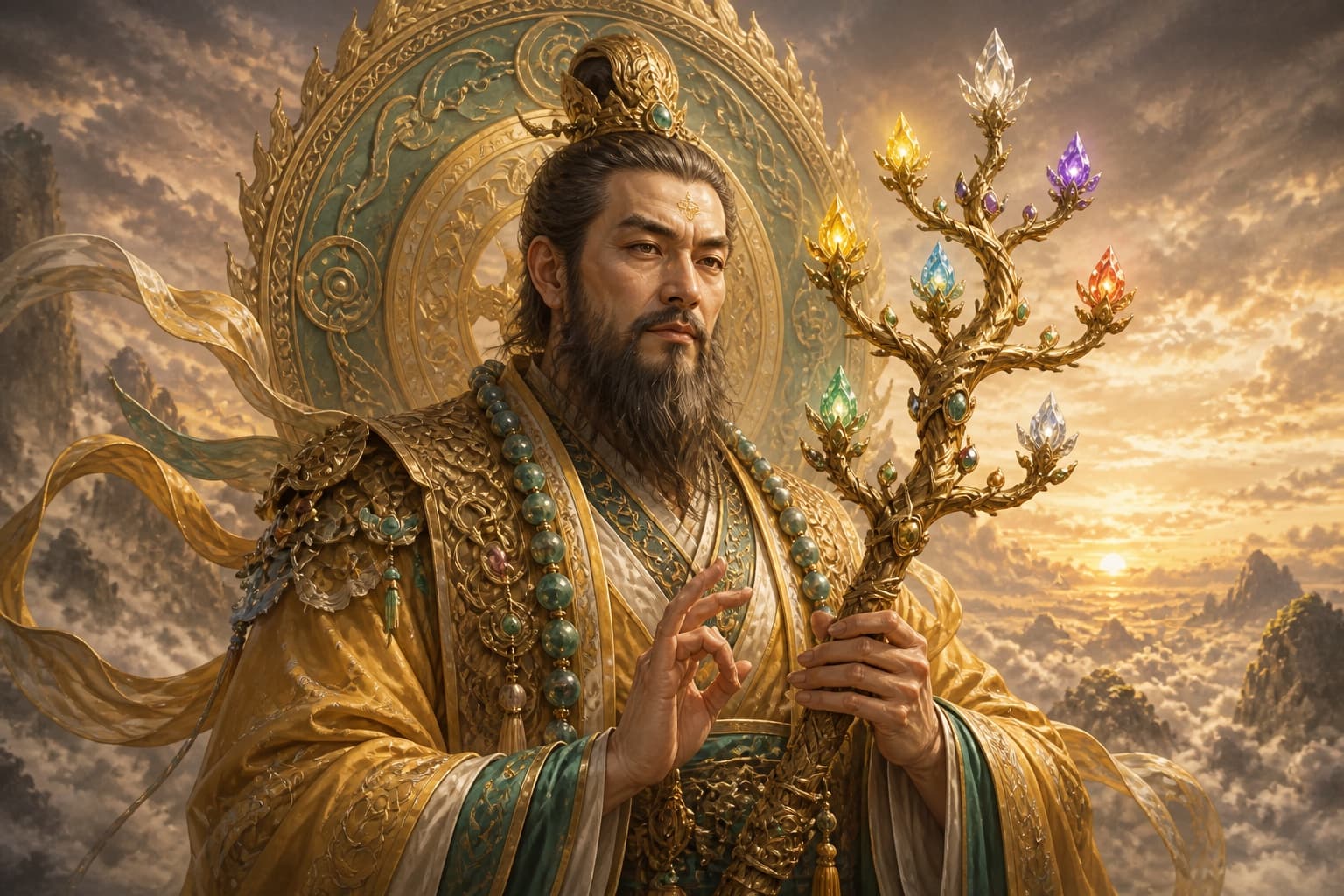
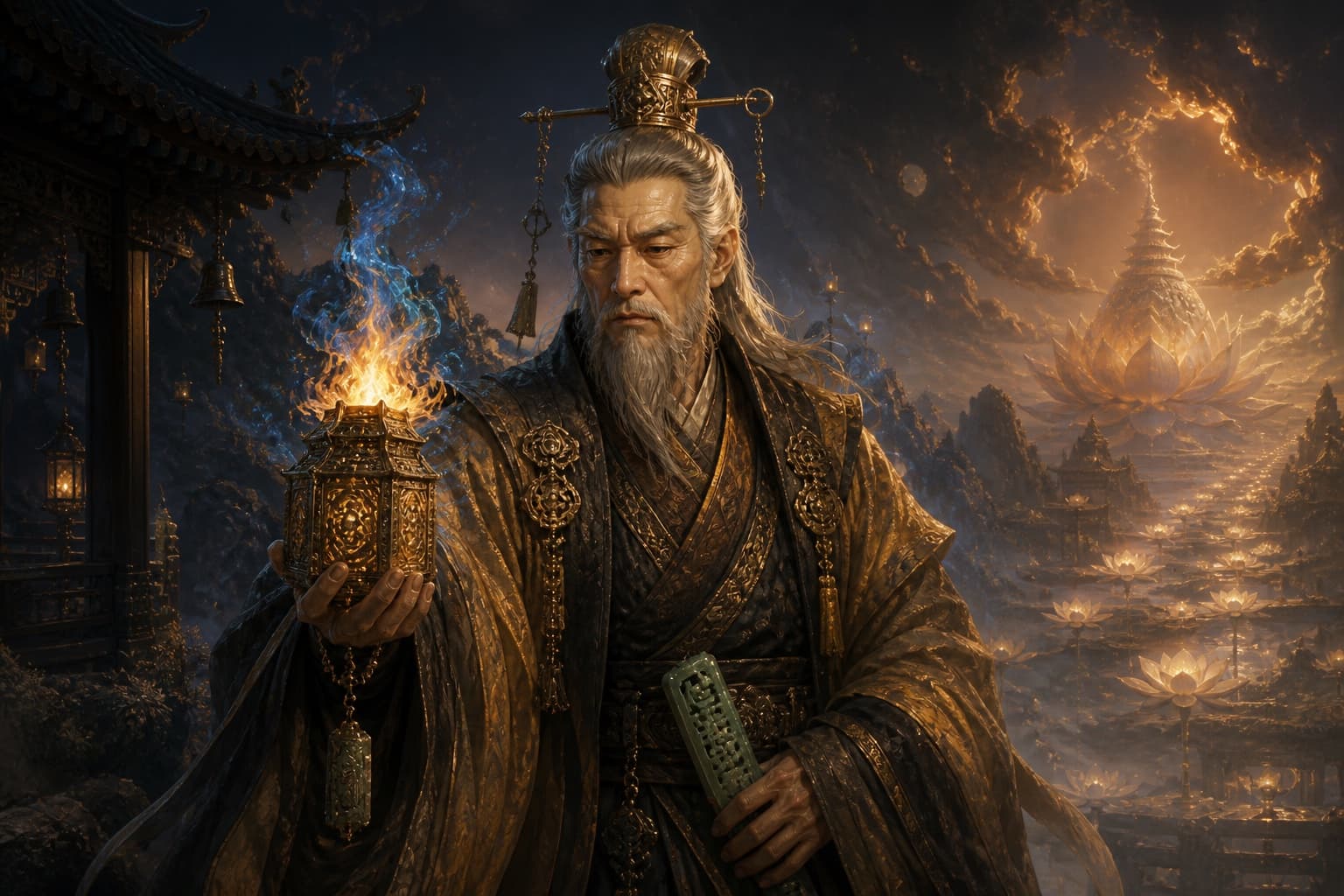
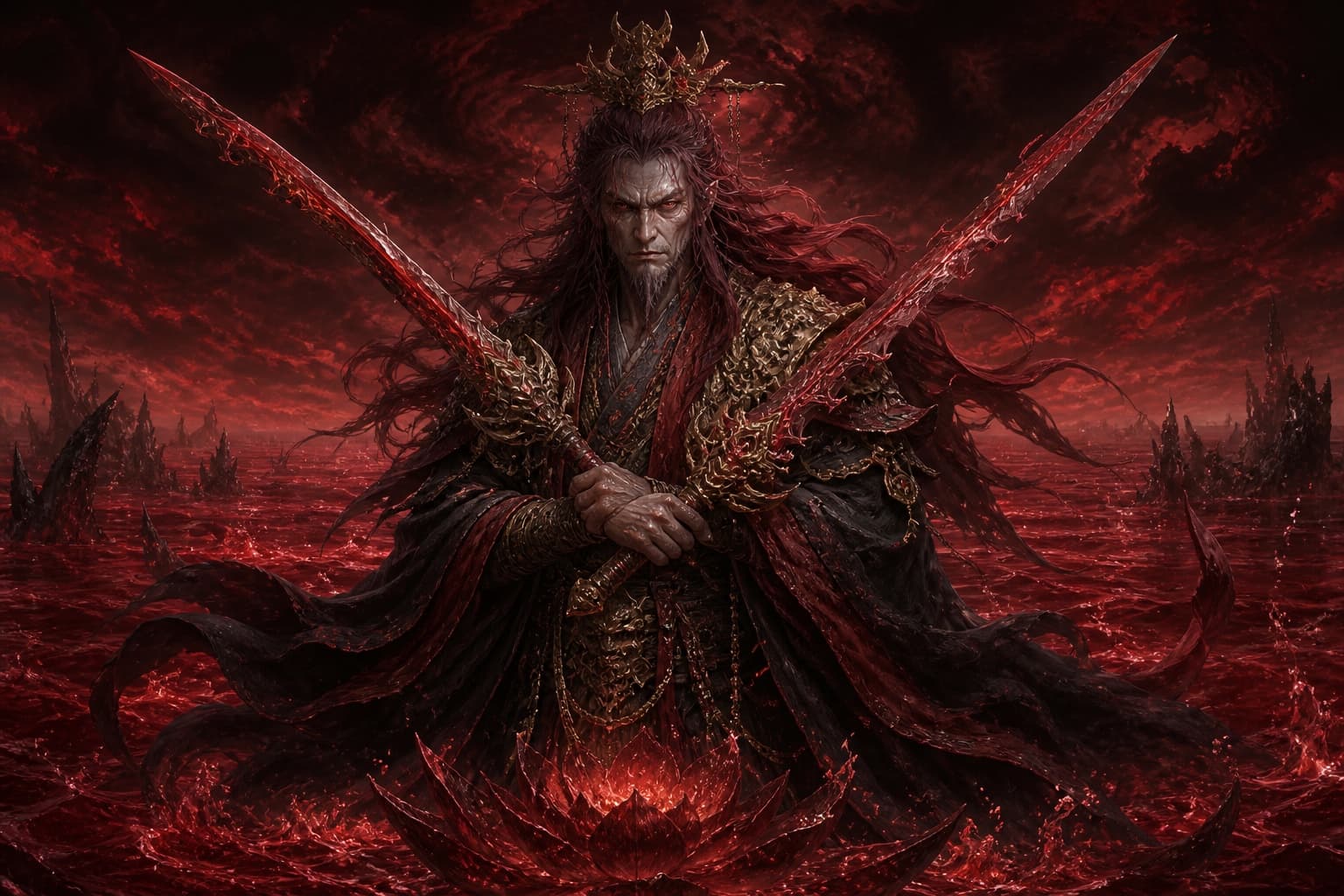
Minghe Laozu
The story
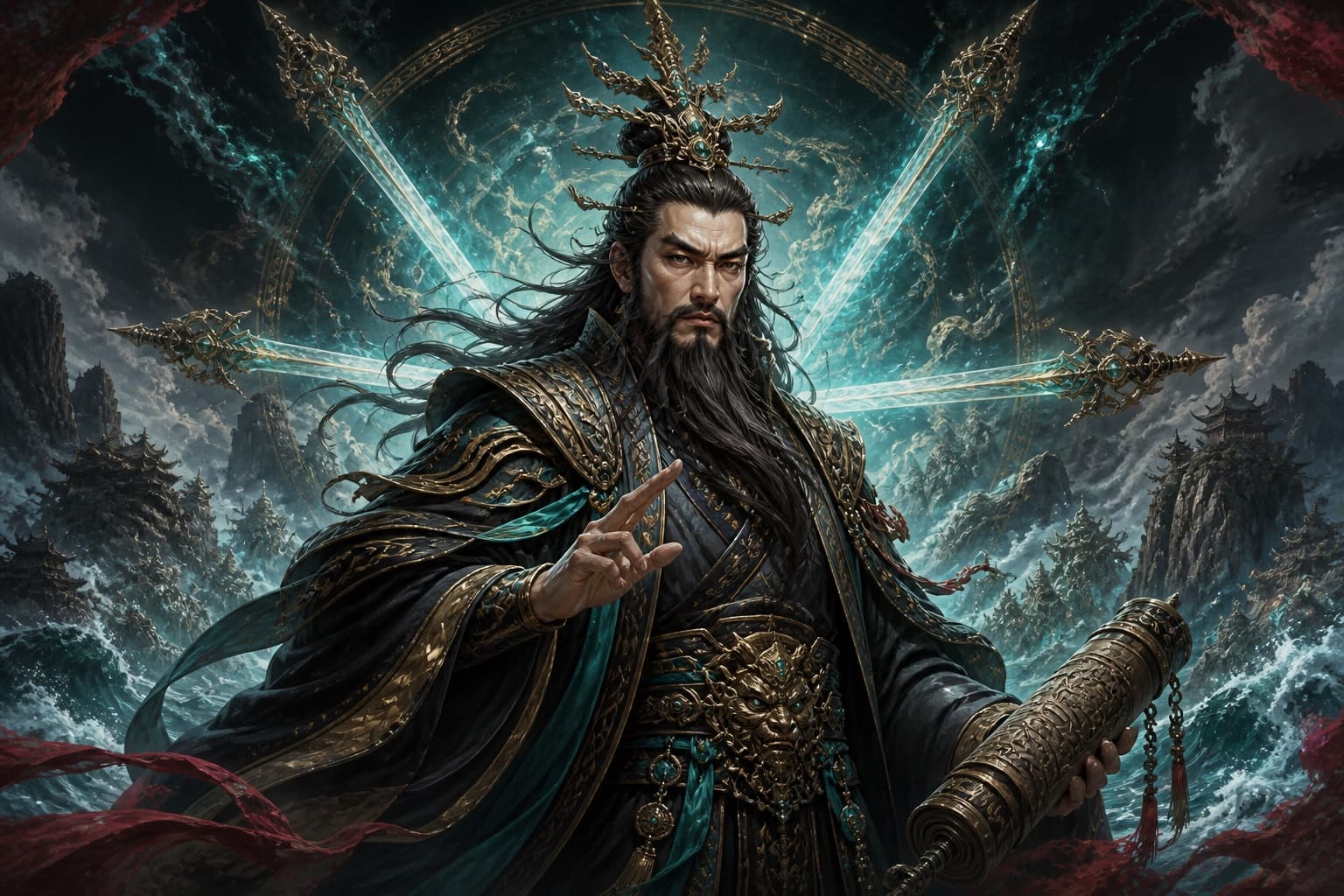
When Minghe Laozu was newly born the sea of blood was still a barren and silent place that nothing had entered. He wandered it alone, feeling out its limits, and over long ages came to understand the strange forces held within it.
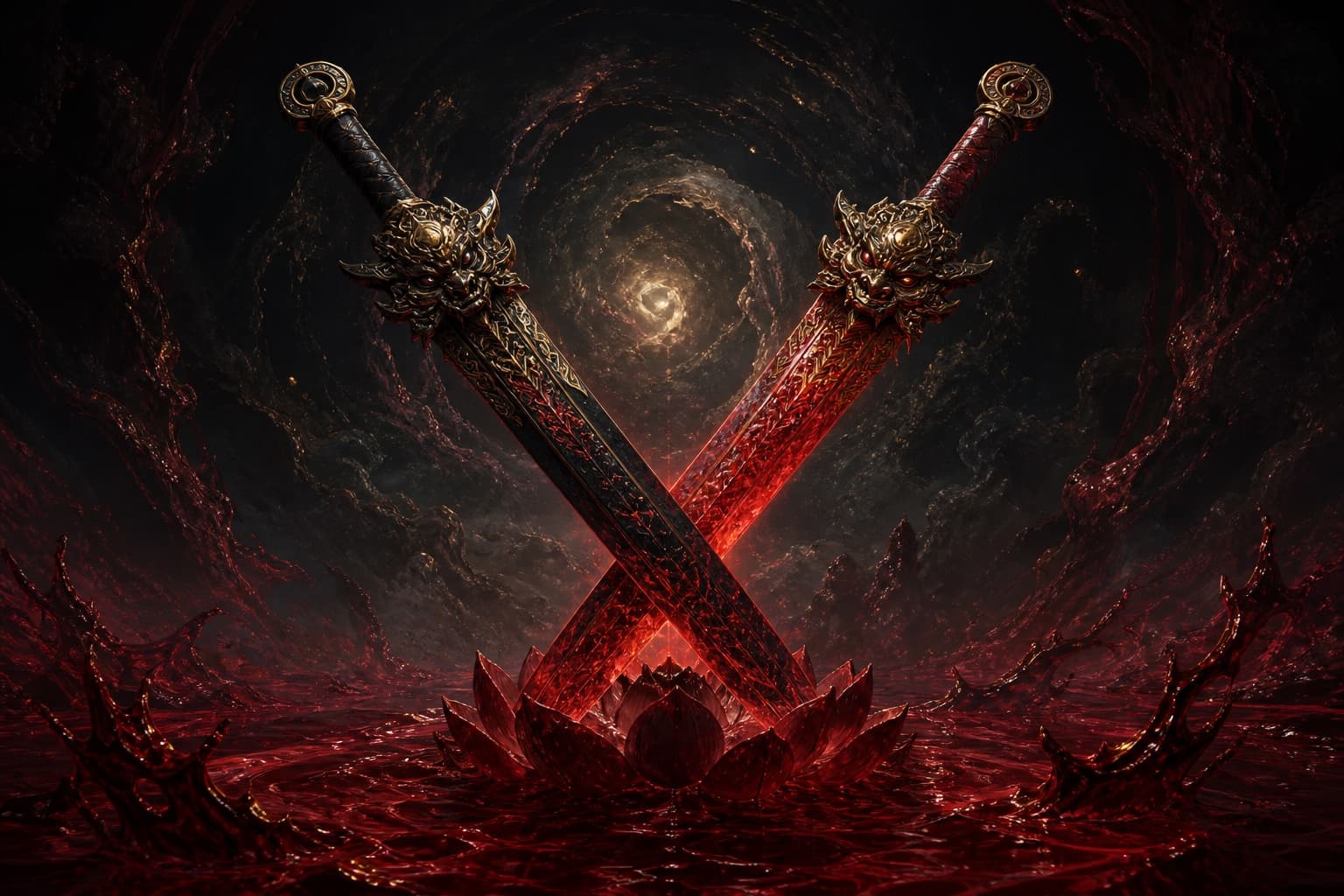
In the depths of the sea of blood Minghe found two blades — one called Yuantu and one called Abi — with dark red edges and a faint haze of blood along them. He took both for his own and carried them with him ever after.
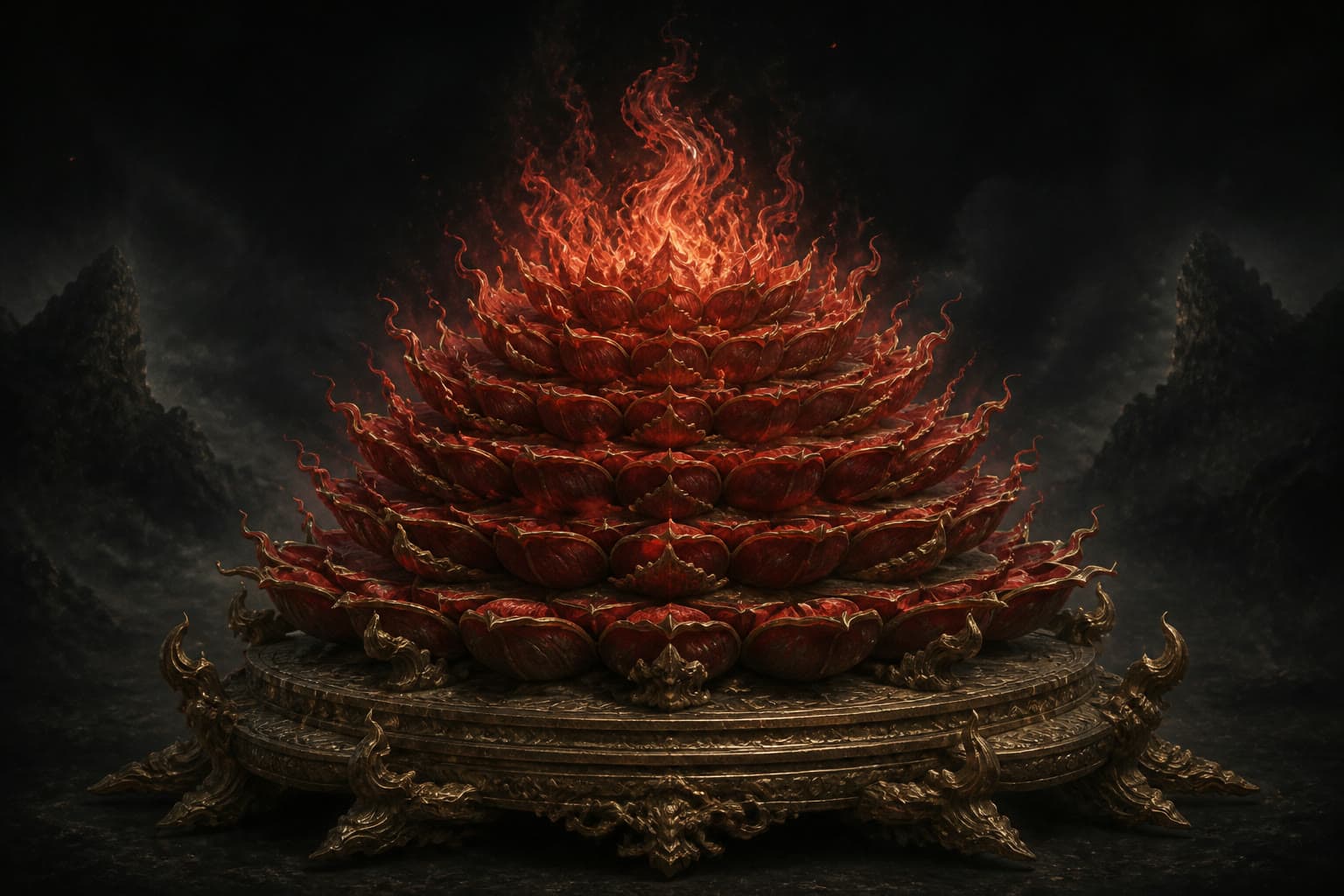
Minghe also had the Twelve-Ranked Red Lotus of Karmic Fire to shield him.
The sea of blood was too broad for one to guard, so Minghe divided his own blood into a number of blood-spirit selves and set them at the crucial waters throughout it; whenever a living thing entered the sea, a blood-spirit went to see to it.
By then Nüwa had shaped people from earth in the world above and humankind was multiplying. When word reached the underworld, Minghe went out beyond the sea of blood to see how humankind lived, and quietly noted the methods by which Nüwa had made them.
Back in the sea of blood, Minghe took the blood-force of the sea and made a people of his own after Nüwa’s example: the Asura. Merit came down from heaven for it, but Minghe did not become a saint by it.
The Asura multiplied. Seeing how much they loved a fight, Minghe founded the Asura Sect in the sea of blood, took the headship himself, expounded the arts of the sea of blood to them and taught them how to kill.
With the sect founded, the Asura settled the islands of the sea of blood, while Yuantu, Abi and the Red Lotus of Karmic Fire stayed in Minghe’s hands. The versions differ on the sect’s people and its transmission, and keep in common only the founding of the race and the sect.
Several of the world’s calamities passed by outside the sea of blood. Minghe kept his blood-spirits at their stations and seldom went far from it; a cultivator who came deep into the water would meet the blood-spirit selves posted everywhere before he met anything else.
Houtu, one of the Twelve Ancestral Witches, travelling in the world, saw the souls of the dead drifting in the underworld with nowhere to go, and formed the thought of giving herself up so that the six paths might be opened and each soul have somewhere to belong.
Houtu gave up her Ancestral Witch body and became the six paths of rebirth in the underworld. From then on the dead passed, according to the causes of their lives, into one of the six — devas, asuras, humans, animals, hungry ghosts and hells — and turned within them.
With the six paths established, the asura path was among them, so that the Asura Sect Minghe had founded and the underworld Houtu had become stood side by side. The border of the sea of blood met the country of the underworld, and there were constant dealings across it.
Once the underworld had opened, it and the sea of blood lay together in the same darkness, and the asura path shared its name with the race Minghe had made. From this the versions write the underworld and the sea of blood as neighbours, but rarely give any fixed story of the two coming to open war.
Minghe stayed in the sea of blood ever after and seldom came into the middle of the world. When Dijun and Donghuang Taiyi raised the Yao Heavenly Court and the Twelve Ancestral Witches fought the Yao clan, the sea of blood was remote and he never entered the war in force.
The Asura Sect grew over the ages and its people settled the waters of the sea of blood as they chose. Minghe still walked the sea with Yuantu and Abi, and the Red Lotus of Karmic Fire stayed year after year at its heart, unmoved.
Later tellers pass on a saying — while the sea of blood is not dry, Minghe cannot die — to describe how the two depend on each other and endure. The saying comes from popular tradition; the versions still differ on what Minghe did afterwards, and it is not a settled account.
Relationship map
Relationship story
Select a label on one of the lines to read when the two met, what happened next, and how it ended.
Selecting a portrait still opens that entry directly.